
Boston, MA, December 21, 2025
A recent auction of a downtown Boston office and retail building signifies shifting commercial property valuations in the city. The sale of 99 Bedford Street for $19 million reflects a 63% decrease from its pre-pandemic price, highlighting the challenges and opportunities within Boston’s dynamic economy. As developers adapt to changing market conditions, this event underscores the resilience of Massachusetts entrepreneurs and the potential for innovative investments in the commercial real estate sector.
Boston, MA.
Boston Property Auction: A New Era for Commercial Real Estate?
A recent downtown Boston office and retail building auction highlights evolving commercial property valuations, presenting both challenges and opportunities for the city’s dynamic economic landscape.
The pulse of Boston’s economy is often measured by the vibrancy of its commercial real estate market, a critical indicator of growth, investment, and entrepreneurial spirit. In a dynamic urban environment, the ability of the private sector to adapt to changing conditions and find new value is paramount. Recent market activity has once again brought these themes to the forefront, demonstrating the ongoing evolution of property valuations in the city’s core. This landscape, while presenting new realities, also underscores the resilience of Massachusetts entrepreneurs and the potential for innovative approaches to capitalize on shifting trends.
The recent sale of a prominent downtown Boston office and retail building at auction provides a tangible example of these evolving market dynamics. On December 19, 2025, the property at 99 Bedford Street changed hands for $19 million, a figure that reflects a significant adjustment from its pre-pandemic valuation. This sale was approximately 63% below its prior purchase price in 2019, when it traded for $51 million. Such transactions, while noteworthy, are an inherent part of a free market, signaling periods of recalibration and the emergence of new investment opportunities for those with foresight and capital.
The Downtown Auction: A Closer Look
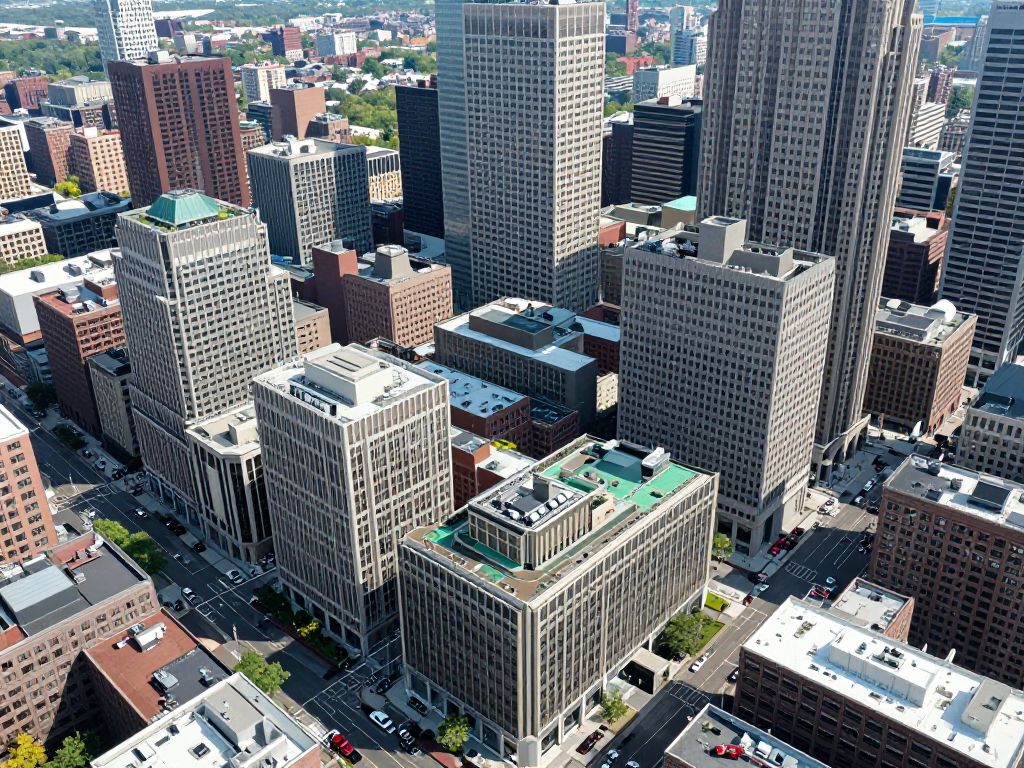
The auction on December 19, 2025, saw a downtown Boston office and retail building located at 99 Bedford Street sell for $19 million. This transaction represents a considerable discount from its valuation prior to the pandemic, specifically a 63% reduction from its 2019 sale price of $51 million. Boston-based development and investment firm Chevron Partners, in partnership with Capital Hall Partners, emerged as the top bidder for the five-story, approximately 98,000-square-foot property situated near South Station. The building was largely vacant at the time of the sale, with a limited number of ground-floor tenants. Chevron Partners has plans to invest in upgrades to reposition the asset, including a renovated lobby, new tenant amenities like a lounge, conference space, and a fitness center, along with a move-in-ready speculative suite to attract future tenants.
Broader Commercial Real Estate Trends
The situation in Boston is not isolated. Across the region and the nation, commercial real estate markets are experiencing significant shifts. On October 21, 2025, the Hartford Superior Court approved the foreclosure of a large downtown Hartford office complex, Constitution Plaza, which includes six buildings totaling 670,626 square feet. This action highlights the challenges facing the commercial office market in that area. Similarly, a 43-story office tower in Chicago’s Loop business district was granted preliminary landmark status on December 8, 2025, as part of a move to fund its conversion into apartments. This Chicago tower’s situation reflects a nationwide trend where many older mid-20th century structures face decisions about their future amid changing valuations.
These adjustments are part of a broader trend where office real estate values nationwide have been impacted by the post-pandemic shift towards remote work. Many larger employers have significantly reduced their office footprints as leases have come up for renewal, leading to rising vacancy rates across the country.
Boston’s Market: Nuance and Continued Investment
While some properties are experiencing significant valuation adjustments, Boston’s commercial real estate market also demonstrates ongoing strategic investment. For instance, the One Lincoln office tower in downtown Boston, a 36-story, 1.1 million-square-foot building, was acquired by a lending group for $400 million at a foreclosure auction on March 28, 2025. This bid, while reflecting a substantial decrease from its $1 billion refinancing in 2022, indicates continued interest in high-profile assets. The building was originally acquired for nearly $900 million in late 2006.
Furthermore, Synergy, a prominent real estate investor, operator, and manager, announced the acquisition of 99 High Street, a 32-story, 730,208-square-foot Class A office tower in Boston’s Financial District, on April 25, 2025. This acquisition, for $227 million, expanded Synergy’s downtown Boston footprint and reinforces their commitment to high-quality assets in prime locations. The property, currently 78% leased to a variety of tenants, underwent a significant modernization in 2019 and has seen over $24 million in capital improvements over the past decade. Synergy’s other acquisitions in Boston have also been at attractive valuations, including One Liberty Square, 179 Lincoln Street, 1 India Street, and 101 Arch Street. Additionally, in the broader Boston area, Riverside Properties acquired 160 Gould Street, a 135,272-square-foot office building in Needham, for $19 million on June 13, 2025. This suburban transaction also reflects shifting dynamics in the Greater Boston commercial real estate market.
Opportunities for Innovation and Growth
These market shifts, while reflecting economic adjustments, also create significant opportunities for Boston MA business. New valuations can open doors for nimble entrepreneurs, smaller businesses, and creative adaptive reuse projects, transforming underutilized spaces into vibrant new hubs. The plans by Chevron Partners to invest in upgrades and reposition 99 Bedford Street exemplify this entrepreneurial innovation, aiming to attract new tenants with modern amenities. Such private investment is crucial in driving revitalization, bringing capital and fresh perspectives to properties that may have otherwise languished.
A responsive regulatory environment, characterized by limited red tape, can further accelerate these transitions. By streamlining permitting processes and offering incentives for adaptive reuse, local governments can empower Massachusetts entrepreneurs to quickly pivot and bring new life to commercial properties. This approach fosters an environment where private ingenuity and capital can thrive, leading to diversified economic growth and new opportunities for Boston small business.
Community and Economic Resilience
The ongoing evolution of Boston’s commercial real estate market underscores the resilience of the city’s economic ecosystem. Market adjustments are a natural part of a healthy, evolving economy, allowing for the reallocation of resources to more productive uses. This dynamic process, driven by private sector adaptability and innovation, ensures long-term stability and creates new avenues for job creation and business success.
Engaging with these shifts actively, through community participation and supportive local policies, can strengthen Boston’s position as a hub for innovation and economic vitality. The ability of investors to acquire properties at new valuations and invest in their modernization ultimately benefits the community by ensuring buildings remain productive assets, contribute to the local tax base, and support local jobs.
Conclusion
As Boston’s commercial real estate market navigates these evolving dynamics, it’s clear that the city’s fundamental strengths – its vibrant talent pool, innovative spirit, and strategic location – remain powerful attractors for investment and growth. The adjustments observed in property valuations present a fertile ground for savvy Massachusetts entrepreneurs and investors to identify new opportunities, foster economic growth, and contribute to the ongoing revitalization of our urban core. Supporting local businesses and staying informed about these trends are key to ensuring Boston’s continued prosperity. The future of Boston MA business will undoubtedly be shaped by how we collectively adapt, innovate, and embrace the opportunities presented by these shifts.
Frequently Asked Questions (FAQ)
What happened with a downtown Boston office and retail building recently?
A downtown Boston office and retail building located at 99 Bedford Street sold at auction on December 19, 2025.
What was the sale price compared to its pre-pandemic valuation?
The building sold for $19 million, marking a steep discount from its pre-pandemic valuation, specifically about 63% below its 2019 purchase price of $51 million.
Are other commercial real estate markets experiencing similar trends?
Yes, other commercial real estate markets are experiencing similar trends. For example, the Hartford Superior Court approved the foreclosure of a downtown Hartford office complex on October 21, 2025, and a 43-story office tower in Chicago’s Loop business district was granted preliminary landmark status on December 8, 2025, as part of a conversion plan.
What other significant commercial property transactions have occurred in the Boston area?
Other transactions include the One Lincoln office tower in downtown Boston selling for $400 million at a foreclosure auction on March 28, 2025, Synergy acquiring 99 High Street, a Class A office tower in Boston’s Financial District, for $227 million on April 25, 2025, and Riverside Properties acquiring 160 Gould Street in Needham for $19 million on June 13, 2025.
What do these trends mean for Boston’s economy?
These trends indicate evolving market dynamics and present opportunities for entrepreneurial innovation, private investment, and adaptive reuse projects to foster economic growth and revitalize urban areas.
Key Features of Boston’s Commercial Real Estate Market Event
| Feature | Details | Scope |
|---|---|---|
| Event | Downtown Boston office and retail building sold at auction | Local |
| Date of Sale | December 19, 2025 | Local |
| Sale Price | $19 million | Local |
| Comparison to Pre-Pandemic Valuation | Significantly below; approximately 63% below its 2019 sale price of $51 million | Local |
| Location of Property | 99 Bedford Street, Downtown Boston | Local |
| Type of Property | Office and retail building | Local |
| Related Market Trend (Hartford) | Hartford Superior Court approved foreclosure of downtown Hartford office complex on October 21, 2025 | State-level (Connecticut) |
| Related Market Trend (Chicago) | Landmark downtown tower in Chicago sought receivership amid significant drop in valuation and plans for conversion on December 8, 2025 | Nationwide (Chicago) |
| Other Boston-area Investment | One Lincoln Office Building foreclosure auction won for $400 million on March 28, 2025 | Local |
| Other Boston-area Investment | Synergy acquired 99 High Street, a Class A office tower, for $227 million on April 25, 2025 | Local |
| Other Boston-area Investment | Riverside Properties acquired 160 Gould Street in Needham for $19 million on June 13, 2025 | Regional (Greater Boston) |
Deeper Dive: News & Info About This Topic
HERE Resources
Boston City Council Approves Increased Property Tax Rates
Economic Effects of Mass Deportation on Boston Businesses
Big Y’s Expansion: Boosting Retail in Massachusetts
Boston Office Market Faces New Valuation Challenges
Greater Boston’s Real Estate Market Shows Resilience
Lawsuit Claims Retaliatory Overtaxation in Boston
Boston Zoning Commission Approves Major Update for Downtown
Eli Lilly Expands Research Footprint in Boston’s Seaport
Watertown Mall Sold for $100 Million in Strategic Shift
HGA Moves to New Boston Office in Historic Warehouse

Author: STAFF HERE BOSTON WRITER
The BOSTON STAFF WRITER represents the experienced team at HEREBoston.com, your go-to source for actionable local news and information in Boston, Suffolk County, and beyond. Specializing in "news you can use," we cover essential topics like product reviews for personal and business needs, local business directories, politics, real estate trends, neighborhood insights, and state news affecting the area—with deep expertise drawn from years of dedicated reporting and strong community input, including local press releases and business updates. We deliver top reporting on high-value events such as Boston Marathon, Head of the Charles Regatta, and Boston Harborfest. Our coverage extends to key organizations like the Greater Boston Chamber of Commerce and Associated Industries of Massachusetts, plus leading businesses in finance, biotech, and insurance that power the local economy such as Fidelity Investments, Biogen, and Liberty Mutual Insurance. As part of the broader HERE network, we provide comprehensive, credible insights into Massachusetts's dynamic landscape.