

Boston, January 7, 2026
Suffolk University’s Ford Hall Forum in Boston will host a screening of the documentary ‘Harm in the Water,’ which reveals the impact of industrial water pollution on Black communities along the Mississippi River. The event, set for February 5, also features a discussion with the film’s director, Kendall Moore, allowing for community engagement on pressing environmental justice issues.
Boston,
Illuminating Challenges: “Harm in the Water” Screens at Ford Hall Forum
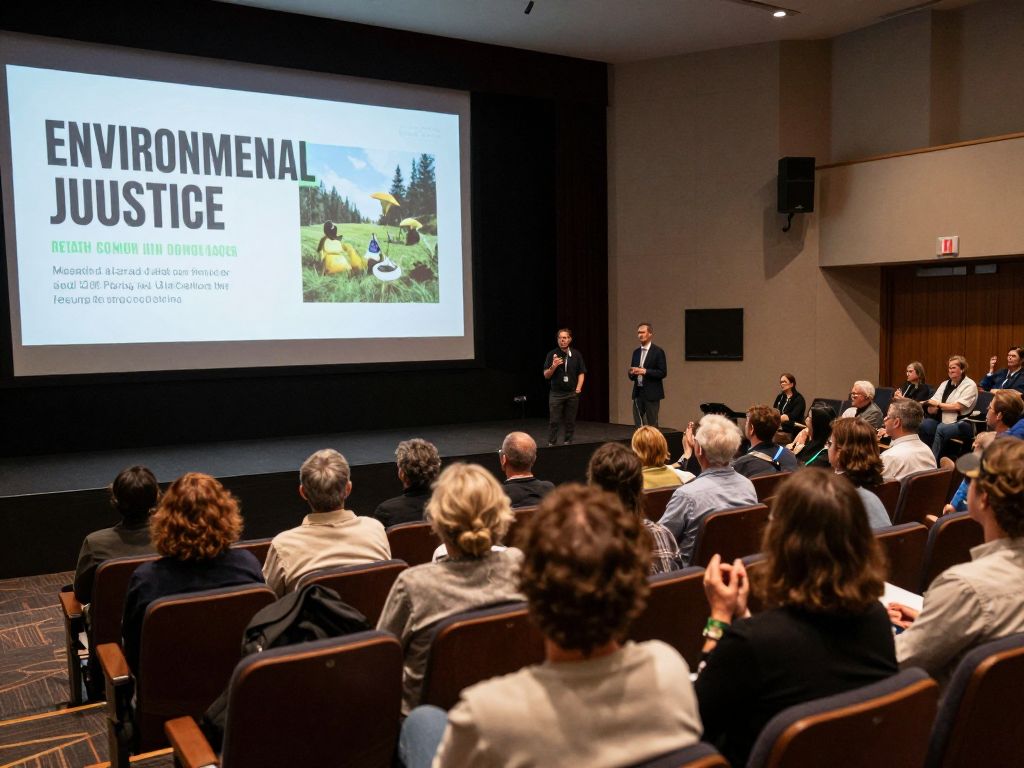
Boston’s long-standing tradition of fostering civic engagement and intellectual discourse continues this February as Suffolk University’s esteemed Ford Hall Forum hosts a screening of the compelling documentary “Harm in the Water.” This event underscores the vital role of local institutions in bringing critical issues to public attention, encouraging an informed citizenry, and sparking proactive community dialogue. It represents a powerful confluence of personal initiative and shared civic space, essential elements for a thriving metropolis.
The Ford Hall Forum, a testament to enduring civic innovation, provides an invaluable platform for deep dives into societal challenges, promoting freedom of speech and an engaged populace. Such gatherings empower individuals with knowledge, inspiring them to consider their role in addressing complex issues both locally and nationally. The upcoming screening offers a prime opportunity for Bostonians to engage with a pressing environmental justice narrative, reinforcing the belief that an educated and active community is the bedrock of progress.
A Legacy of Open Dialogue: The Ford Hall Forum
The Ford Hall Forum, founded in 1908 by Boston businessman George W. Coleman, holds the distinction of being the oldest free public lecture series in the United States. Its inception was rooted in the vision of creating a common meeting ground for all people, enabling full, free, and open public discussion on vital questions affecting human welfare. Over a century later, the Forum continues this mission, fostering an informed and engaged citizenry through presentations, debates, and discussions that illuminate key societal issues.
Originally housed in the Ford Building on Beacon Hill, from which it derives its name, the Forum has consistently stood as a beacon for intellectual independence. It has famously provided a stage for a diverse array of thought-provoking speakers, some of whom were considered controversial in their time, reaffirming its commitment to freedom of speech. This dedication to robust debate and the presentation of multiple perspectives is crucial for citizens to form their own educated opinions and to uphold the principles of individual thought and civic responsibility.
“Harm in the Water”: Unveiling Environmental Realities
On Thursday, February 5, 2026, the Modern Theatre at Suffolk University will open its doors for the screening of “Harm in the Water,” an acclaimed documentary directed by Kendall Moore. This powerful film delves into the profound and often devastating impact of industrial water pollution on Black communities situated along the Mississippi River. It meticulously uncovers how historical patterns of environmental hazards have regrettably culminated in a modern crisis, demanding attention and action.
The documentary, supported by the National Science Foundation, weaves together compelling personal stories with rigorous scientific evidence. It highlights the struggles and remarkable resilience of community members, environmental activists, and scientific experts who are actively fighting for clean water and environmental justice. The film explores critical issues such as the disproportionate concentration of polluting industries near Black communities, which has led to contaminated water supplies and elevated rates of various health conditions, including cancer, respiratory illness, rashes, miscarriages, and infertility.
Furthermore, “Harm in the Water” addresses the severe economic consequences, such as the depletion of vital food sources like oysters and crabs, which impacts Black fishermen. The narrative also critically examines the challenges faced by affected communities in securing recognition, resources, and remediation, and the struggle to include Black voices and engineers in developing solutions. The documentary draws a clear connection between historical factors like colonialism, plantation slavery, and agribusiness, and their enduring negative impacts on Black communities and environments.
Post-Screening Dialogue: Fostering Civic Engagement
Following the screening, attendees will have the valuable opportunity to participate in a talkback session with director Kendall Moore. This interactive segment is a hallmark of the Ford Hall Forum’s approach, providing a direct channel for audience members to engage with the filmmaker, ask questions, and delve deeper into the film’s themes. Such direct engagement is vital for transforming passive viewing into active understanding and potential civic initiative.
These discussions encourage critical thinking and offer a space for Bostonians to reflect on the broader implications of environmental justice and water quality, fostering a sense of shared responsibility. By bringing the creators of such impactful works directly to the public, the Forum facilitates a level of community engagement that is invaluable for a city committed to progress and thoughtful action.
Boston’s Own Water Stewardship: A Local Perspective
While “Harm in the Water” focuses on communities along the Mississippi River, the themes of water quality and environmental stewardship resonate deeply within Boston and the Commonwealth of Massachusetts. Efforts to protect and improve local waterways, such as the Charles, Mystic, and Neponset Rivers, have been ongoing for decades. The U.S. Environmental Protection Agency (EPA), for instance, launched the Clean Charles River Initiative in 1995, working with the Commonwealth, local communities, non-profit organizations, private institutions, and individual citizens. These collaborative initiatives have led to significant improvements, particularly in reducing bacterial contamination.
However, challenges persist, notably from stormwater pollution, which continues to introduce phosphorus, nitrogen, and bacteria into our rivers, contributing to issues like harmful algal blooms. Boston’s aging infrastructure also presents challenges, with combined sewer overflows (CSOs) sometimes releasing a mix of stormwater and sewage into the Charles River and Boston Harbor during heavy rainfall. Addressing these issues requires continued investment in local infrastructure and the implementation of “green” solutions.
Organizations like the Boston Water and Sewer Commission (BWSC) actively educate residents on their role in preventing pollution, emphasizing proper disposal of waste and responsible cleanup methods. Advocacy groups across Massachusetts, such as Clean Water Action, are also at the forefront of efforts to ensure safe drinking water, reduce lead and PFAS contamination, and fight toxic pollution, often focusing on environmental justice communities that are disproportionately affected by environmental hazards. These local initiatives highlight the power of collective action and individual vigilance in maintaining our precious natural resources.
Cultivating a Proactive Community
The Ford Hall Forum’s screening of “Harm in the Water” at Suffolk University’s Modern Theatre is more than just an event; it’s a catalyst for thoughtful consideration and informed action within the Boston community. By freely providing access to such critical narratives and facilitating open dialogue, institutions like the Forum champion the spirit of personal initiative and civic engagement that underpins a robust society.
Bostonians are encouraged to seize these opportunities, not only to broaden their understanding of vital environmental issues but also to consider how individual choices and local involvement can contribute to broader solutions. Whether by engaging with local environmental groups, supporting initiatives for infrastructure improvement, or simply being more mindful of daily habits that impact water quality, every citizen plays a role. The ongoing commitment to open discourse and community action remains crucial for addressing challenges and fostering sustained growth and well-being for all. Ensure to reserve your free tickets in advance for this enlightening event.
FAQ: Ford Hall Forum Presents “Harm in the Water”
What is the Ford Hall Forum?
The Ford Hall Forum is the oldest free public lecture series in the United States, founded in 1908. Its mission is to promote freedom of speech and foster an informed and engaged citizenry through the free public presentation of lectures, debates, and discussions.
What is the “Harm in the Water” documentary about?
“Harm in the Water” is a powerful documentary that examines the devastating impact of industrial water pollution on Black communities along the Mississippi River. It reveals how historical patterns of environmental hazards have created a modern crisis, highlighting struggles for clean water and environmental justice.
When and where is the screening of “Harm in the Water”?
The screening will take place on Thursday, February 5, 2026, at 6:00 PM at Suffolk University’s Modern Theatre, located at 525 Washington Street, Boston, MA 02111.
Is admission to the screening free?
Yes, admission to the “Harm in the Water” screening is free, but tickets are required. Walk-up tickets will be available at the Modern Theatre box office on the day of the event, one hour before the scheduled start time, subject to availability.
Will there be a discussion after the documentary screening?
Yes, the screening will be followed by a talkback session with the documentary’s director, Kendall Moore.
What are some local water quality concerns in Boston?
Local water quality concerns in Boston include stormwater pollution, which introduces phosphorus, nitrogen, and bacteria into rivers, and issues with combined sewer overflows (CSOs) that can release sewage into waterways during heavy rains.
Key Features of the Ford Hall Forum “Harm in the Water” Event
| Feature | Description | Scope |
|---|---|---|
| Event Host | Ford Hall Forum at Suffolk University | Local (Boston, MA) |
| Event Type | Documentary Screening and Talkback | Local (Boston, MA) |
| Documentary Title | “Harm in the Water” | Nationwide (focus on Mississippi River communities) |
| Documentary Focus | Impact of industrial water pollution on Black communities, environmental justice, historical patterns of hazards | Nationwide (focus on Mississippi River communities) |
| Director | Kendall Moore | Nationwide (Director’s work is relevant to a national audience) |
| Date and Time | Thursday, February 5, 2026, at 6:00 PM | Local (Boston, MA) |
| Location | Suffolk University’s Modern Theatre, 525 Washington Street, Boston, MA 02111 | Local (Boston, MA) |
| Admission | Free; tickets required (walk-up available subject to availability) | Local (Boston, MA) |
| Post-Screening Engagement | Talkback with Director Kendall Moore | Local (Boston, MA) |
Deeper Dive: News & Info About This Topic
HERE Resources
Family-Friendly August Events in Boston: Festivals and Fun
Boston Hosts Movie Screenings All Week
Boston Welcomes Tyler, The Creator’s ‘Chromakopia’ Tour

Author: STAFF HERE BOSTON WRITER
The BOSTON STAFF WRITER represents the experienced team at HEREBoston.com, your go-to source for actionable local news and information in Boston, Suffolk County, and beyond. Specializing in "news you can use," we cover essential topics like product reviews for personal and business needs, local business directories, politics, real estate trends, neighborhood insights, and state news affecting the area—with deep expertise drawn from years of dedicated reporting and strong community input, including local press releases and business updates. We deliver top reporting on high-value events such as Boston Marathon, Head of the Charles Regatta, and Boston Harborfest. Our coverage extends to key organizations like the Greater Boston Chamber of Commerce and Associated Industries of Massachusetts, plus leading businesses in finance, biotech, and insurance that power the local economy such as Fidelity Investments, Biogen, and Liberty Mutual Insurance. As part of the broader HERE network, we provide comprehensive, credible insights into Massachusetts's dynamic landscape.