

Boston, January 24, 2026
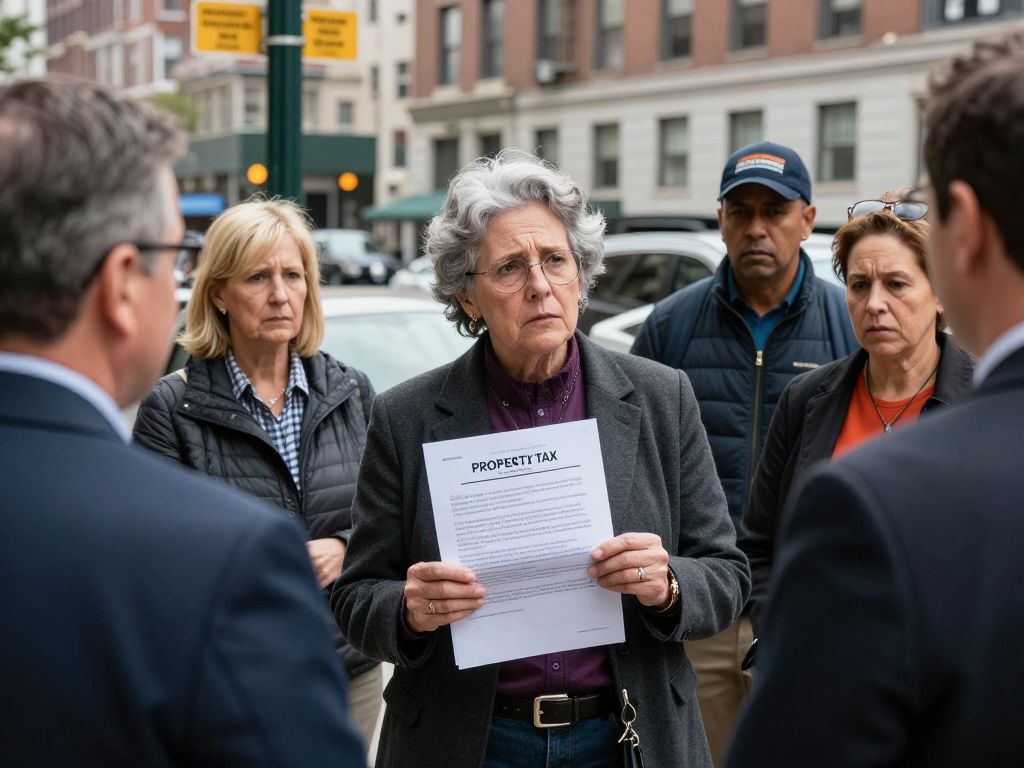
In a recent legislative session, the Massachusetts State Senate rejected Mayor Michelle Wu’s property tax plan and instead approved an alternative measure. This new plan empowers cities to offer tax credits to vulnerable residents facing significant property tax increases. The move comes amid rising concerns over the growing tax burdens on Boston homeowners driven by economic trends, marking a crucial step towards providing localized tax relief across Massachusetts.
Boston
Massachusetts State Senate Advances Alternative Property Tax Relief Amidst Resident Concerns
In a pivotal legislative session earlier this week, the Massachusetts State Senate voted down Mayor Michelle Wu’s proposed property tax plan, instead advancing an alternative measure designed to empower cities with the ability to offer credits to vulnerable residents. This decision emerges from a period of increasing property tax burdens on Boston homeowners, largely attributed to shifts in national economic trends.
The alternative measure passed by the State Senate will allow cities and towns throughout Massachusetts to implement a system of credits for those residents facing substantial increases in their property tax bills. This approach seeks to provide localized relief, acknowledging the varied financial landscapes across the Commonwealth. Mayor Wu’s original proposal, which aimed to mitigate the impact of rising taxes specifically for Boston’s homeowners, has faced legislative hurdles multiple times since June 2024, consistently failing to pass in the state Senate.
Context of Property Tax Challenges
The ongoing discourse surrounding property tax relief highlights a persistent challenge for many residents whose financial planning is increasingly strained by rising housing costs. Mayor Wu has actively campaigned for residential tax relief, emphasizing the need to protect homeowners from painful increases. She refiled residential tax relief legislation in January 2025, a home rule petition intended to provide multiyear tax relief. This legislative effort garnered support from the Boston City Council, which also passed the home rule petition in February of the same year.
The urgency for such measures stems from the observable reality that property tax bills in Boston have escalated due to broader national economic currents. For many, the home is not merely an asset but a foundation, and the stability of its ownership is tied to the predictability of these fundamental costs. The legislative body on Beacon Hill has been under scrutiny for its perceived inaction on these steep tax hikes affecting Boston residents.
Senate’s Path Forward and Proposed Amendments
Amidst this backdrop, the Senate signaled its intent to bypass Mayor Wu’s specific plan, opting for a broader, more flexible framework for municipal relief. During the legislative process, amendments were introduced to the alternative measure. Notably, one amendment proposed by Senator Liz Miranda sought to cap residential tax hikes at six percent, a direct effort to limit the financial pressure on homeowners.
The legislative actions taken this week represent a considered response to the intricate balance between municipal financial needs and the imperative to protect vulnerable residents from disproportionate burdens. The passed measure, by granting cities the autonomy to offer credits, underscores a belief in tailored local solutions to a widespread economic concern. It marks a significant development in the ongoing effort to navigate the complexities of property taxation, reflecting a quiet acknowledgment of the human scale behind the numbers.
Frequently Asked Questions
-
What was the outcome of Mayor Wu’s property tax plan in the Massachusetts State Senate?
The Massachusetts State Senate voted down Mayor Michelle Wu’s proposed property tax plan earlier this week.
-
What alternative measure did the State Senate pass?
The State Senate passed an alternative measure that would allow cities to offer credits to vulnerable residents when property tax bills significantly increase.
-
What was the purpose of Mayor Wu’s original proposal?
Mayor Wu’s original proposal aimed to ease painful property tax increases for homeowners in Boston.
-
Why have property tax bills increased in Boston?
Property tax bills in Boston have increased due to national economic trends.
-
Has Mayor Wu’s property tax plan been considered before?
Yes, Mayor Wu’s proposal has died multiple times in the state Senate since June 2024.
-
What type of legislative action did Mayor Wu take to address residential tax relief?
Mayor Michelle Wu refiled residential tax relief legislation, specifically a home rule petition, in January 2025. This home rule petition was also passed by the City Council in February.
-
Were there any specific amendments proposed for residential tax relief?
Yes, an amendment from Senator Liz Miranda was filed, which would cap residential tax hikes at 6 percent.
Key Features of Property Tax Relief Efforts
| Feature | Mayor Wu’s Proposal (Rejected) | State Senate’s Alternative (Passed) |
|---|---|---|
| Primary Goal | To ease painful property tax increases for homeowners in Boston. | To allow cities to offer credits to vulnerable residents when property tax bills significantly increase. |
| Scope of Application | Primarily focused on Boston residents. | Applicable to all cities and towns in Massachusetts. |
| Legislative History | Died multiple times in the State Senate since June 2024. Refiled residential tax relief legislation in January 2025 and passed by City Council in February. | Recently passed by the State Senate as an alternative measure. |
| Mechanism of Relief | Aims for multiyear tax relief to protect homeowners. | Provides a framework for cities to offer credits. |
| Driver for Relief Efforts | Property tax bills increased due to national economic trends. | Response to significant increases in property tax bills. |
| Specific Amendments Considered | Not explicitly detailed for Wu’s specific plan in recent context. | Included an amendment by Sen. Liz Miranda to cap residential tax hikes at 6 percent. |
Deeper Dive: News & Info About This Topic
HERE Resources
Massachusetts Senate Rejects Mayor Wu’s Property Tax Proposal
New York Firm Invests $63 Million in Stoughton Apartment Complex
Massachusetts Senate Poised for Votes on Tax Relief and Reforms
Rent Prices Decrease in Boston Area, Signaling Market Shift
Massachusetts Tax Cap Proposal Sparks Economic Debate
Boston City Council Approves Increased Property Tax Rates
Boston City Council Approves Increased Tax Rates
Lawsuit Claims Retaliatory Overtaxation in Boston
Fiscal Challenges Looming for Massachusetts Municipalities
Boston Faces $1.7 Billion Decline in Commercial Property Tax Revenue

Author: STAFF HERE BOSTON WRITER
The BOSTON STAFF WRITER represents the experienced team at HEREBoston.com, your go-to source for actionable local news and information in Boston, Suffolk County, and beyond. Specializing in "news you can use," we cover essential topics like product reviews for personal and business needs, local business directories, politics, real estate trends, neighborhood insights, and state news affecting the area—with deep expertise drawn from years of dedicated reporting and strong community input, including local press releases and business updates. We deliver top reporting on high-value events such as Boston Marathon, Head of the Charles Regatta, and Boston Harborfest. Our coverage extends to key organizations like the Greater Boston Chamber of Commerce and Associated Industries of Massachusetts, plus leading businesses in finance, biotech, and insurance that power the local economy such as Fidelity Investments, Biogen, and Liberty Mutual Insurance. As part of the broader HERE network, we provide comprehensive, credible insights into Massachusetts's dynamic landscape.