
Boston, January 25, 2026
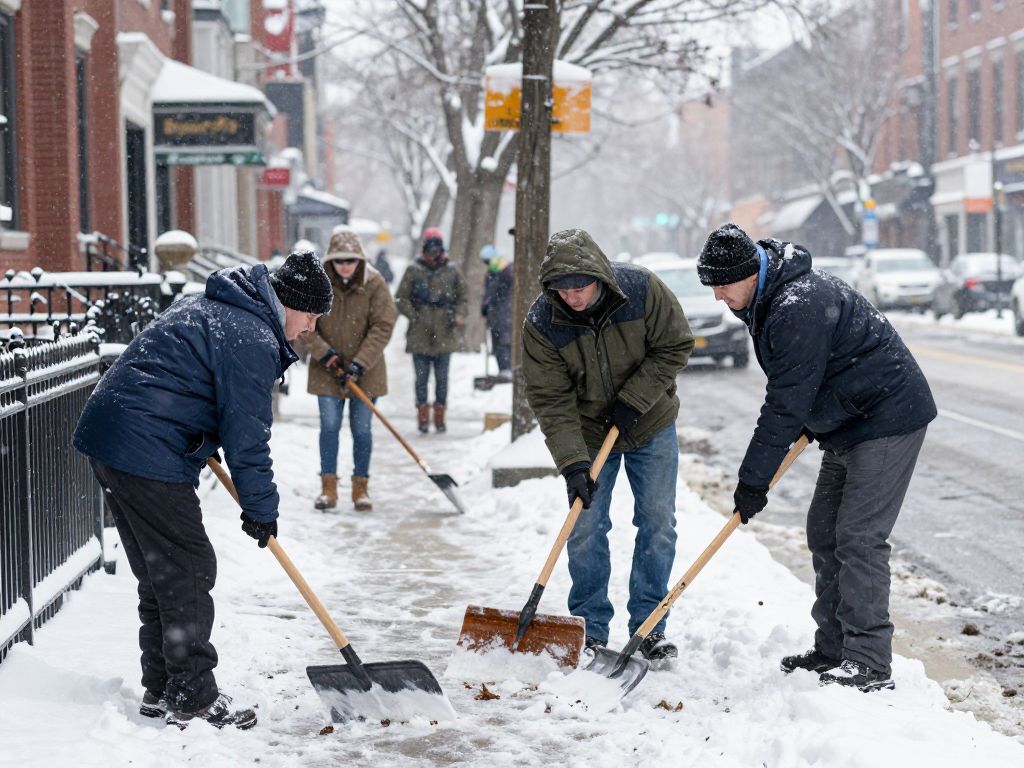
Boston faced one of its largest snowstorms in recent years, with residents and civic leaders uniting to prepare and respond effectively. Mayor Michelle Wu declared a snow emergency while community members made proactive preparations to ensure safety and minimize disruption. With snowfall predictions ranging from 16 to 22 inches, the city’s collaborative spirit shone through, highlighting the importance of individual responsibility in overcoming natural challenges and fostering a connected community.
Boston
Boston’s Snow Challenge: How Community Responds
As a significant winter storm blanketed Boston and much of Massachusetts this weekend, residents and civic leaders alike demonstrated proactive planning and collaborative spirit. This event, anticipated to be the largest snowfall in the region in nearly four years, underscored the importance of individual preparedness and effective local governance in navigating nature’s challenges.
The foresight and prompt action by city officials and community members played a pivotal role in mitigating the storm’s potential disruptions. Rather than succumbing to the unpredictability of winter weather, Bostonians, alongside public services, engaged in a coordinated effort that highlighted the resilience inherent in our neighborhoods. This collective initiative, from early preparations to ongoing recovery, exemplifies how a community can thrive even amidst formidable conditions, fostering a stronger, more connected Boston.
Anticipating the Accumulation: Meteorologists Weigh In
Meteorologists provided consistent forecasts leading up to the storm, indicating a long-duration event for Southern New England. Snow began in Boston around noon on Sunday, January 25, 2026, with intensity increasing throughout the afternoon. The highest rates of snowfall were observed from 2 p.m. on Sunday, January 25, through 3 a.m. on Monday, January 26, with snow continuing into Monday before gradually tapering off. This prolonged period of accumulation, potentially exceeding 24 hours, marked it as the region’s most significant snowstorm in nearly four years.
Forecasts predicted widespread snowfall of 12-20 inches across most of Massachusetts. Specifically, Boston was anticipated to receive between 16 and 22 inches of snow. Certain coastal areas of Massachusetts were even expected to see accumulations of up to 24 inches. Conversely, parts of Cape Cod and the Islands experienced a mix of sleet, resulting in slightly lower expected totals, ranging from 7 to 15 inches. The snow was generally characterized as light and powdery, which can make shoveling less arduous, though areas closer to the coast encountered wetter conditions.
Proactive Measures: Boston’s Civic Response
The City of Boston demonstrated decisive leadership in advance of the storm. Mayor Michelle Wu declared a snow emergency and parking ban, effective Sunday, January 25, at 8 a.m. This critical measure aimed to keep major roadways clear for emergency services and snow removal operations. Vehicles remaining on main arteries after the ban took effect were subject to towing, a policy designed to ensure the efficiency of civic operations.
Further illustrating a commitment to public safety and continuity, Boston City Hall and other municipal buildings were closed on Sunday, January 25, and Monday, January 26. All Boston Public Schools and central offices, along with extracurricular activities, sports, and programs, were also canceled for Monday, January 26. At a State-level, Governor Maura Healey directed non-emergency Executive Department state employees not to report to their workplaces on Monday, January 26, and encouraged employers across Massachusetts to consider remote work options. These actions collectively aimed to reduce traffic, minimize risks, and allow public works to operate unimpeded.
Community Engagement and Personal Responsibility
Beyond official declarations, the spirit of individual initiative and community engagement shone brightly. Residents were strongly urged to plan ahead and limit non-essential travel. The City encouraged utilization of resources like AlertBoston for emergency notifications and the 311 service for non-emergency inquiries, streamlining communication during the challenging period.
Many Bostonians took personal responsibility, preparing their homes and assisting neighbors. Recommendations included assembling emergency kits with essentials like bottled water, non-perishable food, batteries, and medications. Charging electronic devices in anticipation of potential power outages was also advised. Proactive steps such as clearing gutters, ensuring smoke and carbon monoxide detectors were functional, and pre-treating walkways with snow melt highlighted the foresight residents displayed. MassDOT crews were also prepared for round-the-clock operations, including pretreating roadways to enhance safety. The Boston Housing Authority (BHA) also ensured their emergency crews and site staff were on hand to clear snow and respond to urgent resident needs, such as issues with heating or electricity, even as their offices were closed.
Navigating Impacts and Ensuring Safety
The storm presented considerable challenges, particularly concerning travel. Hazardous conditions, described by officials as “very difficult to impossible,” affected roadways across Massachusetts and Rhode Island. Bridges and overpasses were especially prone to becoming slick and dangerous. Strong winds, with gusts reaching 35-45 mph, also posed risks of power outages and created periods of near whiteout conditions, though the storm was not ultimately classified as a full blizzard.
Adding to the complexity, the storm was preceded by a significant cold snap. An Extreme Cold Warning was in effect for parts of Western Massachusetts, with wind chills plummeting to -25 degrees Fahrenheit. Boston itself experienced single-digit temperatures, and a cold emergency was in effect from Friday, January 23, to Sunday, January 25, emphasizing the dual challenge of snow and extreme cold.
Conclusion: A Resilient City Stands Tall
The recent winter storm served as a powerful reminder of Boston’s collective strength and the tangible benefits of both individual diligence and effective civic leadership. From the meticulous preparations of city departments like MassDOT and the BHA to the neighbor-helping-neighbor ethos seen across our communities, Boston proved once again its capacity to manage significant weather events. The clear communication, timely declarations, and the widespread embrace of personal responsibility allowed our city to navigate this snow challenge with notable efficiency.
As the city transitions from snowfall to cleanup and recovery, we encourage all residents to continue supporting local businesses and community initiatives. Stay informed through official channels and remain engaged in fostering a resilient and connected Boston, ready for whatever comes next.
Frequently Asked Questions
- When did the snowstorm begin in Boston?
- Snow began in Boston around noon on Sunday, January 25, 2026, and intensified in the afternoon.
- What were the expected snowfall totals for Boston?
- Boston was anticipated to receive between 16 and 22 inches of snow. Widespread snowfall of 12-20 inches was predicted across most of Massachusetts, with some coastal areas potentially seeing up to 24 inches.
- Was travel impacted during the snowstorm?
- Yes, hazardous conditions, described as very difficult to impossible, affected roadways across Massachusetts and Rhode Island.
- Were schools and city offices closed in Boston?
- Yes, Boston City Hall and other municipal buildings were closed on Sunday, January 25, and Monday, January 26, 2026. All Boston Public Schools and central offices were also closed Monday, January 26, 2026.
- What was the wind chill during the storm?
- An Extreme Cold Warning was in effect for parts of Western Massachusetts, with wind chills plummeting to -25 degrees Fahrenheit.
Key Features of the Recent Boston Snowstorm
| Feature | Detail | Scope |
|---|---|---|
| Start Time | Sunday, January 25, 2026, around noon in Boston | Local (Boston) |
| Peak Intensity | Sunday, January 25 (2 p.m.) to Monday, January 26 (3 a.m.) | Local (Boston) |
| Snowfall (Boston) | 16-22 inches forecast | Local (Boston) |
| Snowfall (Massachusetts) | 12-20 inches widespread, up to 24 inches in some coastal areas | State-level |
| Travel Impact | Very difficult to impossible conditions | State-level (Massachusetts and Rhode Island) |
| School Closures | Boston Public Schools closed Monday, January 26, 2026 | Local (Boston) |
| City Office Closures | Boston City Hall and municipal buildings closed Sunday, Jan 25, and Monday, Jan 26, 2026 | Local (Boston) |
| State Employee Directive | Non-emergency Executive Department state employees not to report Monday, January 26 | State-level |
| Wind Gusts | 35-45 mph, risk of power outages and near whiteout conditions | Regional (Southern New England) |
| Pre-Storm Cold | Extreme Cold Warning with wind chills down to -25°F in parts of Western Massachusetts | State-level |
Deeper Dive: News & Info About This Topic
HERE Resources
Boston Braces for Blizzard: Community Preparedness Key
Winter Storm Blankets Massachusetts with Snow
Police Commissioner Addresses Influences in Read Murder Retrial
Severe Storms Cause Tornado in Worcester Area
Canton Sells Site for 49 Condominium Residences
Beloved Boston Journalist Byron Barnett Passes Away
Boston Experiences End of Heat Wave with Significant Cool Down
Mixed Verdict in Karen Read’s Trial: Acquitted of Murder but Convicted of OUI
Boston Hosts a Diverse Range of Music and Arts Events
Snowstorm to Impact Massachusetts with School Closures

Author: STAFF HERE BOSTON WRITER
The BOSTON STAFF WRITER represents the experienced team at HEREBoston.com, your go-to source for actionable local news and information in Boston, Suffolk County, and beyond. Specializing in "news you can use," we cover essential topics like product reviews for personal and business needs, local business directories, politics, real estate trends, neighborhood insights, and state news affecting the area—with deep expertise drawn from years of dedicated reporting and strong community input, including local press releases and business updates. We deliver top reporting on high-value events such as Boston Marathon, Head of the Charles Regatta, and Boston Harborfest. Our coverage extends to key organizations like the Greater Boston Chamber of Commerce and Associated Industries of Massachusetts, plus leading businesses in finance, biotech, and insurance that power the local economy such as Fidelity Investments, Biogen, and Liberty Mutual Insurance. As part of the broader HERE network, we provide comprehensive, credible insights into Massachusetts's dynamic landscape.