

Boston, January 26, 2026
News Summary
A major winter storm has led to widespread closures of Boston universities as institutions prioritize the safety of students and staff. With heavy snow and freezing temperatures expected through the region, schools such as Boston College, Tufts University, and Northeastern University have suspended operations. The National Weather Service has warned of dangerous travel conditions, prompting swift actions from these educational institutions to mitigate risks and maintain community well-being during this extreme weather event.
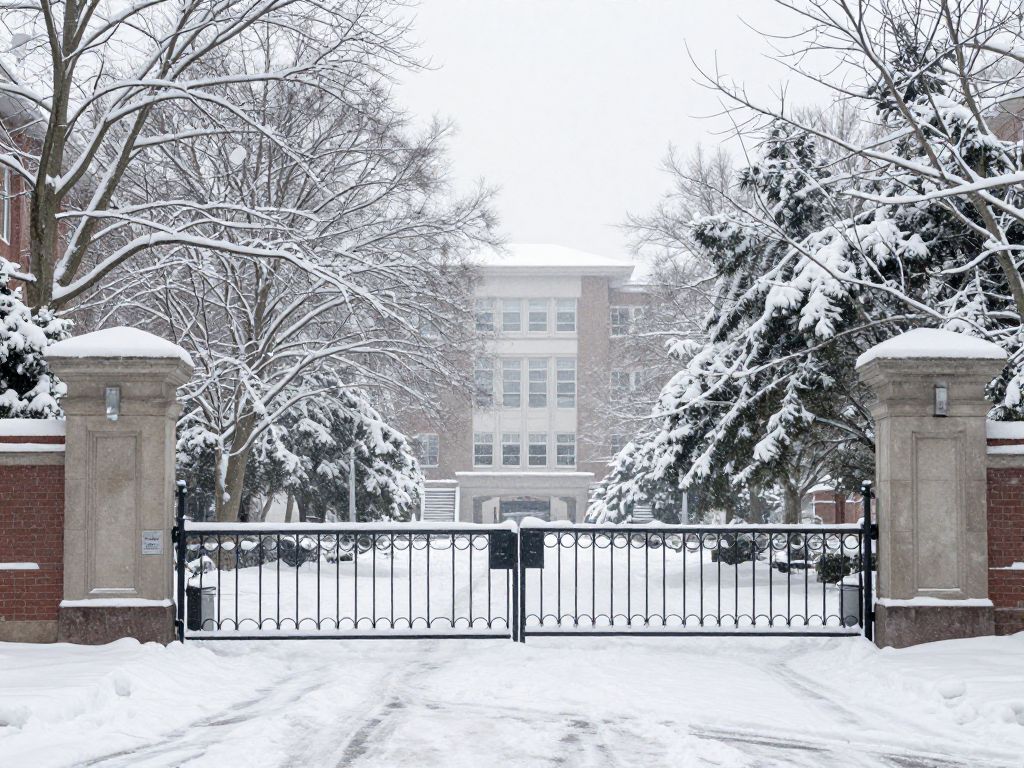
Boston, MA — As a significant winter storm brought heavy snow, freezing temperatures, and challenging travel conditions to the region, numerous higher education institutions in and around Boston proactively announced closures for Monday, January 26. These decisions underscored a commitment to the safety and well-being of students, faculty, and staff, demonstrating responsible leadership in navigating adverse weather. The widespread closures across Boston universities highlight the importance of preparedness and institutional discipline in maintaining a safe campus environment amidst severe weather events.
The National Weather Service had predicted a substantial winter storm for January 25 and 26, 2026, forecasting heavy snowfall and dangerously cold wind chills across much of Massachusetts. Accumulations were expected to exceed 12 inches for many areas, with some communities potentially receiving up to two feet of snow, making travel “very difficult to impossible”. In response, institutions took decisive action to prioritize safety and mitigate risks associated with the severe conditions. This approach reflects a steadfast dedication to personal responsibility within the academic community, ensuring that all members are protected from the elements and hazardous travel.
Widespread Campus Closures Across Boston
Several prominent Massachusetts higher education institutions enacted closures or significant operational changes for Monday, January 26. Boston College announced the closure of its campus and the cancellation of classes for the day, a decision made on January 25 and updated on January 26. This marked the first time in nearly eight years that Boston College had canceled classes due to extreme weather, showcasing the severity of the storm. Similarly, Boston University’s Charles River, Fenway, and Medical Campuses were closed starting at noon on Sunday, January 25, and remained closed through Monday, January 26. The university indicated that both in-person and virtual classes were canceled, and non-essential employees were not expected to work.
Tufts University also announced the closure of all its campuses from Sunday at 12 p.m. through Monday, with classes and other on-campus activities canceled. Essential operations, however, continued as usual, and instructors were advised to communicate with students regarding makeup sessions or virtual instruction. Northeastern University, another key institution in Boston MA college news, also implemented closures. The New England Conservatory (NEC) announced it would be closed for all activities, classes, concerts, and events through Monday, January 26, due to current weather conditions. Suffolk University similarly declared a closure beginning Sunday, January 25, at 3 p.m. and extending through Monday evening. The Harvard Museum of Natural History also confirmed its closure for Monday, January 26, due to inclement weather. Additionally, UMass Boston closed its campus for Monday, January 26, with remote and virtual classes also cancelled, marking what was supposed to be the first day of classes for the Spring semester.
Institutional Policies and Operational Continuity
The decisions by these institutions reflect established protocols for managing severe weather. Many universities have detailed inclement weather policies to guide their response, focusing on the safety of their communities while attempting to maintain operational consistency. For example, essential employees at Boston University were expected to report as scheduled, with services such as University Police, Residence Life, and Dining Services continuing operation. Dining halls at Boston University and Tufts University, for instance, planned to remain open to serve residential students.
UMass Boston’s policy specifies that during a campus closure, both remote and virtual classes are canceled, similar to face-to-face instruction, and only essential staff report to work. This disciplined approach ensures that critical services are maintained even as broader operations pause. Northeastern University’s procedures include communicating closures via their NU Alert system, university website, and broadcast messages, with access to campus typically limited to emergency and snow removal personnel during closures.
Broader Community and Economic Impact
The winter storm’s impact extended beyond university campuses, affecting the wider Boston metropolitan area and across the state. Massachusetts Governor Maura Healey urged state residents to stay off the roads over the weekend due to frigid temperatures and snowfall. Boston Public Schools and other city buildings, including libraries and community centers, also announced closures for Monday. The city of Boston had prepared with 850 pieces of snow-clearing equipment and 40,000 tons of salt to pretreat roads, emphasizing the logistical challenges posed by such a significant weather event. The Veterans Affairs (VA) Boston Health Care also anticipated over 12 inches of snow at its campuses for January 25 and 26, highlighting the storm’s reach across various public service sectors.
The comprehensive response from educational institutions, coupled with city-wide and state-level directives, demonstrates a coordinated effort to safeguard public health and safety. These measures, while temporarily disrupting daily routines, underscore the commitment to community well-being and the responsible management of public resources during emergencies. The emphasis on individual and collective responsibility ensures that the city navigates challenging weather with minimal risk.
National Context of Winter Weather Events
This regional weather event in Massachusetts occurred within a broader national context of severe winter weather. The National Weather Service had issued a winter storm warning for states spanning from Texas to Maine, with forecasts indicating widespread, heavy ice accumulation in the southeast and dangerously cold wind chills in the Great Plains. Over half of the U.S. population was expected to be affected by snow, ice, or bitter cold, with more than 177 million people under watches or warnings for ice and snow. This extensive reach demonstrates the scale and complexity of managing such weather phenomena, necessitating robust emergency planning across various regions, including University of Massachusetts and other institutions nationwide. For instance, Drexel University in Philadelphia also suspended operations and closed its campus for Monday, January 26, due to inclement weather and a city-declared snow emergency, illustrating a shared experience of winter weather challenges across the country.
Table of Boston University Closures (January 26, 2026)
| Institution | Closure Status for January 26, 2026 | Reason for Closure |
|---|---|---|
| Boston College | Closed, classes canceled | Winter storm with over a foot of snow |
| Boston University | All campuses closed (Charles River, Fenway, Medical) | Significant snowstorm (12-18 inches), frigid temperatures |
| Tufts University | All campuses closed | Winter storm (12-22 inches forecast) |
| Northeastern University | Closed | Winter storm |
| New England Conservatory (NEC) | Closed for all activities, classes, concerts, and events | Current weather conditions |
| Suffolk University | Closed (beginning Sunday, Jan. 25 at 3 p.m. through Monday evening) | Impending winter weather |
| Harvard Museum of Natural History | Closed | Inclement weather |
| University of Massachusetts Boston | Closed, remote and virtual classes canceled | Massive winter storm (up to 21 inches forecast) |
| Drexel University (Nationwide) | Operations suspended and campus closed | Inclement weather and City of Philadelphia snow emergency |
Looking Ahead: Resilience and Preparedness in Higher Education
The response to the January 2026 winter storm by Boston universities underscores the critical role of proactive planning and effective communication in ensuring public safety and academic continuity. While disruptive, these closures demonstrate a responsible approach to severe weather, prioritizing the well-being of the academic community and supporting broader civic efforts to manage the storm’s impact. The consistent and clear messaging from institutions allowed students and staff to adjust plans accordingly, exemplifying the value of discipline and preparation in crisis management.
As Boston and the wider New England region continue to experience dynamic weather patterns, the lessons learned from such events reinforce the importance of robust emergency preparedness plans. These plans not only safeguard individuals but also contribute to the resilience of Massachusetts higher education institutions, allowing them to adapt and recover efficiently. Readers are encouraged to stay informed about university announcements, explore institutional preparedness resources, and remain engaged with their local campus communities as they continue to navigate the challenges and triumphs of academic life in Boston.
Frequently Asked Questions
- Which universities in Boston announced closures for Monday, January 26, 2026?
- Boston College, Boston University, Tufts University, Northeastern University, New England Conservatory, Suffolk University, and the University of Massachusetts Boston all announced closures for Monday, January 26, 2026, due to a winter storm.
- What was the primary reason for these university closures?
- The primary reason for these closures was a significant winter storm predicted by the National Weather Service, bringing heavy snow, wind, freezing temperatures, and dangerous travel conditions to the Boston area.
- Did remote or virtual classes continue during the closures?
- At Boston University and the University of Massachusetts Boston, both in-person and virtual classes were canceled due to the closures.
- Were essential university services maintained during the closures?
- Yes, essential services such as University Police, Residence Life, and Dining Services continued operations at institutions like Boston University and Tufts University, with essential employees expected to report as scheduled.
- How much snow was expected in Massachusetts during the storm?
- The National Weather Service forecasted total accumulations of over 12 inches for much of Massachusetts, with some communities potentially receiving up to two feet of snow.
- Was the winter storm only affecting Boston?
- No, the National Weather Service issued a winter storm warning for states spanning from Texas to Maine, indicating a broad national impact.
Deeper Dive: News & Info About This Topic
HERE Resources
Boston’s Higher Education Institutions Adapt to Financial Challenges
Wellesley College Closes Amid Severe Winter Storm
Tufts University Campuses Close Amid Winter Storm Warning
Boston University Closes Campuses Ahead of Major Snowstorm
Northeastern University Expands Marino Recreation Center
Boston University Crime Logs Highlight Campus Theft Issues
Greater Boston Sees Progress in Narrowing Gender Wage Gap
Boston Researchers Report Significant Gender Wage Gap Reduction
Boston Gender Wage Gap Narrows, Research Shows Progress
Boston’s Campus Landscape Evolves: Dugout Café Closure

Author: STAFF HERE BOSTON WRITER
The BOSTON STAFF WRITER represents the experienced team at HEREBoston.com, your go-to source for actionable local news and information in Boston, Suffolk County, and beyond. Specializing in "news you can use," we cover essential topics like product reviews for personal and business needs, local business directories, politics, real estate trends, neighborhood insights, and state news affecting the area—with deep expertise drawn from years of dedicated reporting and strong community input, including local press releases and business updates. We deliver top reporting on high-value events such as Boston Marathon, Head of the Charles Regatta, and Boston Harborfest. Our coverage extends to key organizations like the Greater Boston Chamber of Commerce and Associated Industries of Massachusetts, plus leading businesses in finance, biotech, and insurance that power the local economy such as Fidelity Investments, Biogen, and Liberty Mutual Insurance. As part of the broader HERE network, we provide comprehensive, credible insights into Massachusetts's dynamic landscape.