

Greater Boston, January 27, 2026
News Summary
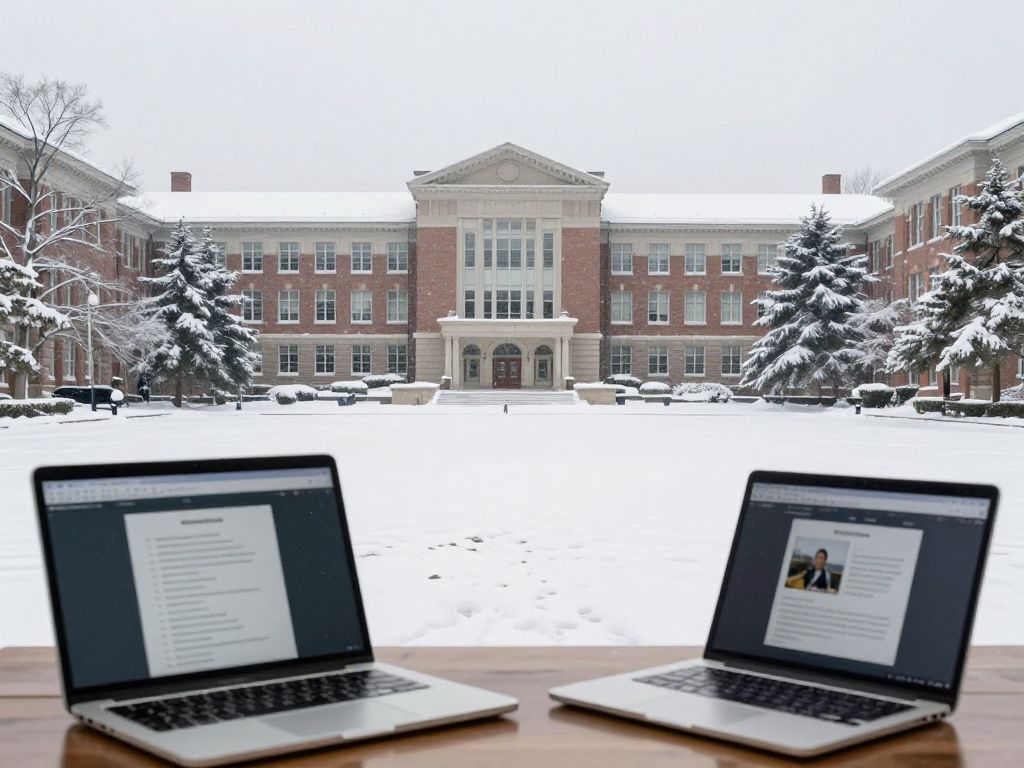
As a severe winter storm impacted the Greater Boston area, local universities implemented various operational adjustments to ensure safety and maintain academic continuity. Harvard Law School shifted to remote operations, while Worcester State University closed entirely for the day. This adaptability highlights the commitment of Boston’s higher education institutions to prioritize community well-being in the face of environmental challenges, while effectively leveraging technology for academic continuity.
Boston, MA — As a significant winter storm swept through the Greater Boston area on Monday, January 26th, local universities and colleges demonstrated a blend of strategic planning and adaptive leadership in their operational responses. The inclement weather prompted various institutions to adjust schedules and modes of operation, prioritizing the safety of their students, faculty, and staff while striving to maintain academic continuity. These decisions underscored the commitment of Massachusetts higher education to institutional discipline and the well-being of its community, even in the face of environmental challenges.
The storm, which brought substantial snowfall and severe wind chills to the region, tested the resilience of campus operations. University administrations were tasked with making swift, informed decisions that balanced the imperative of safety with the mission of education. The varied approaches taken by different institutions highlighted the autonomy and tailored strategies essential to navigating such events, reflecting a responsible stewardship of resources and a deep understanding of each campus’s unique needs.
Proactive Measures Ensure Safety and Academic Continuity
In response to the developing winter storm, institutions like Harvard Law School implemented proactive measures to safeguard their community. On Monday, January 26th, Harvard Law School shifted to remote operations, a decision made in close conjunction with university officials who were diligently monitoring the storm’s progression across the Greater Boston area. This strategic pivot allowed for the continuation of essential academic activities and administrative functions without requiring on-campus presence, thereby mitigating travel risks for thousands of individuals. The move exemplified a disciplined approach to emergency management, ensuring that safety remained paramount while upholding academic commitments through flexible solutions.
Diverse Responses Across the Boston Higher Education Landscape
The operational adjustments on January 26th were not uniform across the region, reflecting the diverse nature and specific considerations of Boston’s extensive higher education ecosystem. While some institutions opted for remote functionality, others made different choices. Notably, Worcester State University announced a full closure for Monday, January 26, 2026, canceling all day and evening classes and events. This comprehensive closure demonstrated a clear prioritization of safety in conditions deemed too hazardous for any on-campus activities. In contrast, reports indicated that some other colleges within the Greater Boston area chose to continue key operations on Monday, requiring meticulous planning and coordination to ensure safe access and essential service provision. These varying responses underscore the importance of institutional autonomy in assessing risk and implementing appropriate solutions tailored to their specific campus environments and operational capacities.
Wider Regional Impact and Community Preparedness
The winter storm’s impact extended beyond university campuses, affecting a broad spectrum of public services and community facilities across the region. The Brockton VA Medical Center, part of VA Boston Health Care, anticipated significant snowfall, with forecasts predicting over 12 inches of snow coupled with severe wind chill temperatures ranging from -10 to -15 degrees on January 25th and 26th, 2026. Such projections necessitated comprehensive preparedness plans to ensure continued care for veterans while managing hazardous conditions on its campuses and clinics. Similarly, the New England Aquarium in Boston also announced a closure on Monday, January 26th, due to the inclement weather. These widespread closures and operational changes across the Greater Boston area underscored the storm’s significant reach and the collective effort required by various organizations to prioritize public safety and operational discipline during severe weather events. The collaboration and communication among these entities are vital for the overall well-being and functionality of the Massachusetts community.
Maintaining Academic Continuity Through Technological Resilience
The ability of many institutions to transition to remote operations highlights the significant advancements in educational technology and institutional planning that now support academic continuity. For universities implementing remote learning and work, technology served as an essential tool, enabling professors to conduct classes, students to attend lectures, and staff to perform their duties from off-campus locations. This reliance on digital platforms showcases a commitment to academic freedom and innovation, ensuring that educational pursuits are not unduly interrupted by external factors like severe weather. It also fosters a sense of personal responsibility among students and faculty, who are empowered to adapt to new learning environments and maintain their academic progress. The seamless shift demonstrates a leadership mindset focused on proactive problem-solving and leveraging modern resources to uphold the educational mission, even when physical access to campus is restricted.
A Nationwide Perspective on Weather-Related Adjustments
The decisions made by Boston-area institutions on January 26th were part of a broader trend observed across the nation where colleges and universities adapt to winter weather challenges. On the same day, institutions far beyond Massachusetts also made similar adjustments. For instance, West Virginia University announced remote work for its Morgantown Campus on Monday, January 26th, in response to a continuing winter storm affecting that region. Similarly, New Jersey City University declared remote operations for Monday, January 26th, anticipating a major winter storm impact. This national pattern illustrates a shared commitment to student and staff safety, demonstrating that well-established protocols for severe weather are a cornerstone of responsible university administration. It underscores that the disciplined approach taken by Boston’s higher education sector aligns with best practices adopted by leading institutions across the country.
The proactive and adaptive measures taken by Boston’s universities and colleges in response to the January 26th winter storm underscore their dedication to academic excellence, student well-being, and operational resilience. From Harvard Law School’s shift to remote learning to Worcester State University’s full closure, each decision reflected careful consideration of safety alongside the commitment to educational continuity. These actions exemplify the leadership inherent in Massachusetts higher education, demonstrating how institutions can navigate challenges while upholding their core missions.
Readers are encouraged to stay informed about university programs, campus events, and ongoing developments within Boston’s vibrant college community. For more updates on how local institutions contribute to the intellectual and economic landscape of the Greater Boston area, continue to explore HEREboston.com.
Key Operational Adjustments During January 26, 2026 Winter Storm
| Institution | Operational Status (January 26, 2026) | Rationale / Impact |
|---|---|---|
| Harvard Law School | Remote operations | Prioritized safety amidst Greater Boston area snowstorm, continued academic functions. |
| Worcester State University | Closed; all classes and events canceled | Inclement weather; comprehensive safety measure. |
| Brockton VA Medical Center (VA Boston Health Care) | Anticipated 12+ inches of snow, -10 to -15°F wind chills | Required comprehensive preparedness for continued patient care. |
| New England Aquarium | Closed | Inclement weather affecting public access. |
| Other Greater Boston Area Colleges | Varied (some continued key operations) | Diverse institutional assessments of safety and operational needs. |
| West Virginia University (Nationwide) | Remote work for Morgantown Campus | Continuing winter storm in the region. |
| New Jersey City University (Nationwide) | Remote operations | Major winter storm expected to impact the region. |
FAQ: Boston Universities and the January 26, 2026 Winter Storm
Q: Which Boston-area university implemented remote operations on January 26, 2026, due to the snowstorm?
A: Harvard Law School implemented remote operations on Monday, January 26th, due to the snowstorm affecting the Greater Boston area.
Q: Did all Greater Boston area colleges move to remote operations on January 26th?
A: No, while some schools moved instruction and staff remote, other Greater Boston area colleges chose to continue key operations on Monday.
Q: Was Worcester State University open on January 26, 2026?
A: No, Worcester State University was closed Monday, January 26, 2026, due to inclement weather, and all day/evening classes and events were canceled.
Q: What weather conditions were anticipated at the Brockton VA Medical Center on January 25th and 26th, 2026?
A: The Brockton VA Medical Center anticipated 12+ inches of snow and wind chill temperatures from -10 to -15 degrees Fahrenheit on January 25 & 26, 2026.
Q: Were universities outside of Massachusetts also affected by winter storms on January 26th?
A: Yes, for example, West Virginia University implemented remote work for the Morgantown Campus, and New Jersey City University announced remote operations due to major winter storms on Monday, January 26th.
Deeper Dive: News & Info About This Topic
HERE Resources
Boston Colleges Navigate Winter Storm Impact, Resume Operations
Boston’s Enduring Hockey Tradition: A Look at the Beanpot Tournament
Boston Emerges as a Leading AI Innovation Hub
Boston Universities React to Severe Winter Weather
Emerson College Responds to Winter Storm Closure
Boston Universities and Schools Respond to Winter Storm
MIT Harnesses AI and Synthetic Biology to Tackle Antimicrobial Resistance
Boston College Launches Innovative Research Database
Boston Universities Close Due to Severe Winter Storm
Babson College Student’s Mistaken Deportation Raises Concerns

Author: STAFF HERE BOSTON WRITER
The BOSTON STAFF WRITER represents the experienced team at HEREBoston.com, your go-to source for actionable local news and information in Boston, Suffolk County, and beyond. Specializing in "news you can use," we cover essential topics like product reviews for personal and business needs, local business directories, politics, real estate trends, neighborhood insights, and state news affecting the area—with deep expertise drawn from years of dedicated reporting and strong community input, including local press releases and business updates. We deliver top reporting on high-value events such as Boston Marathon, Head of the Charles Regatta, and Boston Harborfest. Our coverage extends to key organizations like the Greater Boston Chamber of Commerce and Associated Industries of Massachusetts, plus leading businesses in finance, biotech, and insurance that power the local economy such as Fidelity Investments, Biogen, and Liberty Mutual Insurance. As part of the broader HERE network, we provide comprehensive, credible insights into Massachusetts's dynamic landscape.