

Boston, January 28, 2026
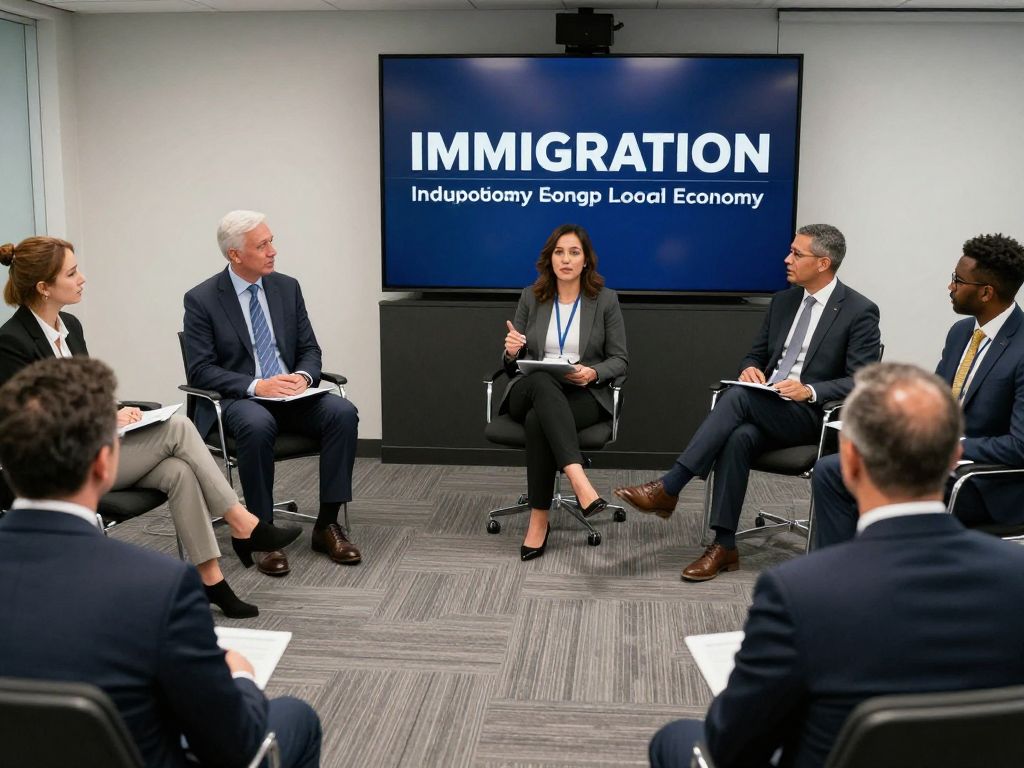
Boston’s recent forum, hosted by the MIRA Coalition, brought together business leaders to discuss the economic impact of immigration and increasing federal enforcement actions. Highlighting contributions of immigrants to local businesses and the economy, the event emphasized a need for policy solutions supporting community advancement and prosperity. With immigrant labor credited for much of Massachusetts’ workforce growth, the forum underscored the importance of collaboration between local leaders and the private sector in fostering a productive environment.
Boston
Boosting Local Prosperity: Boston Businesses Convene on Immigration’s Economic Impact
Boston, a city celebrated for its innovative spirit and vibrant communities, continues to demonstrate how local initiative and collaborative effort can effectively address complex societal and economic issues. In a recent significant gathering, the MIRA Coalition brought together Boston business leaders for a vital forum, focusing on the substantial economic contributions of immigration and the implications of increased federal immigration enforcement actions. This event underscores a proactive approach from the private sector and local organizations to navigate challenges and foster an environment conducive to continued growth and individual achievement.
Such forums exemplify how community-driven dialogues, often outside the realm of extensive bureaucracy, can lead to a deeper understanding of economic realities and stimulate actionable solutions. By highlighting themes of personal initiative and the essential role of a dynamic workforce, these discussions pave the way for policies that support both individual prosperity and collective community advancement in the Greater Boston area.
The Economic Bedrock: Immigrants in Boston’s Economy
Immigrants are an integral part of Boston’s economic landscape, contributing significantly to its vitality and growth. Massachusetts boasts the sixth-highest foreign-born population in the U.S., with immigrant labor credited for 80% of the Commonwealth’s labor force growth. Immigration from abroad has consistently supported Massachusetts’ population growth for decades.
Within Boston, immigrant communities inject over $4 billion annually from after-tax earnings into the local economy. These expenditures alone generate a regional product of $4 billion and support more than 25,800 local jobs. Furthermore, Boston is home to 8,800 immigrant-owned small businesses, which collectively generate almost $3.7 billion in annual sales and employ 18,500 people. These businesses contribute an additional regional product of about $3.6 billion. Immigrants make up 27% of Boston’s workforce for employees aged 25 to 64. In 18 specific industries across the city, foreign-born individuals account for 20% or more of the workforce. Immigrant workers are critical to various sectors, including professional, scientific, and technical industries, as well as hotels, home health services, and hospitals.
A Unified Front: The MIRA Coalition Forum
On January 22, the MIRA Coalition, a prominent immigrant rights advocacy group based in Boston, convened business leaders from across the Greater Boston area. The forum’s primary objective was to delve into the economic impact of immigration and the effects of increased actions by Immigration and Customs Enforcement (ICE). Described as a “timely conversation,” the event featured insights from civic leaders, economic data experts, and businesspeople. The forum sought to offer clearer guidance, stronger coordination, and solutions directly informed by employer experiences to counter and adapt to rising ICE enforcement nationwide.
A key component of the forum was a comprehensive data presentation on the economic impact of immigration in Massachusetts, delivered by Dr. Mark Melnik from the UMass Donahue Institute.
Navigating Challenges: Business Leaders Speak
The forum provided a platform for business leaders to express their perspectives on the practical challenges posed by current immigration enforcement. Massachusetts Economic Development Secretary Eric Paley shared observations about the fear among workers in communities like Chelsea, where ICE has been active. This highlights the disruption that uncertainty can create for local workforces and daily life.
Pedro Arce, Senior Vice President at M&T Bank, emphasized the complex interplay between artificial intelligence, immigration policy, and the labor market, advocating for long-term structural solutions. He noted that the leadership of his company is significantly composed of immigrants, illustrating their foundational role in the U.S. economy. Lisa Gurgone, CEO of Mystic Valley Elder Care Services, underscored the potential economic repercussions if immigrant labor were to diminish in the senior care sector, indicating a potential ripple effect throughout the broader economy. These testimonies collectively reinforced the view that effective immigration policies are not merely social concerns but crucial for sound business operations and sustained economic prosperity.
Statewide Economic Contributions and Entrepreneurship
Beyond Boston, the economic contributions of foreign-born individuals are substantial across the entire Commonwealth of Massachusetts. Immigrants contribute approximately $116 billion to the state’s total economic output, representing 20% of the total. In terms of fiscal contributions, Massachusetts’ foreign-born population pays around $23 billion in income taxes, $4 billion in sales taxes, and $4 million in property taxes. These individuals also support an estimated 387,000 jobs across the state. A recent study further indicates that immigrants without legal status contributed nearly $650 million in state and local taxes in Massachusetts in 2022.
Entrepreneurial spirit thrives among immigrants in Massachusetts, with 91,400 immigrant entrepreneurs collectively generating $1.6 billion in business income. Immigrants are responsible for starting a quarter of all businesses in Massachusetts, despite comprising only 17% of the state’s workforce. This entrepreneurial drive fosters innovation and creates jobs, demonstrating a significant capacity for personal initiative and wealth creation.
Fostering Community Growth and Stability
To cultivate a stable and predictable environment for businesses and individuals, the MIRA Coalition introduced the “Massachusetts Businesses Pledge to Protect our Immigrant Communities” at the forum. This pledge aims to foster an environment where all workers can contribute to their fullest potential. Such local initiatives highlight how private partnerships and civic involvement can address community needs directly.
The MIRA Coalition’s broader mission involves convening, serving, and organizing alongside its members and community leaders for the advancement of all immigrants across the Commonwealth and beyond. Their work encompasses education, training, leadership development, and policy analysis, striving to create a state where everyone can thrive and fully participate in social, economic, and civic life.
Conclusion
The recent MIRA Coalition forum served as a timely reminder of the profound economic contributions immigrants make to Boston and the wider Massachusetts economy. From fueling labor force growth to launching new businesses and contributing billions in taxes and spending power, foreign-born residents are an indispensable part of our community’s prosperity. This gathering of Boston business leaders exemplifies the power of local engagement and personal initiative in seeking practical solutions to complex issues. By fostering an environment that encourages individual achievement and streamlines processes for community integration, Boston can continue to strengthen its economic foundations. We encourage all residents to remain engaged in local initiatives that support community development and reinforce the foundations of our shared future.
FAQ Section
- What was the primary focus of the MIRA Coalition forum?
- The MIRA Coalition forum convened Boston business leaders to discuss the economic impact of immigration and the implications of increased Immigration and Customs Enforcement (ICE) actions.
- When did the MIRA Coalition forum take place?
- The MIRA Coalition forum took place on January 22.
- What percentage of Massachusetts’ labor force growth is attributed to immigrant labor?
- 80% of Massachusetts’ labor force growth is credited to immigrant labor.
- How much do immigrant communities in Boston spend annually?
- Immigrant communities in Boston spend over $4 billion annually from after-tax earnings.
- How many immigrant-owned small businesses are there in Boston?
- There are 8,800 immigrant-owned small businesses in Boston.
- What is the total economic output contributed by foreign-born individuals in Massachusetts?
- Foreign-born individuals contribute approximately $116 billion to Massachusetts’ total output, which is 20% of the state’s total.
- How much did immigrants without status contribute in state and local taxes in Massachusetts in 2022?
- Immigrants without status contributed nearly $650 million in state and local taxes to Massachusetts in 2022.
- What pledge was introduced at the forum?
- The “Massachusetts Businesses Pledge to Protect our Immigrant Communities” was introduced at the forum, supporting an environment where all workers can contribute to their fullest potential.
Key Economic Contributions and Impacts
| Feature | Detail | Scope |
|---|---|---|
| Labor Force Growth Contribution | 80% of Massachusetts’ labor force growth credited to immigrant labor. | State-level |
| Annual Spending by Immigrant Communities | Over $4 billion from after-tax earnings in Boston. | City-level (Boston) |
| Immigrant-Owned Small Businesses | 8,800 businesses in Boston. | City-level (Boston) |
| Total Annual Sales from Immigrant Businesses | Almost $3.7 billion in Boston. | City-level (Boston) |
| Total Output Contribution | Approximately $116 billion (20% of total) to Massachusetts’ economy. | State-level |
| State and Local Taxes (Immigrants without Status) | Nearly $650 million in Massachusetts in 2022. | State-level |
| Immigrant Entrepreneurs | 91,400 in Massachusetts generating $1.6 billion in business income. | State-level |
| Share of Workforce (Boston) | 27% of employees aged 25-64 in Boston. | City-level (Boston) |
Deeper Dive: News & Info About This Topic
HERE Resources
ICE Presence Raises Concerns in Boston District Courts
Boston Expert to Address Financial Issues at Upcoming Summit
Massachusetts Congress Members Raise Concerns Over U.S. Actions in Venezuela
Tufts Community Supports Scholar’s Release from Detention
Boston: Call for Action on Domestic Violence Job Protection Bill
Candidates Compete for Open Boston City Council District 7 Seat
Medford City Council Election Candidates Compete
Mayor Michelle Wu Secures Reelection Victory in Boston
Massachusetts Business Leaders Prepare for Economic Uncertainty
Michelle Wu Wins Boston Mayoral Primary

Author: STAFF HERE BOSTON WRITER
The BOSTON STAFF WRITER represents the experienced team at HEREBoston.com, your go-to source for actionable local news and information in Boston, Suffolk County, and beyond. Specializing in "news you can use," we cover essential topics like product reviews for personal and business needs, local business directories, politics, real estate trends, neighborhood insights, and state news affecting the area—with deep expertise drawn from years of dedicated reporting and strong community input, including local press releases and business updates. We deliver top reporting on high-value events such as Boston Marathon, Head of the Charles Regatta, and Boston Harborfest. Our coverage extends to key organizations like the Greater Boston Chamber of Commerce and Associated Industries of Massachusetts, plus leading businesses in finance, biotech, and insurance that power the local economy such as Fidelity Investments, Biogen, and Liberty Mutual Insurance. As part of the broader HERE network, we provide comprehensive, credible insights into Massachusetts's dynamic landscape.