

Boston, MA, January 31, 2026
News Summary
Dr. Patrick Tutwiler, Massachusetts Secretary of Education, delivered the latest State of Education Address, emphasizing investments in early and higher education. Key initiatives include the expansion of financial aid, new graduation requirements, and the ambitious ‘Reimagining High School’ initiative aimed at equipping students for future success. The address highlights a commitment to making education more accessible while outlining plans for funding and support that enhance student growth and community impact across the Commonwealth.
Boston, MA —
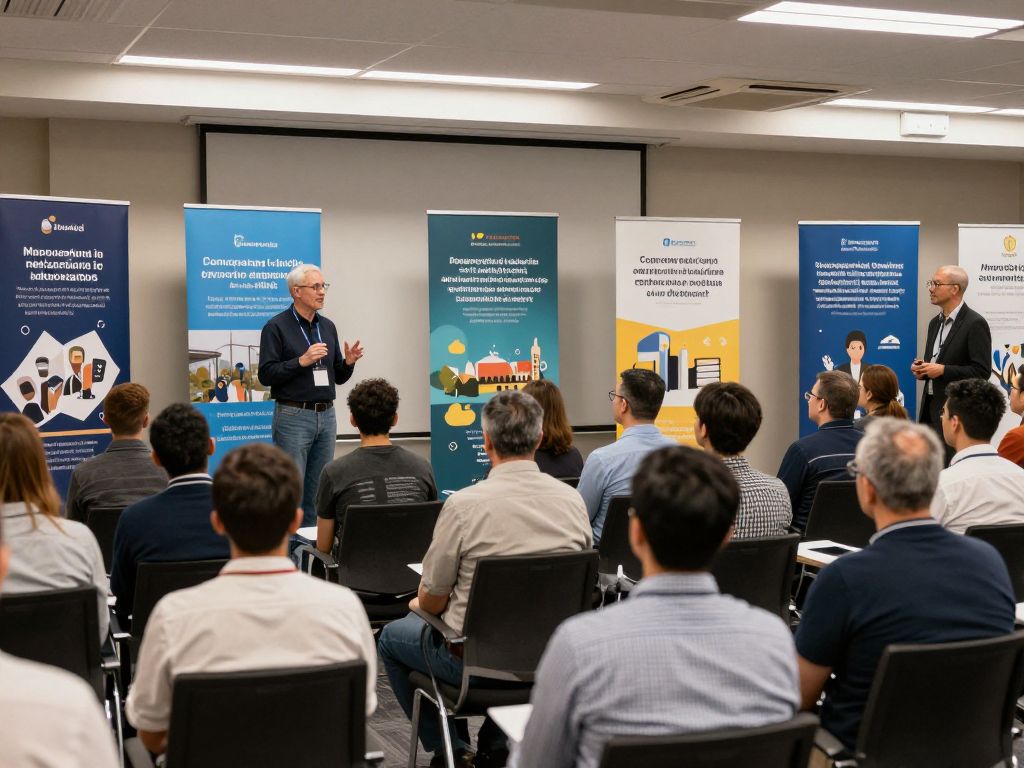
Dr. Patrick Tutwiler, Massachusetts Secretary of Education, recently delivered the 2026 State of Education Address at the Rennie Center’s annual summit in Boston, outlining the Healey-Driscoll Administration’s ongoing commitment to strengthening the Commonwealth’s educational landscape. Held at the UMass Club, One Beacon Street, this significant address highlighted a strategic vision for progress across both early and higher education sectors, emphasizing foundational principles of stabilization, healing, and transformation.
The address underscored key investments and proposed initiatives aimed at fostering academic excellence, preparing students for future challenges, and reinforcing Massachusetts’ position as a leader in educational innovation. Secretary Tutwiler detailed how these efforts are designed to enhance student growth and contribute positively to the community and economy through improved access and robust preparation pathways, affecting institutions from community colleges to the University of Massachusetts campuses. This proactive approach reflects a dedication to personal responsibility and academic freedom, crucial elements for developing the next generation of leaders in Boston and beyond.
Driving Educational Transformation and Investment
The Healey-Driscoll Administration’s framework for education is built upon three core principles: to stabilize, heal, and transform the system. Secretary Tutwiler highlighted considerable advancements under this agenda, showcasing a commitment to making education more accessible, equitable, and affordable for all Massachusetts residents. This includes substantial expansions in state financial aid, which have broadened access to higher education and led to increased enrollment across colleges and universities.
A significant highlight was the administration’s strategic doubling of state funding for financial aid. This investment has enabled free tuition and fees for Pell Grant eligible students at all public two- and four-year colleges and made community college free for every student. These initiatives collectively saved Massachusetts students approximately $130 million on college costs during the 2023-2024 academic year alone, demonstrating a clear commitment to alleviating financial barriers to higher learning.
Reimagining High School: Pathways to Postsecondary Success
A central focus of the address was the “Reimagining High School” initiative, an ambitious plan aimed at ensuring every Massachusetts student graduates prepared for college, career, or civic life. This initiative is supported by a proposed $53.4 million investment for Fiscal Year 2027. The strategy includes the expansion of Early College designated programs, with a goal to reach over 100 high schools and enroll 100,000 students by 2036.
Currently, 78 high schools and 32 higher education institutions statewide are collaborating to support more than 10,000 students in Early College programs during the 2025-26 school year. Furthermore, the initiative is expanding Innovation Career Pathways, offering hands-on coursework and work opportunities in high-demand fields such as clean energy, manufacturing, healthcare, and information technology. These pathways are currently available in 117 high schools, serving over 8,500 students, fostering discipline and practical skills vital for the modern workforce.
New Graduation Requirements for a Future-Ready Workforce
The K-12 Statewide Graduation Council, formed by Governor Healey, has put forth initial recommendations for new comprehensive statewide high school graduation requirements, released in December 2025. These recommendations consist of seven elements that emphasize not only rigorous coursework but also offer diverse opportunities for students to demonstrate their learning in ways that reflect individual strengths.
A core component of these new requirements is a “Vision of a Graduate,” which outlines the essential skills, knowledge, and experiences every Massachusetts graduate should possess. This vision extends beyond traditional academic content to include critical thinking, communication, problem-solving, civic engagement, and social-emotional readiness, thereby building leadership and personal responsibility. The new framework also includes a plan to phase out the 10th-grade MCAS as a graduation requirement, replacing it with end-of-course assessments. Additional requirements include maintaining an individual career and academic plan, completing federal and state financial aid applications (FAFSA/MASFA), and developing financial literacy skills.
Enhancing Higher Education Accessibility and Outcomes
Beyond K-12, the Department of Higher Education (DHE) and public higher education institutions are actively working to transform developmental education. This includes implementing mathematics pathways, supporting co-requisite models, and using multiple measures to increase student success and reduce remediation needs. Moreover, the state’s Fiscal Year 2023 budget mandated that all Massachusetts public undergraduate colleges and universities provide opportunities for students aged 18 and over with severe disabilities to participate in courses as non-matriculating students alongside their non-disabled peers, fostering a more inclusive campus environment.
A recent state report highlighted the economic benefits of a Massachusetts public higher education degree. Five years post-graduation, alumni of public colleges and University of Massachusetts campuses earn $20,000 to $30,000 more annually than peers who did not pursue higher education, with significant gains in fields like health sciences, STEM, and trades. Governor Healey has also championed the BRIGHT Act bond bill, proposing a substantial $2.5 billion investment for capital projects in higher education institutions, further solidifying the state’s commitment to its academic infrastructure.
Looking Ahead: A Future of Opportunity
The initiatives outlined in the 2026 State of Education Address by Secretary Tutwiler underscore a profound commitment to investing in the intellectual capital and future leaders of Massachusetts. These efforts, spanning from redesigned graduation requirements to expanded higher education access and financial support, aim to cultivate a resilient and skilled workforce ready to contribute to the economic vitality of Boston and the entire Commonwealth. By fostering innovation and academic discipline, Massachusetts is building a robust educational ecosystem that champions personal growth and broad community impact.
Readers are encouraged to explore the diverse programs offered across Massachusetts higher education institutions, stay informed about Boston MA college news, and engage with the ongoing efforts to enhance educational opportunities for all. The commitment to academic excellence and community development remains a cornerstone of the state’s vision for a prosperous future.
| Initiative/Investment | Description/Amount | Impact |
|---|---|---|
| State Financial Aid Expansion | Doubled funding; free tuition/fees for Pell Grant eligible students at public 2- and 4-year colleges; free community college for all. | Saved students ~$130M in 2023-24; increased access and enrollment. |
| Reimagining High School Initiative | Proposed $53.4M (FY27) investment to expand Early College and Innovation Career Pathways. | Aims to prepare all high school graduates for college, career, or civic life. |
| Early College Programs | Goal: reach over 100 high schools; enroll 100,000 students by 2036. | Currently serves >10,000 students in 78 high schools and 32 higher education institutions (2025-26). |
| Innovation Career Pathways | Hands-on learning in high-demand industries (e.g., clean energy, healthcare, IT). | Offered in 117 high schools, serving >8,500 students. |
| BRIGHT Act Bond Bill | Proposed $2.5 billion for capital projects in higher education institutions. | Supports academic infrastructure development. |
| Support for Students with Severe Disabilities | FY23 budget requires public undergraduate colleges to offer non-matriculating course opportunities for eligible students aged 18+. | Fosters inclusive campus environments. |
Frequently Asked Questions
Q: What was the main focus of the Massachusetts 2026 State of Education Address?
A: The main focus of the Massachusetts 2026 State of Education Address, delivered by Dr. Patrick Tutwiler, was on highlighting investments in early and higher education and proposing new graduation requirements.
Q: Where and when was the 2026 State of Education Address delivered?
A: The 2026 State of Education Address was delivered on January 29, 2026, at the Rennie Center’s annual summit at the UMass Club, One Beacon Street, 32nd Floor, Boston.
Q: What are some of the key investments in higher education mentioned in the address?
A: Key investments include doubling state funding for financial aid, offering free tuition and fees for Pell Grant eligible students at all public two- and four-year colleges, and making community college free for everyone. Additionally, a $2.5 billion BRIGHT Act bond bill is proposed for higher education capital projects.
Q: What are the key elements of the proposed new graduation requirements for high school students in Massachusetts?
A: The proposed new graduation requirements include a framework with seven elements emphasizing coursework, diverse ways to demonstrate learning, and preparation for college or career. A “Vision of a Graduate” focusing on critical thinking, communication, problem-solving, civic engagement, and social-emotional readiness is central. The plan also includes phasing out the 10th-grade MCAS as a graduation requirement and expanding Early College and Innovation Career Pathways.
Q: How much did state financial aid programs save Massachusetts students in a recent academic year?
A: State financial aid programs saved Massachusetts students approximately $130 million on the cost of college in the 2023-2024 academic year.
Deeper Dive: News & Info About This Topic
HERE Resources
MassArt Achieves 2026 Carnegie Classification for Community Engagement
Harvard University Housing Announces 2026-27 Rents
Expansion of Travel Bans Impacting Student Visas in Boston
BU President Champions Interdisciplinary Research
Boston Wine Expo to Boost Local Economy and Tourism
Boston’s Free February: Igniting Community & Opportunity
New Bill to Regulate ICE Operations in Massachusetts
Boston College Launches Innovative Two-Year Embedded College Program
Civic Participation: Newton’s Legal Brief and Community Impact
Boston College Appoints Interim Leader for Schiller Institute

Author: STAFF HERE BOSTON WRITER
The BOSTON STAFF WRITER represents the experienced team at HEREBoston.com, your go-to source for actionable local news and information in Boston, Suffolk County, and beyond. Specializing in "news you can use," we cover essential topics like product reviews for personal and business needs, local business directories, politics, real estate trends, neighborhood insights, and state news affecting the area—with deep expertise drawn from years of dedicated reporting and strong community input, including local press releases and business updates. We deliver top reporting on high-value events such as Boston Marathon, Head of the Charles Regatta, and Boston Harborfest. Our coverage extends to key organizations like the Greater Boston Chamber of Commerce and Associated Industries of Massachusetts, plus leading businesses in finance, biotech, and insurance that power the local economy such as Fidelity Investments, Biogen, and Liberty Mutual Insurance. As part of the broader HERE network, we provide comprehensive, credible insights into Massachusetts's dynamic landscape.