

Boston, MA, February 2, 2026
News Summary
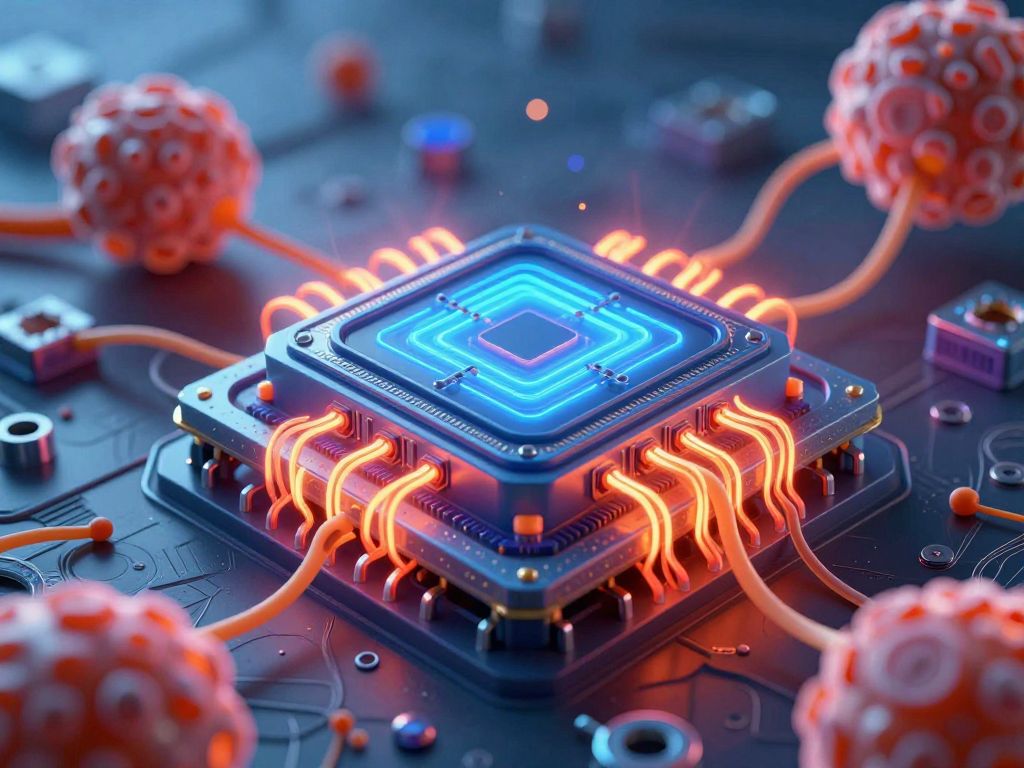
Researchers at MIT have developed groundbreaking silicon structures capable of performing computations using excess heat instead of electricity. This innovation represents a significant shift in computing paradigms, enhancing energy efficiency and transforming waste heat into a valuable resource. The project, featuring collaboration between experienced researchers and undergraduate students, underscores MIT’s commitment to innovation and academic excellence. As the demand for energy-efficient technology rises, these heat-powered devices aim to set new standards in microelectronics and advanced computational applications.
Boston, MA — Innovation flourishes within the hallowed halls of Massachusetts’s leading academic institutions, fostering advancements that promise to reshape technological landscapes and cultivate the next generation of scientific leaders. The Massachusetts Institute of Technology (MIT), a beacon of academic rigor and groundbreaking research, recently unveiled a significant development in computing. Its engineers have pioneered the design of structures capable of performing computations using heat rather than traditional electricity, a breakthrough that underscores the institution’s commitment to pushing the boundaries of scientific inquiry and problem-solving.
This novel approach to computation not only highlights the ingenuity inherent in Boston’s vibrant higher education ecosystem but also points towards a future where electronic devices could operate with unprecedented energy efficiency. Such advancements are not merely academic curiosities; they represent the fruits of disciplined research and intellectual freedom, offering tangible benefits that could reduce energy consumption in various technologies, from everyday devices to advanced artificial intelligence systems. The dedication to exploring unconventional pathways in engineering and physics exemplifies the spirit of innovation and the profound impact that focused academic pursuits can have on society.
The research, recently featured as “Today’s Featured News” by MIT, emphasizes the vital role of sustained investigation in addressing contemporary challenges, such as the increasing energy demands of modern computing. By leveraging naturally occurring excess heat, typically considered a byproduct to be dissipated, MIT engineers are demonstrating how responsible resourcefulness and inventive thinking can transform perceived limitations into powerful new capabilities. This endeavor, involving both seasoned researchers and promising undergraduates, stands as a testament to the collaborative and growth-oriented environment cultivated within Massachusetts higher education, preparing students for leadership roles in future technological development.
A Paradigm Shift in Computing: Harnessing Heat
At the core of this innovation is the design of specialized silicon structures by MIT researchers. These microscopic structures possess the remarkable ability to perform calculations within an electronic device by utilizing its own excess heat, completely circumventing the need for electricity in the computational process. This method represents a departure from conventional computing paradigms, where heat is largely seen as waste that must be managed and removed to maintain device performance and longevity. Instead, this research ingeniously transforms waste heat into a valuable information carrier, fundamentally altering how we might approach the design of future electronic systems.
Precision Engineering and Energy Efficiency
The silicon structures, described as being roughly the size of a dust particle, are designed using advanced inverse-design algorithms. These algorithms allow researchers to specify the desired computational function, and the software then iteratively refines the silicon geometry, including the placement of tiny pores and thickness gradients, to achieve the target heat flow behavior. This intricate design enables the natural conduction and distribution of heat through the material to perform specific mathematical operations. The input data for these thermal computations are encoded as a set of temperatures, with the output being represented by the power collected at the other end, maintained at a fixed temperature. This thermal analog computing method has demonstrated significant accuracy, achieving over 99% correctness in performing matrix vector multiplication, a fundamental operation in machine learning and artificial intelligence.
Academic Disciplines Converge: Condensed Matter Theory
The theoretical underpinnings of this research are deeply rooted in Condensed Matter Theory, a field within physics that investigates the macroscopic and microscopic physical properties of matter. This area of study explores how quantum physics and many-body interactions lead to emergent physical phenomena, often focusing on advanced materials and their unique behaviors. The success of this project highlights the critical role of fundamental scientific disciplines in enabling technological breakthroughs. By applying sophisticated theoretical frameworks, MIT engineers are able to conceptualize and realize entirely new ways of processing information, demonstrating the profound interplay between abstract scientific understanding and practical engineering applications.
Fostering Future Leaders: Undergraduate Involvement
A notable aspect of this groundbreaking work is the active involvement of undergraduate students, categorized explicitly within the project’s details. This commitment to integrating students into cutting-edge research is a hallmark of MIT and Boston’s higher education institutions, providing invaluable hands-on experience and nurturing the next generation of innovators. Such opportunities allow students to contribute to significant scientific advancements, developing critical thinking, problem-solving skills, and a deep understanding of academic discipline. This early exposure to impactful research helps shape students into future leaders capable of tackling complex global challenges and making meaningful contributions to society. MIT’s Undergraduate Research Opportunities Program (UROP) provides pathways for undergraduates to engage directly with faculty and research labs.
Implications for Energy-Efficient Devices and Beyond
The potential applications of computing with heat are extensive, particularly in the realm of energy-efficient electronics. By utilizing waste heat—a constant presence in electronic devices—as an information medium, these silicon structures could enable more sustainable and powerful computing solutions. This innovation holds promise for reducing the energy footprint of various technologies, from microelectronic diagnostics and thermal sensing to advanced machine learning models and large language models, where matrix multiplication is a core mathematical technique. While challenges remain in scaling this method for modern deep-learning workloads, the immediate promise for improved thermal management and heat-source detection within microelectronics without requiring additional sensors or power consumption is significant. This forward-thinking research aligns with a global imperative to develop more sustainable and efficient technological solutions.
Boston’s Continuous Contribution to Global Technology
This research from MIT is a prime example of how Boston-area universities consistently contribute to the global technological landscape. The dedication to fostering academic freedom and supporting audacious research projects ensures that Massachusetts remains at the forefront of scientific discovery and engineering innovation. By encouraging a culture of rigorous inquiry and practical application, institutions like MIT not only advance human knowledge but also drive economic growth and create opportunities within the state’s burgeoning tech sector. This commitment to excellence ensures a continuous pipeline of talent and transformative ideas, reinforcing Boston’s reputation as a world-class hub for higher education and technological progress.
The pioneering work by MIT engineers in designing heat-powered computing structures represents a significant stride towards more energy-efficient and sustainable electronic devices. This achievement underscores the value of rigorous academic inquiry, innovative design, and the vital role of student engagement in pushing the boundaries of scientific possibility. We encourage readers to explore the diverse research programs and exciting campus events offered by universities across the region and stay updated on the latest Boston, MA college news and Massachusetts higher education advancements that continue to shape our world. This kind of UMA research (referring to university research in Massachusetts) continuously brings forward novel solutions to global challenges.
Frequently Asked Questions About MIT’s Heat-Powered Computing Structures
What is the primary innovation developed by MIT engineers?
MIT engineers have designed silicon structures capable of performing computations using excess heat instead of electricity.
What type of structures are used for this new computing method?
The researchers designed microscopic silicon structures for this computing method.
How do these structures perform computations?
Input data are encoded as a set of temperatures, and the flow and distribution of heat through the specially designed material form the basis of the calculation.
What is the accuracy of these heat-powered computing structures?
These structures have been used to perform matrix vector multiplication with more than 99% accuracy in simulations.
When was this research on heat-powered computing structures featured by MIT News?
This research was featured by MIT News around January 29, 2026.
What academic categories are associated with this news?
Categories associated with this news include In The News, Undergraduates, and Condensed Matter Theory.
What is a potential application for this technology?
The technology could enable more energy-efficient thermal sensing and signal processing, by turning waste heat into a useful signal.
Key Features of MIT’s Heat-Powered Computing Structures
| Feature | Description |
|---|---|
| Computing Medium | Excess heat instead of electricity |
| Structure Type | Microscopic silicon structures |
| Computational Method | Input data encoded as temperatures, computation through heat flow and distribution |
| Demonstrated Accuracy | Over 99% accuracy for matrix vector multiplication in simulations |
| Primary Publication Date | Featured around January 29, 2026 |
| Associated Fields | In The News, Undergraduates, Condensed Matter Theory |
| Potential Applications | Energy-efficient thermal sensing and signal processing |
Deeper Dive: News & Info About This Topic
HERE Resources

Author: STAFF HERE BOSTON WRITER
The BOSTON STAFF WRITER represents the experienced team at HEREBoston.com, your go-to source for actionable local news and information in Boston, Suffolk County, and beyond. Specializing in "news you can use," we cover essential topics like product reviews for personal and business needs, local business directories, politics, real estate trends, neighborhood insights, and state news affecting the area—with deep expertise drawn from years of dedicated reporting and strong community input, including local press releases and business updates. We deliver top reporting on high-value events such as Boston Marathon, Head of the Charles Regatta, and Boston Harborfest. Our coverage extends to key organizations like the Greater Boston Chamber of Commerce and Associated Industries of Massachusetts, plus leading businesses in finance, biotech, and insurance that power the local economy such as Fidelity Investments, Biogen, and Liberty Mutual Insurance. As part of the broader HERE network, we provide comprehensive, credible insights into Massachusetts's dynamic landscape.