

Massachusetts, February 4, 2026
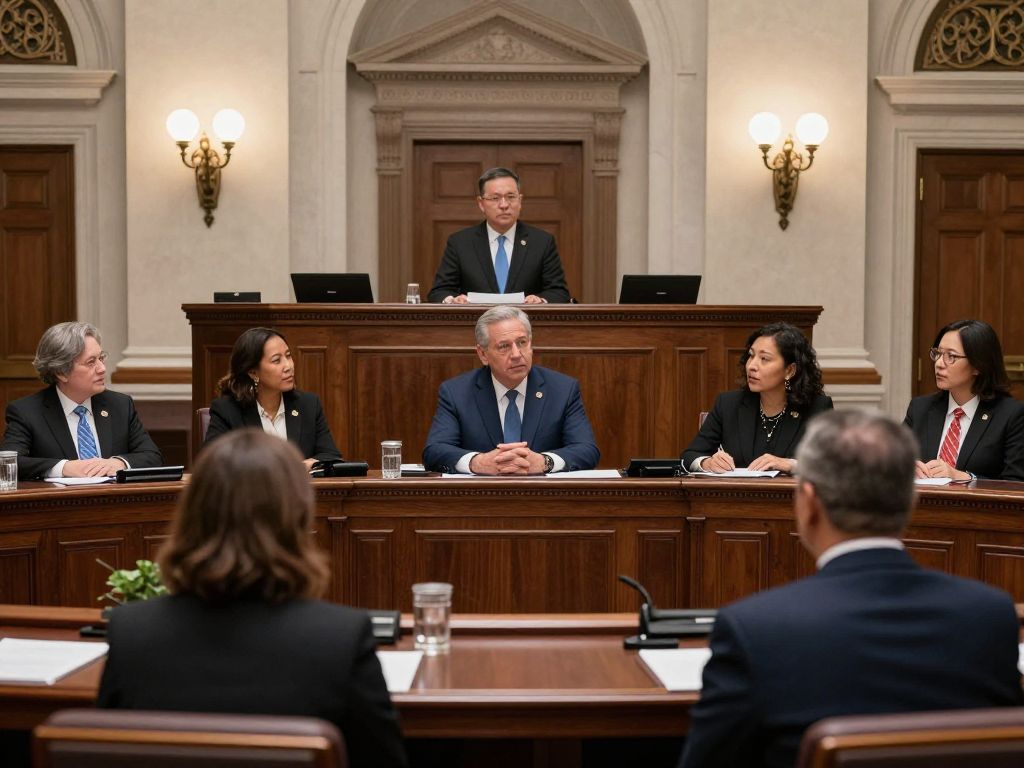
In Massachusetts, state legislators are actively discussing the future of the Immigration and Customs Enforcement (ICE) agency. The debates center on whether the agency should undergo significant reform or be completely abolished. These discussions reflect broader questions about agency authority, state sovereignty, and the rights of residents in light of the Commonwealth’s Constitution, which emphasizes natural rights. This state-level examination is correlated with national judicial scrutiny of administrative agencies and their roles.
Boston
Local political discussions within Massachusetts have recently centered on the future of the Immigration and Customs Enforcement (ICE) agency, with various state legislators engaging in debate regarding its operational structure. These discussions explore whether the agency should undergo significant reform or face complete abolition. This specific focus on ICE is part of a broader ongoing examination of administrative agencies and their roles within both federal and state governance structures.
The conversations in Massachusetts reflect a deep consideration of state sovereignty and the rights of its inhabitants, particularly in light of the Commonwealth’s Constitution, which declares that “All men are born free and equal, and have certain natural” rights. This foundational principle often frames the lens through which state-level interactions with federal entities are viewed.
Judicial Scrutiny of Agency Authority
Across the nation, the authority and expertise of administrative agencies are under a magnifying glass, with the U.S. Supreme Court poised to hear two significant cases this term. These cases will determine the extent to which federal courts should defer to the specialized knowledge and interpretations of federal agencies. This ongoing judicial review at the federal level provides a national backdrop to the state-level deliberations occurring in Massachusetts concerning agency power and oversight. The Constitution does not explicitly establish administrative agencies or prescribe the precise manner of their creation, vesting Congress with the authority to influence and control these executive branch entities.
The Interplay of Federal and State Law
Understanding the current Massachusetts discussions also requires an appreciation for the complex interplay between federal and state legal frameworks. Federal regulations, such as those pertaining to nondiscrimination on the basis of disability, explicitly state that they do not invalidate or limit the remedies, rights, and procedures afforded by other federal, state, or local laws, including state common law. This legal architecture allows for states to maintain their own protective measures, often building upon federal minimums. For new immigrants, guides issued by federal agencies like USCIS emphasize the importance of understanding both federal laws and specific state and local guidelines, such as those related to child protective services or access to healthcare. This intricate layering of legal authority underscores why discussions about a federal agency like ICE can resonate so profoundly at the state and local levels.
Considerations in Agency Reform and Abolition
The debate over reforming or abolishing ICE touches upon significant precedents and considerations for governmental structure. Historically, Congress has exercised its power to eliminate federal agencies, as evidenced by the abolition of the Interstate Commerce Commission. When such an action is taken, a determination is also made about the continuation of specific federal government functions previously handled by the dissolved agency. This historical context offers a practical lens through which the current debates in Massachusetts might consider the logistical and functional implications of any significant change to ICE’s presence or mandate.
Moreover, the role of local institutions in the broader criminal legal system is gaining increasing attention. Local jails, in particular, often play a critical role that can be overlooked in larger discussions about criminal legal system reform. These facilities are frequently the initial point of contact for individuals, including those subject to federal immigration enforcement, thereby linking local infrastructure directly to federal agency operations.
Organizations such as the American Civil Liberties Union (ACLU) consistently advocate for a more perfect union, seeking to uphold the promises of the United States Constitution through various initiatives related to civil rights and liberties. Their work often highlights areas where agency practices intersect with individual rights, providing another dimension to the ongoing conversations in Massachusetts.
The Scope of Agency Action and Human Impact
The activities of administrative agencies extend into many aspects of public life, from emergency preparedness, as guided by entities like FEMA, to public health initiatives, such as strategies for addressing the opioid epidemic. These examples illustrate the pervasive influence of agencies and the human consequences of their policies and operations. When local discussions turn to the presence and functions of a federal agency like ICE, they often do so with an underlying concern for the practical impact on communities and the lives of individuals residing within the Commonwealth. The reflections, therefore, are not merely about bureaucratic structures, but about the delicate balance between enforcement, compassion, and the fundamental dignity of every person.
Frequently Asked Questions
What are state legislators in Massachusetts discussing regarding ICE?
Massachusetts state legislators are discussing how the state can address ICE, with some debating whether the agency should be reformed or abolished.
What is the U.S. Supreme Court considering regarding federal agencies?
The U.S. Supreme Court will hear two cases this term about how much deference federal courts should give to the expertise federal agencies have.
How does the Massachusetts Constitution relate to these discussions?
The Massachusetts Constitution, in Article I, declares that all men are born free and equal and have certain natural rights, which serves as a foundational principle informing state-level considerations of federal agency interactions.
Do federal laws invalidate state and local laws regarding disability rights?
No, federal regulations on nondiscrimination on the basis of disability do not invalidate or limit the remedies, rights, and procedures of any other Federal laws, or State or local laws (including State common law) that provide equal or greater protection.
What is the role of local jails in criminal legal system reform?
Local jails often receive short shrift in larger discussions about criminal legal system reform, but they play a critical role as initial points of contact in the system.
Does the U.S. Constitution explicitly establish administrative agencies?
No, the Constitution does not establish administrative agencies or explicitly prescribe the manner by which they may be created. Congress has the authority to influence and control these executive branch entities.
Key Features of Agency Discussion in Massachusetts
| Feature | Description | Scope |
|---|---|---|
| ICE Debate | State legislators are discussing reform versus abolition of the Immigration and Customs Enforcement agency. | State-level |
| Judicial Deference | The U.S. Supreme Court will hear two cases this term on federal courts’ deference to federal agency expertise. | Nationwide |
| Constitutional Basis | Massachusetts Constitution’s Article I, declaring natural rights, frames state-level interactions with federal entities. | State-level |
| Federal/State Law Interaction | Federal laws typically do not invalidate stronger state or local protections, such as those for disability rights. | Nationwide |
| Agency Establishment | The U.S. Constitution does not explicitly establish administrative agencies; Congress holds authority over their creation. | Nationwide |
| Role of Local Jails | Local jails play a critical, though often overlooked, role in the larger criminal legal system reform discussions. | Nationwide |
Deeper Dive: News & Info About This Topic
HERE Resources
Multi-State Benefits Fraud Scheme Leads to Charges in Massachusetts
East Boston History Teacher Receives Prestigious Teaching Award
Boston School Committee Votes to Close Three Schools
Massachusetts Schools Enhance Financial Literacy with Grants
Massachusetts Expands Nursing Education Pathways
UMass Dartmouth Students Explore Journalism Careers at GBH Boston
Northeastern University Expands Campus with New Residence Hall
Garth Greenwell to Speak at Boston University
Dunwei Wang Appointed Interim Director of Schiller Institute
Boston College Secures $2 Million Grant for Science Education

Author: STAFF HERE BOSTON WRITER
The BOSTON STAFF WRITER represents the experienced team at HEREBoston.com, your go-to source for actionable local news and information in Boston, Suffolk County, and beyond. Specializing in "news you can use," we cover essential topics like product reviews for personal and business needs, local business directories, politics, real estate trends, neighborhood insights, and state news affecting the area—with deep expertise drawn from years of dedicated reporting and strong community input, including local press releases and business updates. We deliver top reporting on high-value events such as Boston Marathon, Head of the Charles Regatta, and Boston Harborfest. Our coverage extends to key organizations like the Greater Boston Chamber of Commerce and Associated Industries of Massachusetts, plus leading businesses in finance, biotech, and insurance that power the local economy such as Fidelity Investments, Biogen, and Liberty Mutual Insurance. As part of the broader HERE network, we provide comprehensive, credible insights into Massachusetts's dynamic landscape.