

Boston, MA, February 19, 2026
News Summary
Boston’s higher education institutions are dedicated to fostering environments conducive to student success by prioritizing safety, mental health, and community engagement. Through enhanced residential policies and comprehensive health initiatives, universities aim to create resilient communities that support personal and academic growth. This commitment extends to adapting strategies for navigating environmental challenges and societal impacts, ensuring students are well-prepared for their future roles as leaders in a global society.
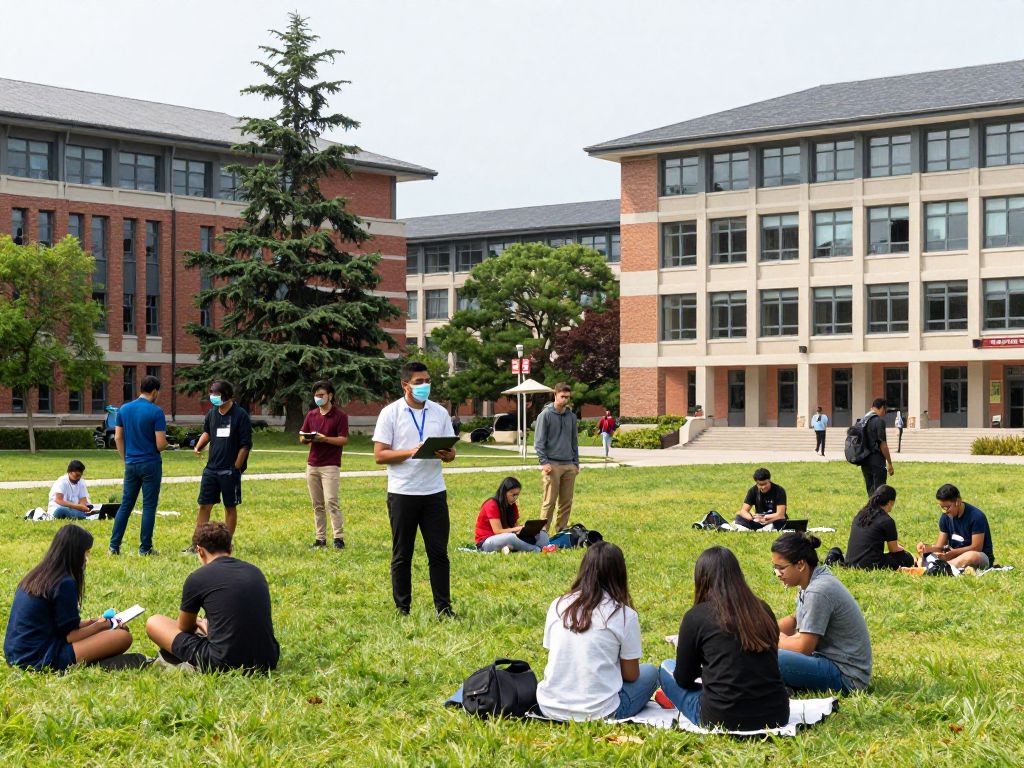
Boston, MA — Boston’s esteemed institutions of higher education are consistently at the forefront of fostering environments that promote student success, not only academically but also in terms of personal growth and well-being. This commitment is evident in the proactive measures taken to address complex challenges spanning campus safety, residential policies, and comprehensive student health initiatives. These efforts underscore a dedication to developing well-rounded leaders prepared for impactful community engagement.
The dynamic landscape of higher education demands continuous adaptation and innovation to support students effectively. Boston’s universities exemplify this by investing in robust support systems and refining policies that contribute to a secure, healthy, and academically stimulating experience. From ensuring safe living spaces to addressing mental health and adapting to environmental shifts, these institutions are building resilient communities that prioritize the holistic development of their students.
Enhancing Campus Living and Safety Protocols
Universities recognize that a safe and supportive living environment is foundational to academic achievement and personal development. Institutions nationwide, including those in Massachusetts, continually evaluate and update residential policies and safety measures to protect their student populations. For instance, concerns regarding access to medications have been voiced by students affected by a flood in the East Residence Hall, highlighting the critical need for robust emergency preparedness and support systems within campus housing.
Ensuring residential safety extends to various aspects of campus life. Policies at institutions such as Delaware State University (DESU) explicitly address the threat of weapons in residence halls, reflecting a broad concern for student security in shared living spaces. Similarly, the University of Nebraska-Lincoln (UNL) requires all freshman students under the age of 19 to live in approved housing units, a policy designed to integrate new students into the campus community and provide structured support. Furthermore, Winona State University’s student guide outlines procedures for registering service animals with Housing & Residence Life, demonstrating a commitment to accessibility and accommodating diverse student needs. Boston College’s Residential Life also outlines official policies for on-campus housing, covering aspects like hall openings, closings, and community expectations, while providing guaranteed housing for a majority of its students, with specific provisions for nursing students, Presidential Scholars, and certain student-athletes who receive four years of guaranteed housing. Boston College also enforces guest limits in residence halls and previously continued asymptomatic surveillance testing, illustrating adaptive measures for community health and safety. Massachusetts College of Liberal Arts offers an all-day hotline, trained security personnel, electronically operated dormitory entrances, and late-night transportation services to prioritize student safety.
Prioritizing Student Health and Mental Wellness
The well-being of students is a paramount concern for higher education institutions, with a growing emphasis on mental health and comprehensive health resources. Boston University’s Student Wellbeing initiative offers cocurricular experiences designed to support students’ health and well-being, including “Thriving Together” and “Wellbeing for Leaders” Hub cocurriculars in Spring 2026. These programs aim to foster connection, leadership, and a culture of wellness across campus, recognizing that when students feel better, they perform better. The university also offers various events and resources to support emotional, social, physical, intellectual, financial, and spiritual well-being. In May 2025, Boston University’s School of Hospitality hosted a Student Wellbeing Competition, inviting students to develop innovative ideas to support social well-being on campus, resulting in initiatives like “Missed Connections,” “You and Me Both,” and “Kindness Chain.” Resources such as the Headspace app for mindfulness and meditation are also provided free for all Boston University students.
Beyond campus-specific programs, broader public health considerations also influence student life. For example, the identification of the first measles case of 2026 in the Metro East Area in Illinois highlights ongoing public health infrastructure needs that affect all students, including those in higher education, by ensuring access to essential health services. Community-level initiatives, such as Access Clinics in the City of Milwaukee, provide mental health assessments, medications, and therapy referrals for uninsured residents, serving as a model for how communities can support mental health needs, including those of students. Nationally and in Massachusetts, violent crime, particularly homicide, is rare on college campuses, but there is a persistent focus on prevention, mental-health care, and community-based risk reduction. Recommendations often include making campus mental health services clearly available and easily accessible to students.
Fostering Community and Addressing Societal Impacts
Boston’s higher education institutions are deeply integrated into the local community and economy, influencing and being influenced by broader societal trends. The 2019 Community Health Needs Assessment for Boston identified housing options as a critical factor profoundly affecting health and educational achievement, a challenge that universities must navigate in providing adequate student support. This underscores the interconnectedness of housing security, health, and academic success for students in the Boston area. Boston College, for example, collects addresses for all students not living on campus to better contact them in emergencies and respond to off-campus incidents.
The Massachusetts Department of Higher Education (DHE) plays a crucial role in advancing campus safety and violence prevention (CSVP) initiatives across public and private institutions in Massachusetts. Since 2008, the DHE has supported these efforts, notably with the enactment of the 2021 Campus Sexual Assault Law, which mandates new reporting requirements for sexual misconduct incidents. This legislative framework, supported by student advocacy, reflects a statewide commitment to enhancing a safe and respectful educational environment. A 2016 task force further broadened the scope of CSVP, and the DHE continues to monitor trends and challenges.
Navigating Environmental and Global Challenges
Universities are increasingly recognizing their role in addressing global challenges, including environmental shifts and international policy complexities. The impact of climate change and environmental extremes, such as alternating drought and flood conditions observed in areas like Australia, underscore the necessity for institutions worldwide to enhance infrastructure resilience and emergency planning. Higher education institutions are adapting to this changing environmental landscape by preparing for natural disasters, improving energy efficiencies, and rethinking campus physical structures. Investments in university infrastructure are also seen as opportunities for environmental benefits, such as reducing carbon footprints through upgrades to windows, roofs, and boilers. Green infrastructure solutions are being integrated into campus planning to manage stormwater, prevent damage, and enhance the aesthetic and recreational value of campus landscapes.
Beyond environmental considerations, understanding global dynamics is integral to modern education. For example, Secretary of State Marco Rubio’s remarks to the press on November 12, 2025, regarding deliverables on the Ukraine issue, while not directly tied to Boston academia, highlight the complex international relations that shape the world in which students will live and work. Similarly, the Office of Foreign Assets Control (OFAC) provides consolidated frequently asked questions regarding blocked persons, which is an aspect of international policy that could affect global engagement and compliance for academic institutions and their international students. These instances emphasize the need for robust programs that prepare students for a globally interconnected world, fostering leadership and informed citizenship.
Institutional Preparedness and Future Outlook
Boston’s institutions continue to evolve their strategies for institutional preparedness, encompassing everything from emergency response to fostering a culture of responsibility. Policies regarding campus entry, residential conduct, and academic integrity are regularly reviewed to ensure they meet the needs of a diverse student body while maintaining high standards of discipline and community. The importance of proactive measures in addressing potential threats, such as those related to campus violence, is continually emphasized, with a focus on prevention and mental health support.
The future will undoubtedly unfold in ways not fully foreseen, as noted in the Global Trends 2040 analysis. However, Boston’s colleges and universities are committed to building upon a foundation of academic freedom and personal responsibility to prepare students for these uncertainties. By fostering innovation in student support, adapting to environmental challenges, and instilling a deep understanding of civic and global responsibilities, they continue to shape leaders who will contribute meaningfully to their communities and beyond.
Summary of Key Campus Well-being and Safety Initiatives
| Initiative Area | Key Actions/Policies | Example Institutions/Scope |
|---|---|---|
| Residential Life & Safety | Addressing flood impact on medication access; weapon prohibition in residence halls; mandatory freshman housing; service animal registration; guest limits. | East Residence Hall, DESU, UNL, Winona State University, Boston College, Massachusetts College of Liberal Arts |
| Student Health & Mental Wellness | Mental health assessments, medications, therapy referrals for uninsured residents; public health responses to disease outbreaks; comprehensive well-being programs focusing on emotional, social, physical, intellectual, financial, and spiritual dimensions. | City of Milwaukee, Illinois (Measles), Boston University |
| Community & Economic Impact | Addressing housing options as a health and educational factor; statewide campus safety and violence prevention laws; incident reporting requirements. | Boston.gov, Massachusetts Department of Higher Education |
| Environmental & Global Preparedness | Adapting to climate change and environmental extremes; enhancing infrastructure resilience; green infrastructure implementation; understanding international policy implications. | Australia (floods), Global Trends 2040, Secretary of State Marco Rubio remarks, OFAC regulations, Higher Education Institutions (general) |
Conclusion
Boston’s colleges and universities are unwavering in their commitment to providing exceptional educational experiences that extend far beyond the classroom. Through diligent attention to student well-being, proactive safety measures, and strategic engagement with broader community and global issues, these institutions prepare students to be responsible citizens and impactful leaders. We encourage readers to explore the innovative programs offered by Boston’s universities, attend campus events that highlight student achievements, and stay informed about the ongoing advancements within Massachusetts higher education. By supporting these vital efforts, we collectively invest in the future of our community and beyond.
Frequently Asked Questions
What concerns have been raised by students affected by the East Residence Hall flood?
Students affected by a flood in the East Residence Hall have voiced concerns about access to medications.
Are freshman students required to live in university housing at UNL?
All freshman students under the age of 19 on the first day of classes at the University of Nebraska-Lincoln (UNL) are required to live in one of the approved housing units during the academic year, unless exemptions apply.
What services do Access Clinics in the City of Milwaukee provide?
Access Clinics in the City of Milwaukee serve uninsured Milwaukee County residents and provide mental health assessments, medications, and therapy referrals.
What did the 2019 Community Health Needs Assessment for Boston highlight regarding health?
The 2019 Community Health Needs Assessment for Boston highlighted housing options as a factor that profoundly affects health and educational achievement.
What are some of Boston University’s Student Wellbeing initiatives for Spring 2026?
In Spring 2026, Boston University’s Student Wellbeing will offer two Hub Cocurriculars: “Thriving Together” and “Wellbeing for Leaders,” with registration starting October 31. They also have events like “Esplanade Clean Up” in February 2026 and “Stress ReLeaf” for Spring 2026.
What is the scope of the 2021 Campus Sexual Assault Law in Massachusetts?
The 2021 Campus Sexual Assault Law in Massachusetts (Chapter 337 of the Acts of 2020) directs institutions to report annually on sexual misconduct incidents on campus and is implemented by the Department of Higher Education (DHE).
What types of security measures are available at Massachusetts College of Liberal Arts?
Massachusetts College of Liberal Arts offers an all-day hotline, trained security personnel, electronically operated dormitory entrances, and late-night transportation services to enhance student safety.
Deeper Dive: News & Info About This Topic
HERE Resources
Boston University Bioengineers Win Sloan Research Fellowships
Boston College Hires Ben Albert as Defensive Line Coach
UGBC Enhances Student Life at Boston College
Pentagon Reviews Graduate Tuition Aid for Active Service Members at Boston College
Boston’s Winter Fun and Civic Engagement Events
Boston Hosts Key Healthcare Innovation Summit
Boston’s Recent Conference Ignites Community Engagement
Boston’s Last Winter Hurrah: Community, Culture, and Connection
Allston’s New ART: Sustainable Design and Economic Growth
Boston Area Housing Market Sees Sales Dip and Price Climb

Author: STAFF HERE BOSTON WRITER
The BOSTON STAFF WRITER represents the experienced team at HEREBoston.com, your go-to source for actionable local news and information in Boston, Suffolk County, and beyond. Specializing in "news you can use," we cover essential topics like product reviews for personal and business needs, local business directories, politics, real estate trends, neighborhood insights, and state news affecting the area—with deep expertise drawn from years of dedicated reporting and strong community input, including local press releases and business updates. We deliver top reporting on high-value events such as Boston Marathon, Head of the Charles Regatta, and Boston Harborfest. Our coverage extends to key organizations like the Greater Boston Chamber of Commerce and Associated Industries of Massachusetts, plus leading businesses in finance, biotech, and insurance that power the local economy such as Fidelity Investments, Biogen, and Liberty Mutual Insurance. As part of the broader HERE network, we provide comprehensive, credible insights into Massachusetts's dynamic landscape.