

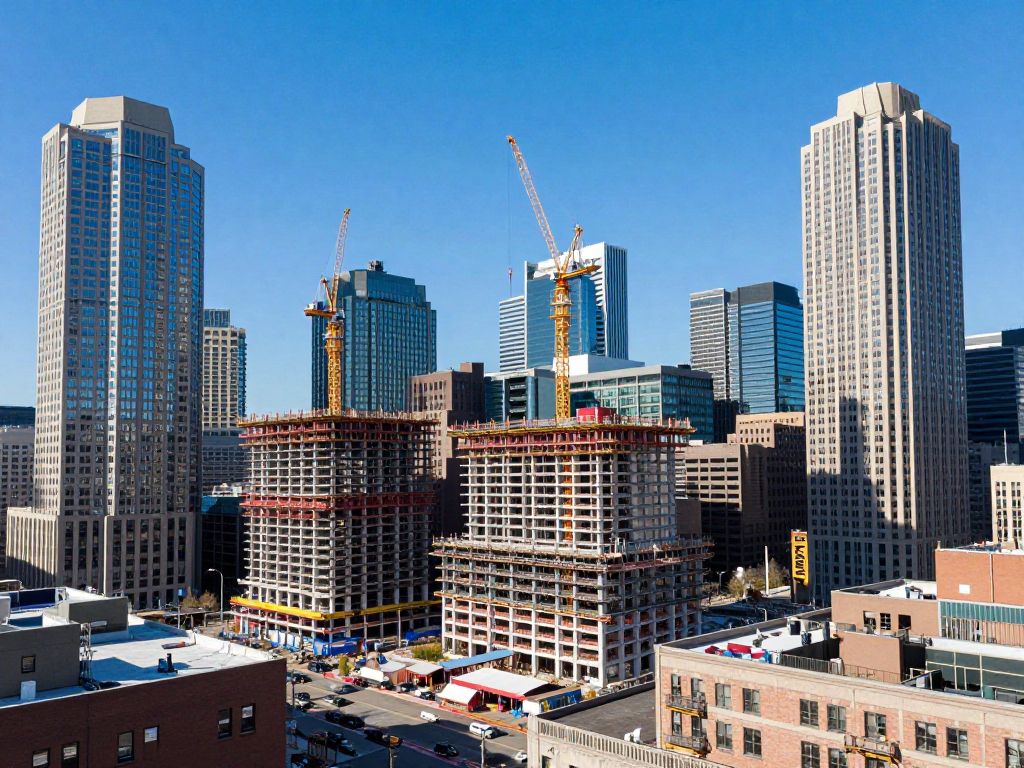
Boston, December 30, 2025
Boston is poised for a significant shift in its urban landscape, with several major developments expected to commence, promising to reshape the city’s economy and infrastructure. As the city navigates various challenges, including zoning laws and construction costs, initiatives aimed at fostering growth are underway. The anticipation surrounding projects like the Dorchester Bay City and renovations at White Stadium symbolizes a hopeful transition from planning to action, reflecting the city’s commitment to addressing housing demands and enhancing community amenities.
Boston’s 2026 Horizon: Will Big Projects Finally Soar?
After years of planning and permitting, Boston stands at a pivotal moment. The coming year could see the groundbreaking of major developments poised to reshape our city’s landscape and economy.
Boston, MA, a city renowned for its innovation and resilience, often finds itself at the forefront of urban development discussions. Yet, even with millions of square feet of new construction space permitted, the actual commencement of these ambitious projects can face various challenges. As we look towards 2026, there is a distinct sense of anticipation that this could be the year when many of these significant undertakings transition from blueprint to groundbreaking, signaling a renewed surge in economic growth and opportunity for Massachusetts entrepreneurs.
The spirit of small-business resilience and entrepreneurial determination is a cornerstone of Boston’s vibrant economy. Fostering an environment that empowers these innovators, alongside strategic urban planning, is crucial for turning permitted potential into tangible progress. Thoughtful approaches to regulation, which streamline processes without sacrificing quality, can significantly accelerate development, attracting private investment and fostering job creation across the region. This balance between foresight and practical implementation is key to realizing Boston’s full economic potential.
Unlocking Boston’s Development Pipeline
Boston’s development pipeline for 2026 holds promise, with several projects anticipated to see significant movement. Among these are major initiatives such as the Dorchester Bay City project, a complex planned to feature 21 new buildings, which has been permitted since 2023. While it has encountered financing and legal hurdles, 2026 is viewed by some as a potential breakthrough year for this transformative buildout. The renovation of White Stadium is also a centerpiece project for the city administration, with expedited work expected over the next 12 months to deliver the facility for use by early 2027, despite some legal challenges.
Beyond these large-scale endeavors, several smaller yet impactful housing developments are also in the pipeline. These include city-approved projects like 150 Centre Street, which is set to introduce 72 units of affordable housing near Shawmut Station. Additionally, 555 Talbot Avenue is planned to incorporate 34 housing units above a small grocery store, contributing to neighborhood amenities. A 22-unit, four-story building near the Murphy Funeral Home on Dorchester Avenue is also expected, alongside a long-awaited redevelopment of Fields Corner’s O’Hearn warehouse building, which promises 47 new housing units above a renovated US post office. These projects collectively underscore the commitment to addressing the city’s diverse housing needs and enhancing local communities.
Megaprojects Shaping the Future
Boston’s urban landscape is in constant evolution, with several megaprojects set to redefine daily life, commuting, and the city’s overall structure. The South Station Tower, an ambitious transit-oriented development, opened in September 2025. This $1.5 billion project significantly boosts the bus terminal’s capacity by approximately 50%, integrating offices, residences, a hotel, retail spaces, and an eleventh-floor sky park directly above the region’s busiest transit hub. This innovative approach to leveraging space over existing infrastructure serves as a model for maximizing urban density and connectivity.
Another monumental undertaking is the Allston I-90 Multimodal Project. This initiative aims to straighten and simplify a 1.5-mile stretch of the Mass Pike, unlock land for development, and cap sections with parks to reconnect the neighborhood with the Charles River. While complex, involving interchanges, rail relocation, and stormwater planning, early work for this nearly $2 billion project could commence around 2026, promising to transform Allston from a pass-through area into a vibrant destination.
Further reshaping the region is the Suffolk Downs Redevelopment, a vast 161-acre site set to become a new district with approximately 10,000 homes, 5 million square feet of commercial space, and 40 acres of parks and open spaces. Phase one, known as Amaya, opened in June 2024 and was 93% leased by April 2025, demonstrating strong market readiness for transit-connected housing. A one-acre pond park is slated to open in spring 2026, serving as a visible anchor for the green network. This large-scale, mixed-use development emphasizes open space, transit, and a walkable street grid, alongside a substantial commitment to income-restricted housing units and funding for off-site affordability.
Navigating the Hurdles: A Look at Challenges
Despite the vision and permitted space, Boston’s development sector faces a multifaceted array of challenges that can impede project starts. One significant hurdle is the combination of overly restrictive and archaic zoning laws, coupled with a pervasive “not-in-my-backyard” culture that often leads to substantial permitting delays. These local regulatory complexities can add months to project timelines, demanding extensive pre-planning and close coordination with city officials.
Economic factors also play a critical role. Researchers note that elevated tariffs on imports are contributing to higher building material costs Nationwide. This, alongside generally increased construction costs and bid submissions frequently exceeding initial estimates, can strain project budgets and affect financial viability. Furthermore, restrictive immigration policies Nationwide raise the possibility of construction worker shortages, intensifying labor constraints and driving up labor costs in specific trades.
Market uncertainty presents another layer of complexity. There is a proposed 2026 ballot initiative in Massachusetts aimed at enacting rent stabilization, which could significantly impact the appetite for rental housing production across the State-level, as investors might be hesitant to develop in a market with government price controls. This potential regulatory shift, combined with existing financing and legal challenges observed in projects like Dorchester Bay City, creates an uneasy crossroads for future development.
Fostering a Pro-Growth Environment: Initiatives for Progress
In response to these challenges, both State-level and city administrations are implementing various initiatives designed to stimulate economic growth and accelerate development. The administration of Massachusetts Governor Maura Healey has set an ambitious goal to build 222,000 new homes in the State-level by 2035 as part of the Affordable Homes Act. To support this, 450 acres of State-level surplus land have been identified across 20 communities, with the potential to be redeveloped into approximately 3,500 new homes.
A significant step towards streamlining business investment is the comprehensive redesign of the Economic Development Incentive Program (EDIP) by the Healey-Driscoll Administration. This State-level flagship business development tool now offers increased flexibility, transparency, and access for businesses of all sizes. Key reforms include the elimination of the $5 million annual cap on refundable tax credits, making it easier for early-stage, high-growth companies to participate. The application process has also been simplified, with 60% fewer questions, and a clear Request for Proposals document now outlines eligibility and award criteria. These changes aim to make Massachusetts more competitive in attracting and retaining companies, particularly in high-growth sectors like artificial intelligence, climatetech, advanced manufacturing, and robotics, with a focus on Gateway cities and areas with strong economic potential.
On the municipal front, the City of Boston is actively pursuing federal funding opportunities, including resources from the American Rescue Plan (ARPA), the Bipartisan Infrastructure Law (BIL), and the Inflation Reduction Act (IRA), to jumpstart transformative citywide and community projects aimed at climate crisis mitigation and local economic revitalization. Furthermore, the city’s Imagine Boston 2030 plan outlines a comprehensive framework to encourage job growth, support Boston small businesses, increase affordable housing options, and proactively prepare for climate change. Investing in workforce development programs is also a key strategy, aiming to create a large supply of skilled workers which can both decrease unemployment and encourage businesses to relocate and expand in the Boston-metro region.
The Role of Entrepreneurship and Community
At the heart of Boston’s economic vitality is its vibrant ecosystem of Massachusetts entrepreneurs and small businesses. Their ability to innovate, adapt, and create local jobs forms the bedrock of sustainable economic growth. These enterprises often rely on streamlined processes and a supportive regulatory environment to thrive, turning local insights into market-ready solutions. When large-scale urban development projects proceed, they create a ripple effect, opening new avenues for small businesses through construction contracts, supply chains, and the increased demand for services in revitalized neighborhoods.
Community involvement remains a crucial element in ensuring that urban development benefits all residents. Aligning the interests of developers, policymakers, and local communities can help overcome challenges and ensure projects contribute positively to the social and economic fabric of the city. By fostering open dialogue and seeking common ground, Boston can continue to attract private investment that not only builds new structures but also strengthens the existing community bonds and creates inclusive economic growth.
Conclusion
As Boston approaches 2026, the question of whether its big projects will truly take off hangs in the balance, shaped by a complex interplay of ambitious plans, persistent challenges, and proactive policy responses. The permitted millions of square feet represent significant potential for new housing, commercial space, and enhanced infrastructure, all vital for the city’s continued economic growth. While hurdles like restrictive regulations, rising costs, and market uncertainties remain, the concerted efforts by State-level and city administrations to streamline processes, offer incentives, and invest in foundational support aim to clear the path forward.
The coming year offers a critical opportunity for Boston to demonstrate its capacity for innovative urban development. By supporting initiatives that champion entrepreneurial innovation, foster small-business growth, and ensure efficient project delivery, Boston can solidify its position as a dynamic hub of opportunity. We encourage our readers to stay engaged with these developments, support local businesses, and contribute to the ongoing dialogue about Boston’s economic future, ensuring a balanced and prosperous path ahead for our beloved city.
Frequently Asked Questions about Boston’s 2026 Development Outlook
- What is the main question regarding Boston’s big projects in 2026?
- The main question is whether 2026 will be the year that a number of Boston’s big projects, for which millions of square feet of space are permitted, will finally begin construction.
- What are some of the major projects expected to see movement in Boston in 2026?
- Projects expected to see movement in 2026 include the Dorchester Bay City project, the renovation of White Stadium, 150 Centre Street (72 units of affordable housing), 555 Talbot Avenue (34 units above a grocery store), a 22-unit building near the Murphy Funeral Home, and the redevelopment of the O’Hearn warehouse building (47 new housing units).
- What are some of the key challenges hindering construction projects in Boston?
- Key challenges include overly restrictive and archaic zoning laws, a pervasive “not-in-my-backyard” culture, permitting delays, elevated tariffs on imports making building materials expensive Nationwide, increased construction costs, potential construction worker shortages due to restrictive immigration policies Nationwide, and the possibility of a 2026 State-level ballot initiative for rent stabilization.
- What initiatives are being taken to accelerate economic growth and development in Boston?
- Initiatives include the Massachusetts Governor Healey’s administration’s goal to build 222,000 new homes in the State-level by 2035, the identification of 450 acres of State-level surplus land for new homes, the redesign of the Economic Development Incentive Program (EDIP) at the State-level, and the City of Boston’s use of federal funds and the Imagine Boston 2030 plan to encourage job growth and affordable housing.
- How does the redesigned Economic Development Incentive Program (EDIP) aim to help businesses?
- The redesigned State-level EDIP increases flexibility, transparency, and access for businesses by eliminating the $5 million annual cap on refundable tax credits, simplifying the application process, and focusing on high-growth sectors and Gateway cities.
Key Features of Boston’s 2026 Development Outlook
| Feature | Description | Scope of Fact |
|---|---|---|
| Permitted Space | Millions of square feet for new construction projects are permitted in Boston. | City-level |
| Major Projects Expected (2026) | Dorchester Bay City, White Stadium renovation, 150 Centre Street (affordable housing), 555 Talbot Avenue (housing + grocery), O’Hearn warehouse redevelopment. | City-level |
| Other Significant Projects | South Station Tower (opened 2025, boosts bus terminal capacity), Allston I-90 Multimodal Project (early work could start ~2026), Suffolk Downs Redevelopment (housing, commercial, parks). | City-level |
| Zoning and Permitting Challenges | Overly restrictive and archaic zoning laws, “not-in-my-backyard” culture, permitting delays. | Local |
| Construction Cost Drivers | Elevated tariffs on imports for building materials. | Nationwide |
| Labor Market Issues | Potential for construction worker shortages due to restrictive immigration policies. | Nationwide |
| Proposed Rent Stabilization | A 2026 ballot initiative in Massachusetts could enact rent stabilization, potentially impacting rental housing production. | State-level |
| State-level Housing Goal | Massachusetts Governor Healey’s administration aims to build 222,000 new homes in the State-level by 2035. | State-level |
| Economic Development Incentive Program (EDIP) | Redesigned to increase flexibility and access for businesses, including eliminating the $5 million annual cap on refundable tax credits (State-level). | State-level |
| Federal Funding Utilization | City of Boston uses ARPA, BIL, and IRA funds for climate and economic revitalization projects. | City-level |
| Citywide Planning | Imagine Boston 2030 plan focuses on job growth, small business support, affordable housing, and climate preparedness. | City-level |
Deeper Dive: News & Info About This Topic
HERE Resources
Boston’s Business Landscape: Resilience Amidst Change
Boston Navigates Federal Policy Shifts
Strengthening Boston’s Economy Through Local Entrepreneurship
Boston Office Market Faces 20% Vacancy but Signs of Recovery Emerge
Boston’s Stadium Crossroads: Kraft Group Faces Deadline
Essex County’s Commercial Property Market Drives Growth
Boston’s Business Landscape: New Leadership Drives Growth and Innovation
Boston’s Growing Screen Presence Boosts Local Business
MIT Concludes Landmark Year in Academic Excellence and Innovation
Curry College Secures Grant for New Data Sciences Lab

Author: STAFF HERE BOSTON WRITER
The BOSTON STAFF WRITER represents the experienced team at HEREBoston.com, your go-to source for actionable local news and information in Boston, Suffolk County, and beyond. Specializing in "news you can use," we cover essential topics like product reviews for personal and business needs, local business directories, politics, real estate trends, neighborhood insights, and state news affecting the area—with deep expertise drawn from years of dedicated reporting and strong community input, including local press releases and business updates. We deliver top reporting on high-value events such as Boston Marathon, Head of the Charles Regatta, and Boston Harborfest. Our coverage extends to key organizations like the Greater Boston Chamber of Commerce and Associated Industries of Massachusetts, plus leading businesses in finance, biotech, and insurance that power the local economy such as Fidelity Investments, Biogen, and Liberty Mutual Insurance. As part of the broader HERE network, we provide comprehensive, credible insights into Massachusetts's dynamic landscape.