

Boston, December 22, 2025
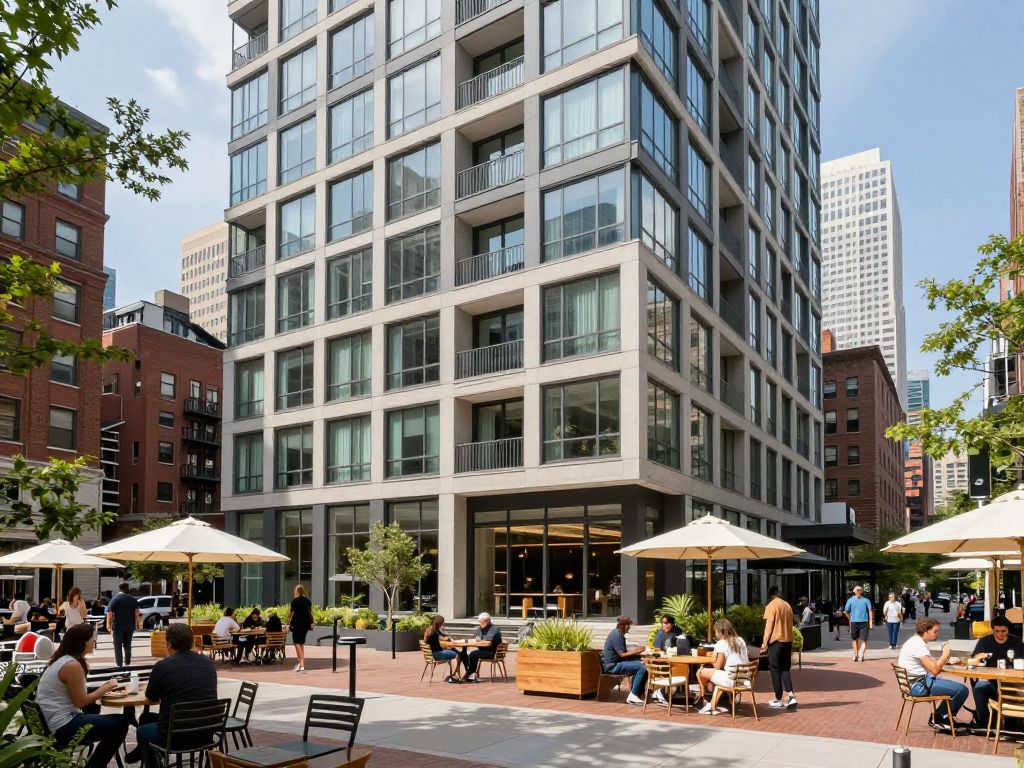
Boston is undergoing significant changes as it converts an 11-story office building into modern apartments, creating 110 new homes in the city’s downtown. This initiative, part of its Office to Residential Conversion Program, aims to address housing shortages while revitalizing the urban landscape. The city’s proactive approach promotes residential living in the business district, integrating more affordable housing options, and supporting local commerce.
Boston Revitalizes Downtown with 110 New Homes
A new conversion project transforms an 11-story office building into modern apartments, showcasing innovative approaches to urban development and economic resilience in the heart of the city.
Boston’s economic landscape continues to evolve, marked by a spirit of entrepreneurial innovation and strategic adaptation. In response to the changing dynamics of urban centers, particularly the shift in office space utilization, Boston has embraced a proactive approach to revitalize its downtown core. This strategy leverages private investment and thoughtful urban planning, demonstrating a commitment to fostering economic growth and creating vibrant residential communities.
The city’s initiative to convert underutilized office buildings into residential units highlights a forward-thinking perspective. By transforming existing infrastructure, Boston is not only addressing its pressing housing needs but also reinforcing the vitality of its central business district. This pragmatic response underscores how targeted programs can encourage development, support local businesses, and enhance the overall quality of urban life for Boston MA business and residents alike.
Transforming Downtown Boston’s Landscape
Construction is now underway on a significant project in downtown Boston: the conversion of an 11-story office building into 110 new apartments. This initiative exemplifies the city’s broader vision to repurpose existing structures for modern residential use. The development aims to avoid vacancies and preserve the historic charm of the downtown area, contributing to its ongoing revitalization. The project at 31 Milk Street, also known as 16-18 Hawley Street, will create 110 rental units, including 22 designated as income-restricted housing.
This conversion is part of a larger trend, reflecting a strategic utilization of existing infrastructure to meet contemporary demands. The goal is to breathe new life into underutilized buildings, creating dynamic living spaces that contribute to a more active and populated downtown, thereby supporting local commerce and enhancing community vibrancy.
Strategic City Initiatives Driving Change
Boston has actively supported these conversions through its Office to Residential Conversion Program, which formally launched in October 2023. This program provides substantial incentives, including an average 75% reduced property tax rate for up to 29 years and streamlined permitting processes. These measures are designed to make conversion projects more financially viable for developers, illustrating the benefits of limited regulation and strategic tax policies in stimulating private investment.
The program has already seen significant engagement, receiving 22 applications across 27 buildings, proposing to convert 1.2 million square feet of office space into 1,517 new homes, with 284 designated as income-restricted. Four projects, encompassing 236 units, are currently under construction. The city extended the application deadline to December 31, 2025, to encourage further participation in this successful initiative.
The state of Massachusetts has also contributed to this effort, announcing a $15 million (State-level) funding pool to incentivize larger-scale conversions. This funding offers up to $215,000 per affordable housing unit, with a cap of $4 million per project, further demonstrating a commitment to addressing the housing shortage.
Fostering Economic Growth and Community Vibrancy
The conversion program is a cornerstone of Boston’s downtown revitalization strategy, responding to increased office vacancy rates observed since October 2022. The aim is to increase residential density downtown, which in turn supports Boston small business, enhances foot traffic, and cultivates a more vibrant, 18-hour urban environment. This approach recognizes that a thriving residential population is crucial for sustaining local retail and restaurants, creating a self-reinforcing cycle of economic growth.
Updated zoning for Downtown has been approved to specifically stimulate residential development and streamline the adaptive reuse of existing buildings. Projects under the program are required to dedicate 17% of all newly created units as income-restricted for households making up to 60% of the Area Median Income, with an additional 3% for voucher holders. Furthermore, these conversions must adhere to new energy efficiency standards and are encouraged to maintain ground-floor retail or other public uses, ensuring both sustainable development and a lively streetscape.
The Spirit of Entrepreneurial Adaptation
The success of these conversion projects is a testament to the ingenuity and resilience of Massachusettes entrepreneurs and developers. Transforming an office building into residential units presents unique logistical and design challenges, requiring innovative solutions and significant private investment. Developers are reimagining how urban spaces can be utilized, demonstrating a proactive spirit in adapting to changing market conditions. This entrepreneurial drive is vital for the continuous evolution and prosperity of Boston economic growth.
A Model for Urban Renewal
Boston’s strategic initiative to convert office spaces into residential units is generating significant interest nationwide. Across the U.S., many downtown office districts are grappling with high vacancy rates following the pandemic. Boston’s comprehensive program, combining financial incentives, streamlined permitting, and updated zoning, offers a replicable model for other cities facing similar challenges. This thoughtful blend of public policy and private sector innovation positions Boston as a leader in urban adaptive reuse, demonstrating how targeted programs can unlock new housing opportunities and foster more dynamic city centers.
The ongoing conversion of office buildings into residential units in downtown Boston is a clear indicator of the city’s commitment to strategic economic development and community enhancement. These projects, driven by private investment and supported by responsive municipal policies, are not just creating new homes; they are redefining Boston’s urban core as a vibrant, round-the-clock neighborhood. By embracing innovation and facilitating sensible development, Boston is securing a prosperous and dynamic future for its residents and businesses.
We encourage our readers to witness these positive changes firsthand, support the burgeoning local businesses that thrive in a more residential downtown, and remain engaged in the ongoing conversations shaping Boston’s economic future.
Frequently Asked Questions (FAQ)
- What is Boston’s Office to Residential Conversion Program?
- Boston’s Office to Residential Conversion Program is a city initiative launched in October 2023 to incentivize the transformation of vacant or underutilized office buildings in downtown Boston into residential units.
- What incentives are offered to developers under this program?
- Developers receive an average 75% reduced property tax rate for up to 29 years and benefit from streamlined permitting processes.
- How many units are being created through this program?
- The program has received 22 applications, proposing to convert office space across 27 buildings into 1,517 new homes, with 284 units designated as income-restricted.
- What is the status of the 110-unit conversion project in downtown Boston?
- Construction is underway to convert an 11-story office building at 31 Milk Street (16-18 Hawley Street) into 110 apartments, with 22 of these being income-restricted.
- What are the affordable housing requirements for projects in this program?
- Projects are required to designate 17% of all newly created units as income-restricted for households making up to 60% of the Area Median Income, with an additional 3% reserved for voucher holders.
- Has the program received state funding?
- Yes, the state of Massachusetts announced $15 million (State-level) in funding to incentivize larger-scale conversions, offering up to $215,000 per affordable housing unit, capped at $4 million per project.
- What is the deadline for applications to the program?
- The application deadline for the program has been extended to December 31, 2025.
Key Features of Boston’s Office to Residential Conversion Program
| Program Launch | October 2023 |
| Primary Goal | Convert vacant office space into residential units, increase housing stock, stabilize the office market, create an 18-hour mixed-use downtown. |
| Key Incentives | Average 75% property tax abatement for 29 years, streamlined permitting, updated zoning. |
| Total Applications (as of Dec 2025) | 22 applications across 27 buildings for 1,517 new homes. |
| Units Under Construction (as of Dec 2025) | 4 projects totaling 236 units. |
| 110-Unit Project Location | 31 Milk Street (16-18 Hawley Street), Downtown Boston. |
| Affordable Housing Requirement | 17% of units at 60% AMI, plus 3% for voucher holders (total 20%). |
| State Funding (State-level) | $15 million (State-level) for larger conversions, up to $215,000 per affordable unit, capped at $4 million per project. |
| Application Deadline | December 31, 2025. |
| Additional Requirements | Compliance with new energy efficiency standards, encouraged ground-floor retail/public uses. |
Deeper Dive: News & Info About This Topic
HERE Resources
Boston Public Schools Forges Landmark Mental Health Partnership
Boston Updates Community Choice Electricity Program for Residents
Boston Grocery Landscape Experiences Significant Transformation
Boston: Call for Action on Domestic Violence Job Protection Bill
Boston City Council Approves Increased Property Tax Rates
Economic Effects of Mass Deportation on Boston Businesses
Cambridge Tower Sale Highlights Investment Confidence in Innovation Hub
Boston Receives $47 Million for Housing Initiatives
HUD Launches Investigation into Boston’s Housing Policies
New Law Enacts Heightened Protections for Massachusetts Transit Workers

Author: STAFF HERE BOSTON WRITER
The BOSTON STAFF WRITER represents the experienced team at HEREBoston.com, your go-to source for actionable local news and information in Boston, Suffolk County, and beyond. Specializing in "news you can use," we cover essential topics like product reviews for personal and business needs, local business directories, politics, real estate trends, neighborhood insights, and state news affecting the area—with deep expertise drawn from years of dedicated reporting and strong community input, including local press releases and business updates. We deliver top reporting on high-value events such as Boston Marathon, Head of the Charles Regatta, and Boston Harborfest. Our coverage extends to key organizations like the Greater Boston Chamber of Commerce and Associated Industries of Massachusetts, plus leading businesses in finance, biotech, and insurance that power the local economy such as Fidelity Investments, Biogen, and Liberty Mutual Insurance. As part of the broader HERE network, we provide comprehensive, credible insights into Massachusetts's dynamic landscape.