

Boston, January 17, 2026
The Massachusetts State Senate voted decisively against Mayor Michelle Wu’s proposal to shift property tax burdens to commercial owners, instead passing an alternative measure. This action is part of ongoing discussions about tax relief for Boston homeowners, as the city grapples with rising living costs and the complexities of urban governance. The Senate’s decision underscores the challenges of balancing economic fairness with the fiscal needs of the community.
Boston
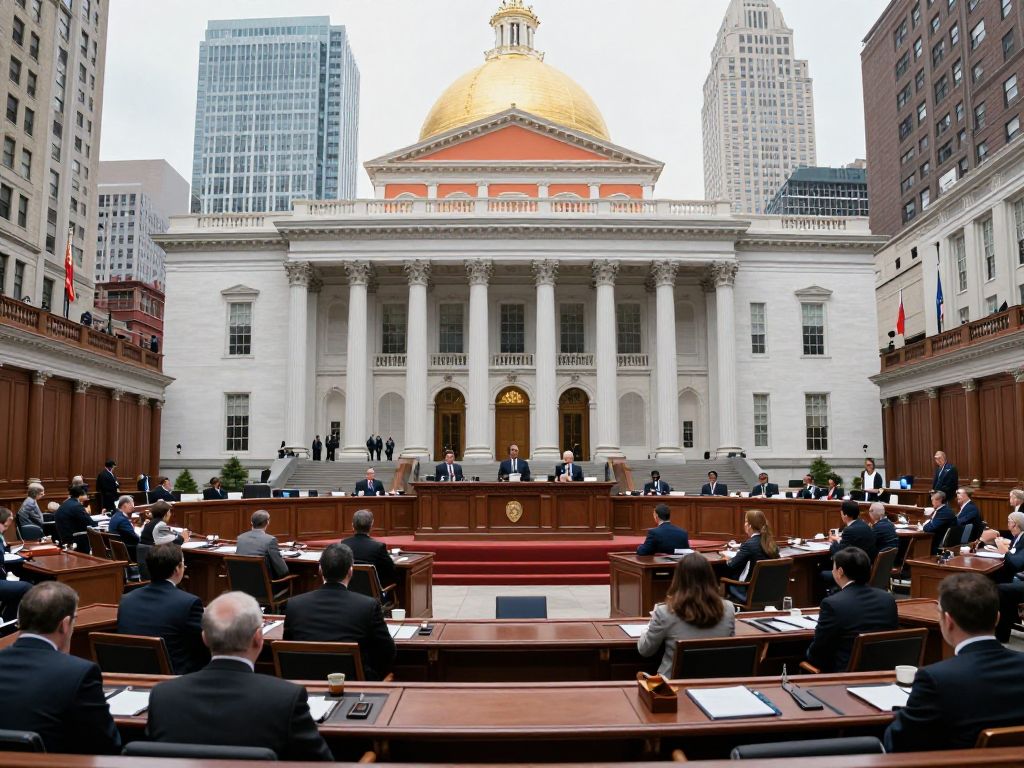
The Massachusetts State Senate, in a decisive vote on January 15, 2026, rejected Mayor Michelle Wu’s legislative proposal aimed at temporarily reallocating a greater share of the city’s property tax obligation to commercial property owners. In its place, the Senate passed an alternative measure, signaling a distinct legislative path forward in the ongoing discussions surrounding residential property tax relief within the city. This action, taking place on Beacon Hill, comes as Boston continues to grapple with the multifaceted economic pressures faced by its homeowners and businesses alike, seeking a sustainable balance for urban prosperity.
A Quest for Residential Relief
Mayor Wu, in collaboration with the Boston City Council, had advocated for the temporary shift in the property tax burden, a direct response to what they identified as steep increases in residential property taxes affecting citizens across the city. The intention behind such a measure was to offer respite to homeowners by easing their financial strain, recognizing the profound impact of rising costs on household budgets and the stability of neighborhoods. This initiative reflects a sincere concern for the everyday lives of Bostonians, particularly those who find their long-held homes increasingly expensive to maintain amidst a dynamic urban economy, where the costs of living continue to climb.
The legislative vehicle for this proposed change was a home rule petition, a mechanism by which a municipality seeks specific authority from the state legislature to enact local laws that deviate from general state statutes. Boston, like other municipalities in Massachusetts, requires such explicit state government permission to adjust its property tax rates in a manner distinct from statewide norms. This intricate dance between local aspiration and state oversight underscores the delicate balance of governance in a commonwealth where local control is often intertwined with broader state policy frameworks, necessitating a consensus that can be difficult to achieve.
Senate’s Alternative Vision
The Senate’s vote on January 15 was conclusive, with an amendment directly mirroring Mayor Wu’s home rule petition being defeated by a significant margin of 33-5. This outcome solidified the legislative body’s reservations regarding the specific contours of the mayor’s plan, which sought to temporarily place a higher tax burden on commercial entities. The decision was not made in isolation; criticism had been directed at Beacon Hill for its perceived inaction on steep tax hikes in Boston, leading the Senate to previously indicate its intention to bypass Wu’s proposal as early as December 2025.
The passage of an alternative measure by the Senate indicates a recognition of the underlying issue of residential tax burden, even while charting a different course than that initially proposed by the city’s executive. While the precise details of this alternative measure were not immediately elaborated upon in available public statements, its adoption signifies a legislative willingness to address the concerns of Boston’s residents, albeit through a strategy distinct from the direct shifting of the tax burden to commercial properties as envisioned by the mayor. This signifies a commitment to finding a resolution, even if the method remains a subject of ongoing deliberation.
A History of Tax Discussions
This recent legislative action is part of a continuing dialogue about property tax equity and relief in Boston. Mayor Wu had previously refiled residential tax relief legislation in January 2025, demonstrating a sustained commitment to addressing these fiscal challenges. The context of these discussions includes past adjustments in the tax landscape; for instance, bills enacted in January 2025 reportedly resulted in an average 3.4% reduction in taxes for commercial properties, translating to an approximate savings of $7,745 compared to the prior year. These figures illustrate the tangible effects of policy decisions on various segments of the property-owning population, revealing the complex interplay of tax rates and economic realities and the continuous search for balance.
The ongoing legislative discourse surrounding property taxation in Boston is a reflection of the challenges inherent in urban governance. It requires a careful calibration of municipal revenue needs with the capacity of both residents and businesses to contribute, all while fostering an environment conducive to growth and stability. The Senate’s action, while differing from the Mayor’s initial proposal, nonetheless signifies a shared acknowledgment of the need to navigate these fiscal waters with prudence and an eye toward the broader well-being of the community. It underscores the perpetual quest for economic fairness within the city’s vibrant yet demanding landscape.
The resolution of such matters often requires patient deliberation and a search for common ground, recognizing that behind every policy decision lies the tangible impact on individuals, families, and the communal fabric of a city. The path forward for Boston’s property tax framework will undoubtedly continue to be shaped by these persistent considerations, as lawmakers strive to balance competing interests with a humane understanding of economic realities, aiming for a future where both residential stability and commercial vitality can thrive.
Frequently Asked Questions
- What happened with Mayor Wu’s property tax plan?
- The Massachusetts State Senate voted down Mayor Michelle Wu’s property tax plan on January 15, 2026, which aimed to temporarily shift more of the city’s property tax burden onto commercial owners.
- When did the State Senate vote on the plan?
- The State Senate voted on Mayor Wu’s plan on January 15, 2026.
- What was the purpose of Mayor Wu’s plan?
- Mayor Wu and the city council had been seeking to temporarily shift more of the city’s property tax burden onto commercial owners to address steep tax hikes in Boston for residential property owners.
- Did the State Senate pass an alternative measure?
- Yes, after voting down Mayor Wu’s plan, the State Senate passed an alternative measure on January 15, 2026.
- Why does Boston need state government permission for property tax changes?
- Boston must ask the state government for permission to change property tax rates in Boston only, as such changes deviate from general state statutes.
Key Legislative Actions on Boston Property Tax
| Date | Action | Description | Scope |
|---|---|---|---|
| January 15, 2026 | State Senate Vote | Rejected Mayor Michelle Wu’s property tax plan (33-5 vote). | State-level |
| January 15, 2026 | State Senate Action | Passed an alternative property tax measure. | State-level |
| December 2025 | Senate Indication | Senate indicated plans to sidestep Mayor Wu’s property tax shift plan. | State-level |
| January 13, 2025 | Mayor Wu’s Action | Mayor Michelle Wu refiled residential tax relief legislation. | Local (Boston) |
| Post-January 13, 2025 | Commercial Tax Impact | Average commercial property received a 3.4% reduction in taxes, about $7,745 less than the previous year, from January 2025 bills. | Local (Boston) |
Deeper Dive: News & Info About This Topic
HERE Resources
New York Firm Invests $63 Million in Stoughton Apartment Complex
Massachusetts Senate Poised for Votes on Tax Relief and Reforms
Rent Prices Decrease in Boston Area, Signaling Market Shift
Massachusetts Tax Cap Proposal Sparks Economic Debate
Boston City Council Approves Increased Property Tax Rates
Boston City Council Approves Increased Tax Rates
Lawsuit Claims Retaliatory Overtaxation in Boston
Fiscal Challenges Looming for Massachusetts Municipalities
Boston Faces $1.7 Billion Decline in Commercial Property Tax Revenue
Boston Commercial Property Owners Face Rising Taxes After Appeals

Author: STAFF HERE BOSTON WRITER
The BOSTON STAFF WRITER represents the experienced team at HEREBoston.com, your go-to source for actionable local news and information in Boston, Suffolk County, and beyond. Specializing in "news you can use," we cover essential topics like product reviews for personal and business needs, local business directories, politics, real estate trends, neighborhood insights, and state news affecting the area—with deep expertise drawn from years of dedicated reporting and strong community input, including local press releases and business updates. We deliver top reporting on high-value events such as Boston Marathon, Head of the Charles Regatta, and Boston Harborfest. Our coverage extends to key organizations like the Greater Boston Chamber of Commerce and Associated Industries of Massachusetts, plus leading businesses in finance, biotech, and insurance that power the local economy such as Fidelity Investments, Biogen, and Liberty Mutual Insurance. As part of the broader HERE network, we provide comprehensive, credible insights into Massachusetts's dynamic landscape.