
Boston, December 26, 2025
Boston’s retail sector is evolving with a notable mix of challenges and opportunities. While national retailers face closures, local entrepreneurship and innovation continue to drive economic growth. The city maintains a low retail vacancy rate, supported by strong consumer demand. Regulatory changes and community support are crucial as small businesses adapt to shifting consumer behaviors and technological advancements, ensuring sustained vitality in Boston’s commercial future.
Boston’s dynamic business landscape is continuously evolving, marked by both the ebb and flow of retail activity and a persistent drive for innovation. While some national retailers are adjusting their physical footprints, the spirit of local entrepreneurship and a focus on economic development continue to shape the Bay State’s commercial future. 2025 brings a mix of challenges and opportunities, particularly for Massachusetts entrepreneurs and small businesses navigating shifts in consumer behavior, regulatory updates, and technological advancements.
Amid a national trend of store closures, Boston’s retail sector demonstrates notable resilience. However, local businesses and policymakers are actively working to foster an environment where small businesses can thrive, emphasizing innovation and community engagement as cornerstones of sustained economic growth. These efforts aim to not only mitigate the impact of broader retail shifts but also to propel Massachusetts’ economy forward.
Retail Shifts and the Boston Market
The retail industry nationwide is undergoing a significant transformation, with a notable increase in store closures across the country. In 2024, retail data indicated a 24 percent rise in store closures compared to the previous year, a trend influenced by consumers shifting towards online shopping, inflation, and bankruptcies. This trend is anticipated to continue into 2025, with some analysts predicting that the total number of national closures could reach 45,000 over the next five years.
Several national chains have already announced plans to reduce their physical presence. For instance, Advance Auto Parts plans to close 727 locations by mid-2025, while Walgreens expects to shutter 500 of its U.S. stores in 2025. Denny’s has also planned 100 closures for next year, following 50 in the current year. Family Dollar is set to close locations in an effort to enhance profitability and address operational issues. Additionally, mall staples such as JCPenney, Victoria’s Secret, Sears, and Foot Locker are also projected to close stores nationwide.
In Massachusetts, specific closures have impacted the retail landscape. Rite Aid, a major pharmacy chain, has closed all its Bay State stores. Joann, the fabric and crafts retailer, closed most of its Massachusetts locations, citing rising costs and reduced demand as more crafters buy supplies online. Smithland Pet & Garden Centers also closed all its locations, including six in Massachusetts. Circle Furniture, a family-run business operating for nearly 70 years, abruptly closed all its eight stores in Massachusetts and New Hampshire in December 2025. The outdoor equipment store REI Co-op also confirmed plans to close its only Boston location in Fenway in 2025 due to declining sales. Moreover, in 2024, eight Stop & Shop locations in Massachusetts were slated for closure by early November as part of a restructuring effort across the Northeast.
Despite these closures, Boston’s retail market demonstrates resilience. The metro area maintains one of the lowest retail vacancy rates among major U.S. markets, with strong demand in its urban core and steady investor interest serving as stabilizing factors. As of Q2 2025, retail availability in Greater Boston was 3.0%, outperforming the national trend of 4.9%. This robust demand, coupled with minimal new retail development, has kept retail space availability near historic lows.
Entrepreneurial Innovation in Boston MA
Boston remains a vibrant hub for innovation and entrepreneurship, blending academic excellence with a dynamic startup culture. The city is recognized as a global leader in innovation, particularly in biotechnology, digital health, AI, and fintech. Institutions like Harvard and MIT fuel groundbreaking research and cultivate a highly skilled talent pool.
The Boston MA business ecosystem is supported by numerous accelerators, incubators, and venture capital firms that provide essential resources, mentorship, and funding to startups. This collaborative environment helps transform scientific advancements into practical solutions and drives economic growth. Programs and initiatives are also in place to support early-stage entrepreneurs and first-time startup founders, offering guidance on idea validation, co-founder matching, and fundraising. Organizations like TiE Boston connect entrepreneurs with experienced founders, investors, and service providers, fostering a cycle of innovation and wealth creation.
In fact, Boston has been ranked as the number one U.S. city for fostering innovation and entrepreneurship by a report from the US Chamber of Commerce and 1776, with Massachusetts recognized as the most innovative state for two consecutive years.
Navigating Regulatory Changes
Massachusetts businesses are also navigating a changing regulatory landscape. Governor Maura Healey’s administration has launched the “Massachusetts Means Business” initiative, aiming to reduce business regulations by 25%. This initiative seeks to cut red tape, simplify regulations, and eliminate unnecessary barriers to business growth, ultimately saving businesses time and money. Updates to regulations span various sectors, including banking, insurance, occupational licensure, and unit pricing for grocery and retail stores.
For instance, changes to Division of Insurance regulations are set to benefit 1,400 licensed insurance companies and approximately 200,000 individual insurance producers by eliminating paper filings and expediting processes. Updates to Division of Banks regulations will benefit 788 financial services companies by refining processes and reducing regulatory burdens. Starting October 29, 2025, employers with 25 or more employees will need to include pay ranges in job postings, with those having 100 or more employees also required to submit detailed wage data to the state beginning February 1, 2025. While some regulations are being streamlined, Massachusetts has a reputation for being a highly regulated state, ranking as the 9th most regulated in the U.S.. Research suggests that excessive regulation can correlate with increased poverty rates, lost jobs, and higher inflation.
Economic Growth and Stability
Boston’s economy has demonstrated remarkable strength and resilience, even amidst national socioeconomic challenges such as inflation, rising interest rates, and labor shortages. Massachusetts’s GDP growth has remained consistent, outpacing the national average with an annual increase of 1.8% and 1.9% in Q1 and Q2 2024, respectively. Key growth sectors include health services, construction, education, and government, with hospitals being major employers in Boston. The technology sector also continues to attract significant public and private investment.
Despite some challenges, Boston’s consistent growth trajectory suggests lasting economic stability. The city’s blend of affluent urban demographics, dense mixed-use developments, and low new supply is expected to continue supporting retail performance. However, the state faces potential economic headwinds, including federal funding cuts and the impact of tariffs, which could affect key sectors like life sciences, higher education, trade, and tourism. Some studies suggest that tariff hikes could cost Massachusetts billions in economic growth and tens of thousands of jobs by 2026. Small businesses nationwide are also facing challenges related to rising labor costs, persistent inflation, and tighter access to credit, impacting optimism levels.
Community and Small-Business Resilience
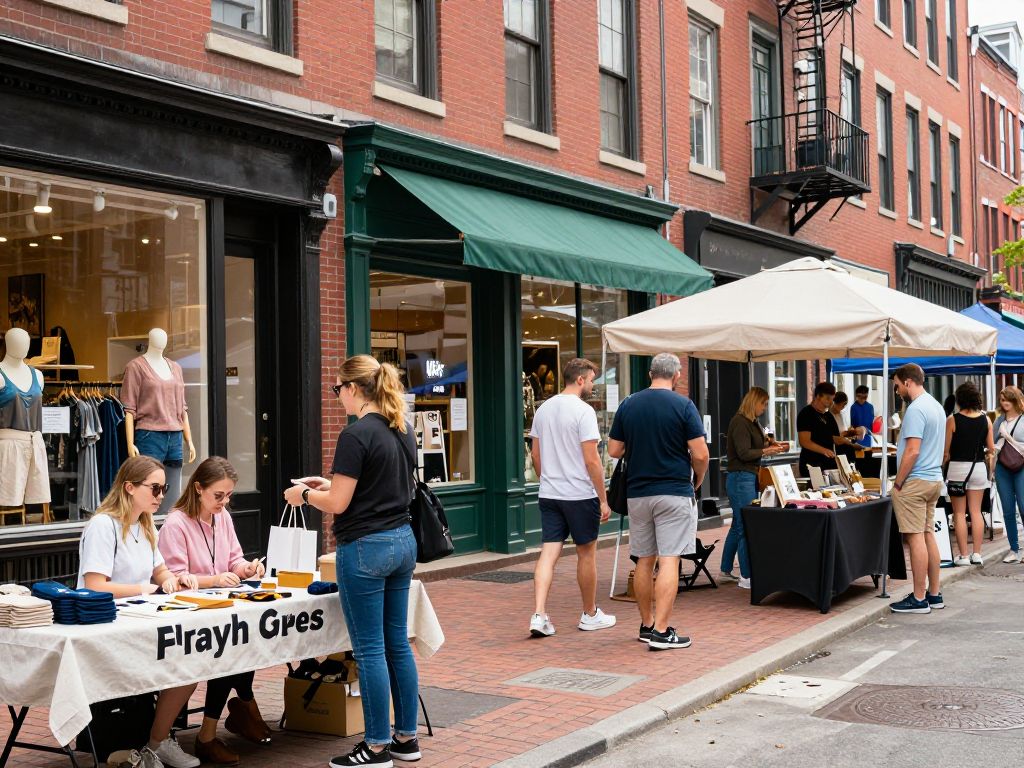
The resilience of Boston small business owners and the strong community fabric are vital in navigating economic shifts. Many independent retailers, from bookstores to gift shops, contribute significantly to the state’s economy. Local consumer spending habits, particularly in dining, apparel, and entertainment, remain robust, providing a solid foundation for retailers.
Retailers are increasingly adopting omnichannel strategies, balancing in-store experiences with digital convenience to meet evolving consumer preferences. Technology, including automation and artificial intelligence, is being utilized by 93% of retailers to enhance customer service and operations. This entrepreneurial adaptation, coupled with community support, plays a crucial role in maintaining Boston’s economic vitality.
The collaboration between universities and industries, supported by venture capital, is a key driver for Massachusetts entrepreneurs, fostering a dynamic environment where young companies can thrive and scale. This innovation ecosystem ensures that even as some traditional retail models face pressure, new opportunities and businesses emerge to contribute to Boston MA business growth.
Boston’s economic landscape, while experiencing shifts in its retail sector, remains fundamentally strong due to its innovative spirit, robust key industries, and active efforts to streamline business operations. The city’s ability to adapt to changing consumer behaviors and technological advancements, coupled with strategic regulatory adjustments, positions it for continued stability and growth. Supporting local businesses and fostering entrepreneurial endeavors are crucial for sustaining Boston’s unique economic vitality. Engage with your local community and discover the innovative businesses shaping Boston’s future.
Frequently Asked Questions (FAQ)
- What national retailers are closing stores in 2025?
- Nationally, Advance Auto Parts plans to close 727 locations by mid-2025. Walgreens expects to shutter 500 of its U.S. stores in 2025. Denny’s has planned 100 closures for 2025, following 50 in the current year. Family Dollar is also set to shut down locations to increase profitability and address operational challenges. Mall staples such as JCPenney, Victoria’s Secret, Sears, and Foot Locker are also projected to close stores nationwide.
- Which retailers have closed locations in Massachusetts in 2025?
- In Massachusetts, Rite Aid has closed all its Bay State stores. Joann, the fabric and crafts retailer, closed most of its Massachusetts locations. Smithland Pet & Garden Centers also closed all its locations, including six in Massachusetts. Circle Furniture closed all eight of its stores in Massachusetts and New Hampshire in December 2025. The outdoor equipment store REI Co-op plans to close its only Boston location in Fenway in 2025.
- How is Boston’s retail market performing despite store closures?
- Boston’s retail market demonstrates resilience, maintaining one of the lowest retail vacancy rates among major U.S. markets. Strong demand in its urban core and steady investor interest serve as stabilizing factors. Retail availability in Greater Boston was 3.0% in Q2 2025, outperforming the national trend of 4.9%, partly due to robust consumer spending and minimal new retail development.
- What initiatives is Massachusetts taking to support businesses?
- Governor Maura Healey’s administration launched the “Massachusetts Means Business” initiative to reduce business regulations by 25%. This initiative aims to cut red tape, simplify regulations, and eliminate unnecessary barriers to business growth, saving businesses time and money. Regulatory updates cover banking, insurance, occupational licensure, and unit pricing for grocery and retail stores.
- What are the key drivers of Boston’s economic growth?
- Boston’s economy shows strength and resilience, with Massachusetts’s GDP growth outpacing the national average. Key growth sectors include health services, construction, education, and government. The technology sector also attracts significant public and private investment. Boston is a global leader in innovation, particularly in biotechnology, digital health, AI, and fintech.
Key Aspects of Boston’s Retail and Business Landscape (2025)
| Aspect | Details | Scope |
|---|---|---|
| National Retail Closures (2025) | Advance Auto Parts (727 locations), Walgreens (500 U.S. stores), Denny’s (100 locations), Family Dollar, JCPenney, Victoria’s Secret, Sears, Foot Locker. | Nationwide |
| Massachusetts Retail Closures (2025) | Rite Aid (all Bay State stores), Joann (most MA locations), Smithland Pet & Garden Centers (all locations, including 6 in MA), Circle Furniture (all 8 stores in MA and NH), REI Co-op (only Boston location). | State-level (MA/NH for Circle Furniture) |
| Boston Retail Vacancy Rate (Q2 2025) | 3.0% (compared to 4.9% nationally). | Local (Boston Metro) |
| Massachusetts Regulatory Reduction Initiative | “Massachusetts Means Business” aims to cut regulations by 25%. | State-level |
| Massachusetts GDP Growth (Q1, Q2 2024) | 1.8% and 1.9% annually (0.2 percentage points above national average). | State-level |
| Boston Innovation Ranking | Number 1 U.S. city to foster innovation and entrepreneurship. | Local (Boston) |
Deeper Dive: News & Info About This Topic
HERE Resources
Boston Reports No Homicides or Robberies on Christmas Day
Boston College Competes in Kwik Trip Holiday Face-Off
Boston Sees Alarming Rise in Shoplifting Arrests
Watertown Model UN Shines at Boston Latin Conference
Boston’s Luxury Market Shines: Moderna CEO’s $10M Beacon Hill Sale
LIT Boutique on Newbury Street Files Chapter 7 Bankruptcy
Boston’s Furniture Landscape Shifts: A Legacy Concludes
Boston’s Thriving Spirit: Community Initiatives Driving Growth
Boston Faces Property Tax Hike and New Legislative Proposals
Boston Revitalizes Downtown with 110 New Homes

Author: STAFF HERE BOSTON WRITER
The BOSTON STAFF WRITER represents the experienced team at HEREBoston.com, your go-to source for actionable local news and information in Boston, Suffolk County, and beyond. Specializing in "news you can use," we cover essential topics like product reviews for personal and business needs, local business directories, politics, real estate trends, neighborhood insights, and state news affecting the area—with deep expertise drawn from years of dedicated reporting and strong community input, including local press releases and business updates. We deliver top reporting on high-value events such as Boston Marathon, Head of the Charles Regatta, and Boston Harborfest. Our coverage extends to key organizations like the Greater Boston Chamber of Commerce and Associated Industries of Massachusetts, plus leading businesses in finance, biotech, and insurance that power the local economy such as Fidelity Investments, Biogen, and Liberty Mutual Insurance. As part of the broader HERE network, we provide comprehensive, credible insights into Massachusetts's dynamic landscape.