
Boston, December 21, 2025
In recent weeks, Boston Mayor Michelle Wu has reiterated her assertion that the city is the safest in the United States. However, conflicting data reveals an increase in homicide rates, challenging the narrative of safety. With 30 reported homicides by early December, this marks a significant rise from the previous year. The discourse surrounding public safety raises questions about the integrity of official claims versus the lived realities of Boston’s residents, prompting a deeper examination of the city’s safety metrics and community experiences.
Boston Grapples with Safety Claims Amidst Unsettling Data
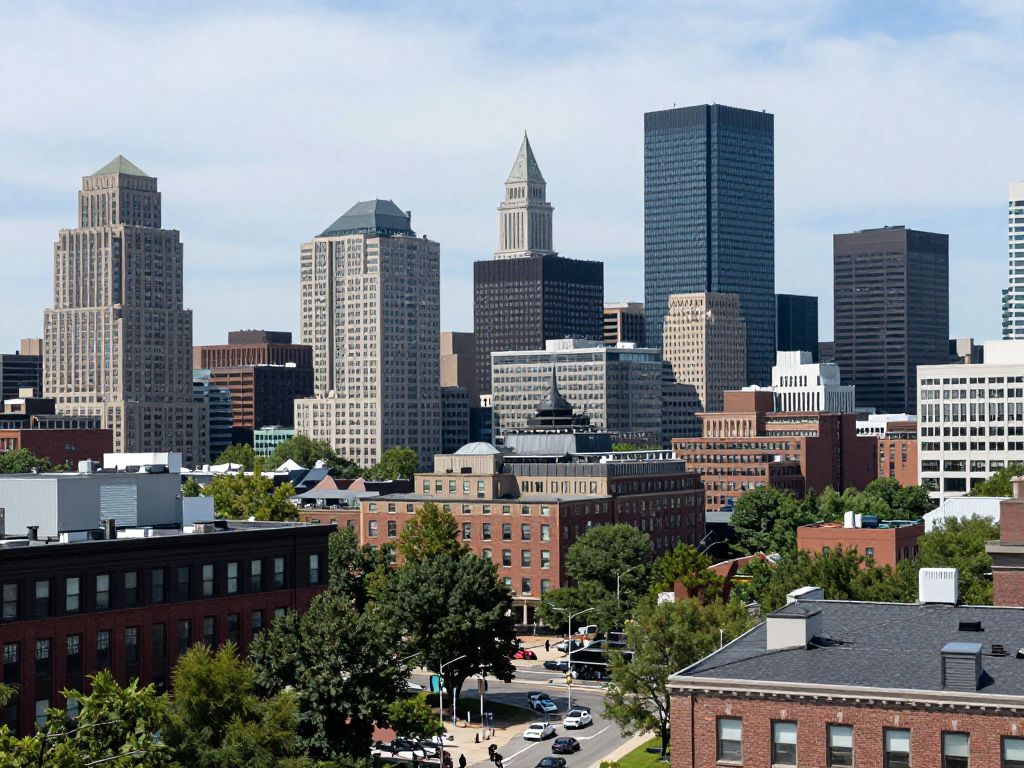
Boston. In the closing weeks of 2025, Mayor Michelle Wu has again asserted that Boston stands as the safest city in the United States. This assertion, however, encounters a complex counter-narrative from recent data, particularly concerning per capita homicide rates through September of this year. The juxtaposition of proclaimed safety with empirical observation invites careful consideration of the metrics by which a city’s well-being is truly measured, touching upon the profound daily realities faced by its residents. The quest for security is a deeply human endeavor, and the transparent presentation of facts forms its bedrock.
A Recurring Claim Meets Emerging Statistics
Mayor Wu has reiterated this claim as the year draws to a close, yet the precise basis for her current statement remains unclear. Such declarations, while perhaps intended to instill public confidence, stand in quiet tension with other available information that reflects a more intricate urban landscape. Public discourse has noted the Mayor’s repeated statements regarding Boston’s status as a safe major city.
The broader context reveals an uptick in homicides within the city, a trend that naturally prompts residents and observers alike to ponder the true state of their security. In the first half of 2025, Boston recorded 17 homicides, marking a 143% increase compared to seven during the same period last year. By December 6, 2025, the Boston Police Department reported 30 homicides, up 36% from 22 in the same period in 2024. This increase follows two consecutive years of declining homicide numbers. It is within this intricate environment, where the specter of violence casts a long shadow, that claims of unparalleled safety are being presented. The perception of safety is not merely an abstract concept; it is interwoven with the daily rhythms of life, affecting where children play, how individuals commute, and the general sense of peace within a community.
Data Reveals a Complex Reality
Contrary to the Mayor’s pronouncements, the latest report from the Major Cities Chiefs Association (MCCA) for 2025 offers a different perspective. This report indicates that several other communities have recorded lower per capita homicide rates through September of this year, including cities like San Francisco, Honolulu, El Paso, Fresno, Omaha, Tampa, Orlando, Salt Lake City, and Mesa. This granular data, drawn from the stark realities of crime statistics, sketches a more nuanced picture than a broad declaration of supreme safety can convey.
Further examination, including analysis by independent observers, has openly questioned the Mayor’s assertion. A local news analysis specifically casts doubt on the claim, suggesting a measurable discrepancy between the stated position and the empirical reality that unfolds in neighborhoods across the city. While Boston Police Commissioner Michael Cox noted that the 31 homicides to date in 2025 represent the second-lowest total in the last 20 years and that shooting victims and incidents of gunfire are at historic lows, the rise in homicides themselves presents a challenge to the “safest city” claim. The responsibility of civic leadership involves not merely the articulation of aspiration, but a grounded engagement with the verifiable facts that shape the public’s perception and, more importantly, their actual experience of their home. To navigate the complexities of urban life requires a steady hand guided by verifiable information.
The Human Dimensions of Urban Safety
The concept of a “safest city” resonates deeply within the human spirit, speaking to a fundamental desire for peace, stability, and security in one’s daily life. It is the quiet assurance that one can walk freely, raise families without undue fear, and build a future unmarred by pervasive threat. When official statements about safety diverge from data that reflects the sorrowful reality of violence, it necessitates a thoughtful pause for reflection. The numbers in a report are not mere figures; they represent lives, families, and communities grappling with profound loss and lingering anxiety.
It is in the intricate patterns of crime statistics, and more profoundly, in the lives touched by these events—the victims, their loved ones, and the broader community—that the true measure of a city’s safety is found. The quiet concern of families, the vigilant efforts of neighborhoods striving for communal protection, and the collective hope for a more secure future are all integral parts of this ongoing civic dialogue. The earnest work of ensuring public safety remains a continuous endeavor, requiring open acknowledgment of challenges and a steadfast commitment to accurate representation for the well-being of all who call Boston home. In the delicate balance between hope and reality, clear-eyed truth serves as the most reliable compass for progress.
Frequently Asked Questions
- What is Mayor Michelle Wu’s recent claim about Boston?
- Mayor Michelle Wu has again asserted that Boston is the safest city in the United States.
- Does recent data support this claim?
- No, recent data suggests otherwise. The latest MCCA report for 2025 shows several communities with lower per capita homicide rates through September of this year.
- What is the context of these claims?
- Mayor Wu’s claims are made amidst an uptick in homicides within the city.
- Is the source of Mayor Wu’s assertion clear?
- The source of Mayor Wu’s current assertion remains unclear.
Key Features of Boston’s Safety Discussion
| Feature | Description |
|---|---|
| Official Claim | Mayor Michelle Wu states Boston is the safest city in the U.S. |
| Counter-Evidence | MCCA report (2025) shows other communities with lower per capita homicide rates through September. |
| Homicide Trend | Claims are made amid an uptick in homicides within Boston; 30 homicides by early December 2025, up 36% from 2024. |
| Source Clarity | The basis for Mayor Wu’s current assertion remains unclear. |
| Independent Analysis | A local analysis casts doubt on the safety claim. |
Deeper Dive: News & Info About This Topic
HERE Resources
Two Arrested Following Armed Robbery and Assault in South End
Boston Authorities Make Multiple Arrests in Vehicle Crime Probe
Tragic Shootings at Brown University and MIT Shake Academic Community
Boston: Call for Action on Domestic Violence Job Protection Bill
Details Emerge from Blue Hill Avenue Incident
Three Arrested in Salem Shooting Incident
Community Vigilance in Boston Investigations
Gang Member Pleads Guilty in Drug Conspiracy Case
Boston Campuses Enhance Security Following Tragic Events
Community Spirit Endures: Powisset Farm’s Event Evolution

Author: STAFF HERE BOSTON WRITER
The BOSTON STAFF WRITER represents the experienced team at HEREBoston.com, your go-to source for actionable local news and information in Boston, Suffolk County, and beyond. Specializing in "news you can use," we cover essential topics like product reviews for personal and business needs, local business directories, politics, real estate trends, neighborhood insights, and state news affecting the area—with deep expertise drawn from years of dedicated reporting and strong community input, including local press releases and business updates. We deliver top reporting on high-value events such as Boston Marathon, Head of the Charles Regatta, and Boston Harborfest. Our coverage extends to key organizations like the Greater Boston Chamber of Commerce and Associated Industries of Massachusetts, plus leading businesses in finance, biotech, and insurance that power the local economy such as Fidelity Investments, Biogen, and Liberty Mutual Insurance. As part of the broader HERE network, we provide comprehensive, credible insights into Massachusetts's dynamic landscape.