

News Summary
Boston educators are leading the charge in integrating artificial intelligence into K-12 education, promoting critical thinking and innovation among students. With a significant portion of students already utilizing AI for schoolwork, schools are focused on responsible and effective technology integration. Notable initiatives aim to train teachers and provide students with the digital literacy skills necessary to navigate an AI-driven world, while local policies are developed to ensure safe and equitable use of these technologies in Massachusetts classrooms.
Boston
Boston Schools & AI: Navigating the Digital Frontier
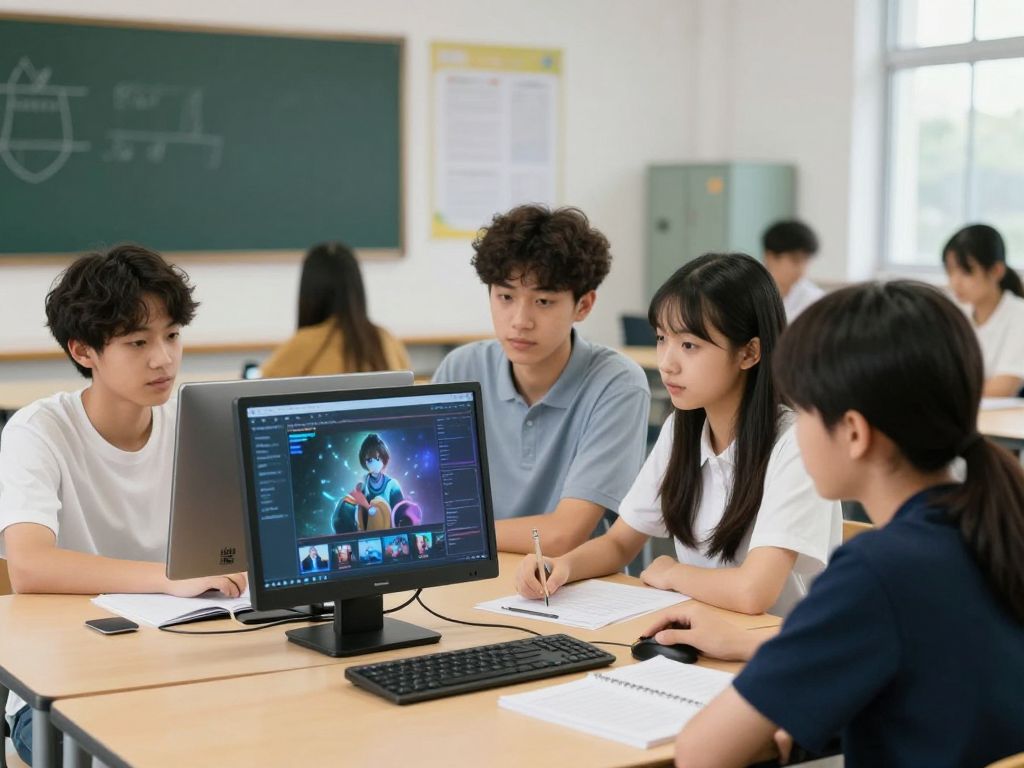
As generative artificial intelligence reshapes education, Boston educators are empowering students to innovate responsibly and critically assess information.
The rapid advancements in technology continue to present both challenges and profound opportunities for educational institutions. In Boston, educators are commendably embracing this new era, integrating innovative tools while upholding the rigorous academic standards that define our city’s commitment to student success. This proactive approach underscores the vital role of local leadership and pedagogical flexibility, demonstrating how adaptable frameworks, rather than rigid bureaucracy, can effectively foster academic growth and prepare students for the future in Massachusetts classrooms.
The integration of artificial intelligence into daily life, and subsequently into education, is a dynamic process. Our local schools, guided by a dedication to fostering critical thinking and personal achievement, are actively engaging with this technology. This engagement ensures that students are not merely passive consumers but active, informed participants in an increasingly AI-driven world, equipping them with the essential skills for navigating the digital landscape responsibly.
Understanding AI’s Presence in Classrooms
The integration of artificial intelligence into K-12 education is already a reality, with a recent statewide poll in Massachusetts revealing that 59% of K-12 students have utilized AI for schoolwork, with usage notably increasing among older students. This widespread adoption occurs amidst divided parental opinions regarding AI’s classroom role; while 33% of parents hold positive views, 34% are negative or unsure, and a significant 37% report being unaware of their child’s school’s AI policies.
Furthermore, a national study by the Stanford History Education Group, involving over 3000 high school students, challenged existing assumptions about students’ proficiency in discerning online misinformation, underscoring the critical need for enhanced digital literacy education. Despite these complexities, artificial intelligence holds substantial promise as a powerful learning assistant, likened to a “24-hour, IQ-150 tutor,” if integrated thoughtfully and supported by updated teaching methodologies. This perspective highlights AI’s potential to personalize learning and extend educational resources, offering a new dimension to student support within Boston MA schools.
Empowering Students as Critical Thinkers and Innovators
Boston Public Schools (BPS) is actively leading the state’s initiative by piloting a new artificial intelligence curriculum within its middle and high schools, aiming to train educators and introduce core AI concepts, technologies, and their societal implications. The objective of BPS is to strategically leverage artificial intelligence to personalize the learning experience, with the potential to reduce teacher workload and effectively address existing achievement gaps.
Locally, schools like Cristo Rey Boston High School are exemplifying innovative integration, where a world history teacher employs AI chatbots to facilitate engaging historical discussions and utilizes a tool called Class Companion for immediate, personalized writing feedback. This not only enhances the learning process but also improves teacher efficiency. Similarly, the International School of Boston (ISB) has implemented a project-based learning approach to AI literacy for its ninth-grade students. This program focuses on developing a technically informed, critically reflective, and ethically grounded ability to understand, evaluate, and engage with AI. The curriculum emphasizes teaching students how to identify misinformation and deepfakes, alongside fostering safe interactions with chatbots, reinforcing that AI literacy is crucial across all educational levels, particularly in high school.
Developing Responsible AI Guidelines and Policies
The Massachusetts Department of Elementary and Secondary Education (DESE) has developed guidance for artificial intelligence in K-12 education, which supports local leaders in establishing thoughtful, responsible, and equitable approaches without mandating AI use. This state-level initiative emphasizes local control, allowing individual districts to tailor AI integration to their specific contexts and community values.
DESE’s multi-year plan for AI integration includes the development of comprehensive resources, extensive training for staff on AI integration and student data privacy, and the creation of clear usage guidelines. These efforts aim to build a shared understanding of how AI functions and to promote its responsible application in educational settings. Drawing from practices in other districts, such as Newport News Public Schools and Wilkes County Schools, guidelines often require teacher permission for generative AI use and advise against independent account creation for students under 18, reflecting a balanced approach to harnessing innovation while ensuring student safety and appropriate oversight. Boston Public Schools is committed to this thoughtful and strategic integration of AI, intending to empower educators, prioritize student experiences, and refine administrative processes, all in alignment with core values of equity, access, and opportunity for every learner.
The Crucial Role of Parental Engagement and Community Insight
As artificial intelligence becomes more prevalent, it is essential for parents to understand how teens are utilizing, or not utilizing, generative artificial intelligence. A statewide poll in Massachusetts has highlighted a clear demand among parents for more digital literacy training, expressing a significant interest in enhancing their ability to distinguish between accurate and misleading information online, especially content generated by AI.
Local initiatives are actively addressing this need. The Boston Public Library, for example, offers workshops focused on digital citizenship and strategies for combating misinformation, demonstrating a community-wide effort to bolster media literacy skills for all residents. Encouraging robust parental and community involvement is paramount in shaping educational policies related to AI. This collaborative approach ensures that the integration of technology in Boston MA schools reflects collective values and aspirations, thereby fostering an environment where responsible innovation and student achievement can thrive in Massachusetts classrooms through enhanced digital literacy.
Conclusion
Embracing artificial intelligence in Boston’s schools signifies a forward-thinking commitment to preparing students for the complexities of the future. This journey is characterized by innovative teaching methods, the empowerment of students as critical thinkers, the implementation of clear and adaptable guidelines, and robust community engagement. Boston residents are encouraged to stay informed about these evolving educational initiatives, actively participate in local school committee discussions, and support educators in their vital work of fostering academic growth and responsible innovation across all Massachusetts classrooms.
Frequently Asked Questions
- What is the current status of AI use in Massachusetts K-12 schools?
- A statewide poll in Massachusetts indicates that 59% of K-12 students have utilized AI for schoolwork, with usage increasing among older students. The Massachusetts Department of Elementary and Secondary Education (DESE) has issued guidance for AI in K-12 education, supporting local leaders in developing policies without mandating AI use.
- How are Boston schools specifically addressing AI education?
- Boston Public Schools (BPS) is among 30 districts in Massachusetts piloting a new AI curriculum for middle and high schools, aiming to train teachers and introduce foundational AI concepts, technologies, and societal implications. BPS also focuses on leveraging AI to personalize learning, reduce teacher workload, and address achievement gaps.
- What are some of the guidelines for AI use in schools?
- Across districts, guidelines typically emphasize requiring teacher permission for generative AI use and cautioning against independent account creation for students under 18 if a login is required. Massachusetts DESE’s guidance provides a framework for local policy development, educator training, and AI literacy.
- Why is digital literacy and combating misinformation important in AI education?
- A national study involving over 3000 high school students revealed challenges in their ability to spot online misinformation, highlighting the critical need for robust digital literacy education. Teaching students to identify misinformation and deepfakes, and to interact safely with chatbots, is considered crucial for responsible decision-making.
- How are parents involved in AI education discussions?
- Parents in Massachusetts hold divided views on AI’s role in classrooms, and a significant portion are unaware of school AI policies. A statewide poll indicated an unmet need for digital literacy training among parents, with many interested in learning to distinguish true from false information online, especially AI-generated content. Community efforts, such as workshops by the Boston Public Library, also aim to build media literacy skills for residents.
| Key Feature | Description | Scope |
|---|---|---|
| AI Use by K-12 Students | 59% of K-12 students in Massachusetts have used AI for schoolwork. | State-level |
| Parental Views on AI in Education | Parents are divided: 33% positive, 34% negative or unsure, and 37% unaware of school AI policies in Massachusetts. | State-level |
| Massachusetts AI Education Guidance | The Massachusetts Department of Elementary and Secondary Education (DESE) provides guidance for K-12 AI education, supporting local leaders without mandating AI use. | State-level |
| Boston Public Schools (BPS) AI Initiative | BPS is piloting a new AI curriculum for middle and high schools, aiming to personalize learning and address achievement gaps. | City-level |
| AI Literacy Focus | Emphasizes teaching students to identify misinformation, deepfakes, and interact safely with chatbots, crucial for responsible decision-making. | Nationwide |
| Student Participation in AI Policy | High school students are active participants in designing GenAI tools and accompanying school policies. | Nationwide |
Deeper Dive: News & Info About This Topic
HERE Resources
BC Launches Accelerated Healthcare Administration Path
MIT Squash Team Dominates University of Chicago
Boston Sees Decline in Major Crimes Over 24-Hour Period
Boston Mayor Promotes Student Co-op Opportunities
Harvard University Wins Key Legal Battles for Academic Freedom
Tufts University Advances Campus Decarbonization Plan
Tufts Community Union Senate Faces Legislative Challenges
Tufts University Senate Fosters Student Leadership
Northeastern University Expands Marino Recreation Center
Boston University Leads in Climate Science and Cosmic Research

Author: STAFF HERE BOSTON WRITER
The BOSTON STAFF WRITER represents the experienced team at HEREBoston.com, your go-to source for actionable local news and information in Boston, Suffolk County, and beyond. Specializing in "news you can use," we cover essential topics like product reviews for personal and business needs, local business directories, politics, real estate trends, neighborhood insights, and state news affecting the area—with deep expertise drawn from years of dedicated reporting and strong community input, including local press releases and business updates. We deliver top reporting on high-value events such as Boston Marathon, Head of the Charles Regatta, and Boston Harborfest. Our coverage extends to key organizations like the Greater Boston Chamber of Commerce and Associated Industries of Massachusetts, plus leading businesses in finance, biotech, and insurance that power the local economy such as Fidelity Investments, Biogen, and Liberty Mutual Insurance. As part of the broader HERE network, we provide comprehensive, credible insights into Massachusetts's dynamic landscape.