
Everett, Massachusetts, December 29, 2025
The Kraft Group and the City of Boston are nearing a critical deadline for a community impact agreement regarding the proposed New England Revolution soccer stadium in Everett. This negotiation highlights the complexities of large-scale private investments aimed at economic growth and urban revitalization. While the Kraft Group promotes the initiative as a catalyst for development and community engagement, Boston officials express concerns about traffic congestion, noise, and job creation implications. With a decision due soon, the outcome will significantly influence Boston’s economic future.
Boston’s Stadium Crossroads: Kraft Group, City Face Arbitration Deadline
As the year draws to a close, Boston MA business leaders and community members are keenly watching a pivotal moment for regional economic growth: the proposed New England Revolution soccer stadium in Everett. The Kraft Group and the City of Boston face a critical deadline this Wednesday, December 31, 2025, to finalize a community impact agreement for the privately funded facility. This high-stakes negotiation highlights the complexities and opportunities inherent in large-scale private investments aiming to reshape the local landscape and drive prosperity.
The pursuit of significant development projects, often championed by visionary Massachusetts entrepreneurs like the Kraft family, can serve as powerful catalysts for urban revitalization. Such initiatives hold the promise of transforming underutilized industrial sites into vibrant community assets, creating jobs, and injecting new energy into surrounding neighborhoods. However, they also necessitate careful deliberation to ensure that the benefits are widely shared and potential challenges are proactively addressed, balancing the drive for progress with the needs of existing communities. The ongoing discussions underscore the importance of finding common ground to foster a dynamic environment for Boston small business and broader economic advancement.
The Everett Stadium Vision: A Catalyst for Development
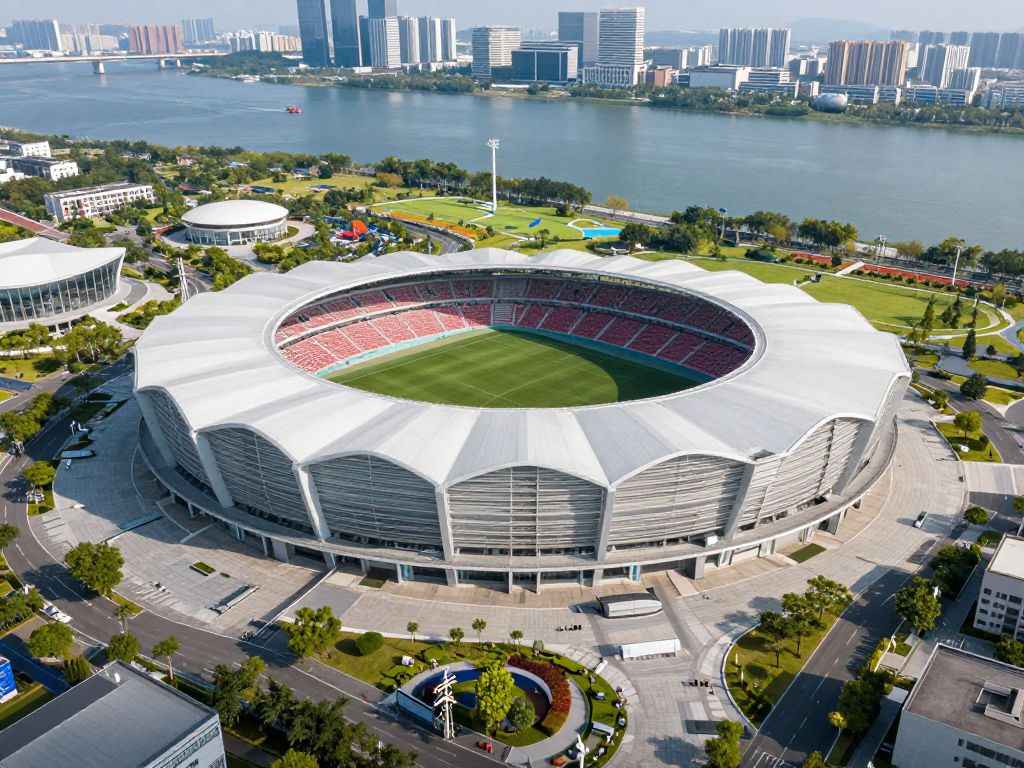
The Kraft Group has unveiled plans for an approximately 24,000-seat soccer stadium for the New England Revolution, coupled with a nearly 4-acre waterfront park, situated along the Mystic River in Everett, Massachusetts. This ambitious project aims to transform a 43-acre brownfield site, currently home to a decommissioned power station, into a modern venue for sports and community gatherings. The project is entirely privately funded, with the Kraft Group committing significant private investment towards its realization. They plan to allocate $80 million for the demolition and environmental remediation of the power plant site, including elevating it for coastal flooding resilience. An additional $20 million is earmarked for the development of the waterfront park, which will feature a pedestrian and bicycle path.
This initiative represents a substantial private sector commitment to urban renewal. Supporters emphasize the potential for this development to become a major economic driver for the region, generating local employment opportunities, increasing foot traffic for nearby Boston small business, and stimulating the broader regional economy. The proposal envisions the site becoming a year-round community resource, offering recreational spaces and hosting diverse events.
Navigating the Deadline: Agreement or Arbitration
The urgency surrounding the stadium project stems from a Massachusetts state economic development law enacted in 2024. This legislation was crucial, as it facilitated the removal of the 43-acre Everett site from its previous “designated port area” (DPA) zoning, which had restricted the land to industrial uses. However, a key stipulation of this law requires the Kraft Group to secure community impact agreements with both the City of Everett and the City of Boston before the project can advance.
Negotiations between the Kraft Group and the City of Boston have been ongoing for months. When an agreement could not be reached by May 1, 2025, the discussions entered a mediation phase, with former Massport CEO Tom Glynn appointed as mediator. Despite these efforts, a final accord has remained elusive. The Wednesday, December 31, 2025, deadline stands as the final date for an agreement. Should the parties fail to reach a mutual understanding, the dispute will automatically proceed to binding arbitration. This process would involve an arbitration panel composed of representatives from each party and a neutral arbitrator.
Points of Discussion: Balancing Development with Community Impact
The negotiations have revealed differing perspectives on the project’s potential impacts and necessary mitigation. Boston officials, led by Mayor Michelle Wu, have expressed significant concerns regarding potential increases in traffic congestion, particularly in the Charlestown and Sullivan Square neighborhoods, as well as impacts related to noise, job creation, and climate resilience. The City of Boston has requested more detailed information from the Kraft Group on these critical areas.
A central point of contention has been the proposed mitigation package for Boston. Mayor Wu publicly stated that the Kraft Group’s offer of $750,000 to offset the stadium’s impacts was “an unserious proposal.” She highlighted that this amount represents only a fraction of the $68 million mitigation package provided for the nearby Encore Casino project in Everett, suggesting it does not adequately address the potential strain on Boston’s infrastructure.
Conversely, the Kraft Group, through Revolution President Brian Bilello, has indicated that they initiated outreach to Boston for negotiations in November 2024, following the passage of the enabling legislation, but experienced delays in receiving a response from the city. They maintain that they have provided requested information. Everett Mayor Carlo DeMaria has been a vocal proponent of the stadium, underscoring the benefits of transforming the underutilized site and the potential for new tax revenue for Everett. He also suggested that planned infrastructure improvements, such as a new Commuter Rail stop and a footbridge, would help manage traffic concerns.
The Path Ahead: Certainty Through Resolution
Regardless of whether an agreement is reached or the matter proceeds to arbitration, a resolution by the December 31st deadline is crucial. For large-scale private investment projects to thrive and contribute effectively to economic growth, a predictable and efficient process for resolving disputes is essential. Arbitration, while a formal dispute resolution mechanism, offers a structured path to a definitive outcome, potentially mitigating prolonged uncertainty that can deter future entrepreneurial endeavors and slow down economic development.
Should the project move forward, the permitting process is estimated to take 12 to 18 months, followed by approximately three years for demolition and stadium construction. The state legislation provides the Kraft Group with a five-year window to complete the stadium.
Conclusion: Shaping Boston’s Economic Future
The impending resolution of the soccer stadium negotiations represents a significant juncture for Boston MA business and regional development. It underscores the vital role that Massachusetts entrepreneurs and private capital play in driving transformative projects. While balancing the aspirations for economic growth with legitimate community concerns is a complex task, a clear and timely resolution sets a precedent for how Boston approaches future large-scale investments. Residents are encouraged to stay informed and engaged in these discussions, recognizing that such projects shape the city’s economic landscape for generations to come. Supporting a framework that encourages innovation, private investment, and efficient resolution of challenges will continue to be paramount for Boston’s prosperity.
Frequently Asked Questions (FAQ)
- What is the deadline for the Kraft Group and the City of Boston to reach an agreement on the soccer stadium?
- The deadline for the Kraft Group and the City of Boston to reach a community impact agreement for the proposed New England Revolution soccer stadium in Everett is Wednesday, December 31, 2025.
- What happens if an agreement is not reached by the deadline?
- If no agreement is reached by Wednesday, December 31, 2025, the dispute will proceed to binding arbitration. An arbitration panel would include a representative from the owner, a representative from the host community (Boston), and a neutral arbitrator.
- Where is the proposed soccer stadium located?
- The proposed New England Revolution soccer stadium is planned for a 43-acre brownfield site along the Mystic River in Everett, Massachusetts, which is currently home to a decommissioned power station.
- Who is funding the construction of the stadium?
- The stadium and an adjacent waterfront park project are privately funded by the Kraft Group.
- What are the City of Boston’s main concerns regarding the stadium project?
- The City of Boston’s main concerns include the stadium’s potential impact on transportation (traffic congestion in Charlestown and Sullivan Square), noise, jobs, and climate resilience.
- What is the proposed capacity of the stadium?
- The proposed stadium is planned to have an approximate capacity of 24,000 to 25,000 seats.
- What is the estimated timeline for construction if the project proceeds?
- The permitting process is expected to take 12 to 18 months, followed by an estimated three years for demolition of the power plant and stadium construction. The state legislation allows the Kraft Group five years to construct the stadium.
Key Features of the Proposed Everett Soccer Stadium Project
| Feature | Details | Scope |
|---|---|---|
| Project Name | New England Revolution Soccer Stadium | Local |
| Location | 43-acre brownfield site along Mystic River in Everett, Massachusetts | Local |
| Capacity | Approximately 24,000 to 25,000 seats | Local |
| Funding | Privately funded by the Kraft Group | Local |
| Key Components | Soccer stadium, nearly 4-acre waterfront park, pedestrian and bicycle path | Local |
| Environmental Remediation Investment | $80 million for demolition and remediation of power plant site, including coastal flooding resilience | Local |
| Waterfront Park Development Investment | $20 million for waterfront park development | Local |
| Enabling Legislation | Massachusetts state economic development law passed in 2024 | State-level |
| Community Impact Agreement Deadline | Wednesday, December 31, 2025, with the City of Boston | Local |
| Dispute Resolution if No Agreement | Binding arbitration with a panel of representatives and a neutral arbitrator | State-level |
| Estimated Permitting Time | 12 to 18 months | Local |
| Estimated Construction Time | Approximately 3 years for demolition and construction | Local |
| Timeframe for Construction (State Law) | Kraft Group has 5 years to construct the stadium after DPA removal | State-level |
Deeper Dive: News & Info About This Topic
HERE Resources
Boston Legacy FC Powers Fan Growth Through Local Partnerships
Chelsea High School’s Football Victory and Local Sports Developments
Sports Equinox Features All Major Leagues in Action
Louisville Cardinals Set to Face Boston College Eagles
Planning Commissioners Approve New Boston Crossing Development
Postseason Golf Action Heating Up in Springfield
Trump Threatens Relocation of World Cup Matches from Boston
2026 FIFA World Cup Matches Set for Gillette Stadium
117 High School Football Games Scheduled in Boston Metro Area
How To Choose The Right Boston Neighborhood For Families

Author: STAFF HERE BOSTON WRITER
The BOSTON STAFF WRITER represents the experienced team at HEREBoston.com, your go-to source for actionable local news and information in Boston, Suffolk County, and beyond. Specializing in "news you can use," we cover essential topics like product reviews for personal and business needs, local business directories, politics, real estate trends, neighborhood insights, and state news affecting the area—with deep expertise drawn from years of dedicated reporting and strong community input, including local press releases and business updates. We deliver top reporting on high-value events such as Boston Marathon, Head of the Charles Regatta, and Boston Harborfest. Our coverage extends to key organizations like the Greater Boston Chamber of Commerce and Associated Industries of Massachusetts, plus leading businesses in finance, biotech, and insurance that power the local economy such as Fidelity Investments, Biogen, and Liberty Mutual Insurance. As part of the broader HERE network, we provide comprehensive, credible insights into Massachusetts's dynamic landscape.