
Boston, MA, January 9, 2026
News Summary
The Boston University community is reeling after an immigration enforcement action at the Allston Car Wash led to protests and calls for accountability. The situation escalated when a student claimed responsibility for the tip that initiated the raid, prompting widespread condemnation. This incident has sparked critical discussions about academic freedom, community impact, and students’ roles in activism amidst ongoing demands for a ‘sanctuary campus’ policy.
Boston, MA — A recent series of events at Boston University has brought into sharp focus the intricate relationship between individual actions, academic freedom, and broader community impact within Boston’s vibrant higher education landscape. This situation, centered around an immigration enforcement action at a local car wash and a student’s claim of involvement, has ignited significant discussion and protests, prompting the Boston University community to reflect on its values of personal responsibility, civic engagement, and institutional role in the wider city.
The episode underscores the dynamic nature of student life and activism in Massachusetts higher education, where academic rigor is often complemented by robust engagement in societal issues. Universities like Boston University are not merely centers for learning and research but also significant contributors to the social and economic fabric of Boston, MA, necessitating a careful balance between fostering open discourse and upholding community well-being. The ensuing dialogue has highlighted the critical importance of discipline in public discourse and the profound impact of individual choices on both campus and surrounding neighborhoods.
The Allston Car Wash Incident and Initial Reactions
On November 4, an immigration enforcement operation took place at the Allston Car Wash, leading to the arrest of nine individuals. This event swiftly garnered attention and generated concern among residents and community leaders in the Allston neighborhood. The immediate aftermath saw a wave of condemnation and fear among neighbors, prompting local leaders to demand a response concerning the incident. This initial phase set the stage for a broader discussion within the Boston community regarding immigration enforcement and its local effects.
A Student’s Claim and Widespread Condemnation
Days after the raid, a Boston University student publicly stated on social media that his tip had led to the immigration enforcement action. This student, identified as the president of Boston University’s College Republicans chapter, claimed to have been contacting immigration authorities for several months. This assertion quickly escalated the situation, drawing strong reactions from various quarters. The revelation led to immediate condemnation and demands from a significant portion of the Boston University community and Allston residents for accountability and a response from the university. Many members of the community expressed strong disapproval of the student’s actions, with some demanding his removal from campus.
Campus Mobilization and Calls for a Sanctuary Campus
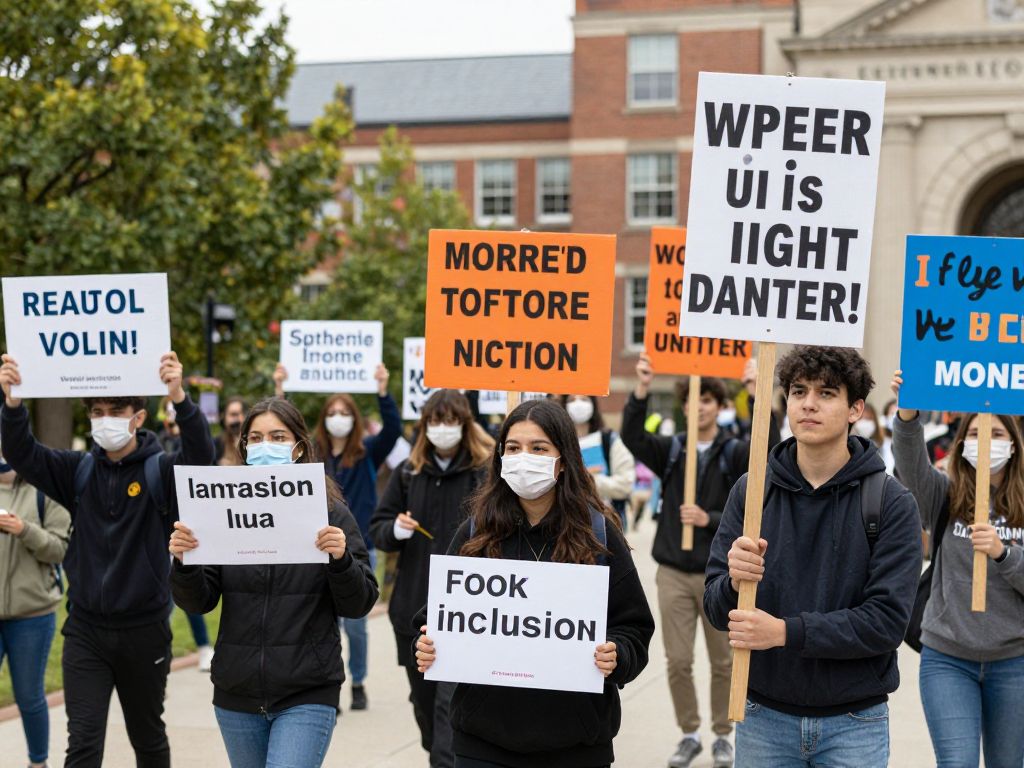
In response to the student’s claim and the Allston Car Wash raid, a series of protests and demonstrations were organized on the Boston University campus. These protests, held at various locations including the president’s house, saw students rallying to condemn the actions of the student who took responsibility for the raid. The demonstrations extended beyond the immediate incident, linking into broader demands that students had been making for months prior, specifically advocating for Boston University to adopt a “sanctuary campus” policy. This movement reflects a commitment to academic freedom and the protection of student welfare, highlighting ongoing discussions about how universities can best support their diverse student populations.
Upholding Academic Freedom and Personal Responsibility
The controversy has sparked crucial conversations within Boston University regarding the balance between academic freedom and personal responsibility. It highlights the principle that while intellectual exploration and diverse viewpoints are integral to a university environment, individual actions can have significant consequences, extending beyond campus borders. The events have served as a case study in how a university community grapples with complex ethical dilemmas, encouraging students and faculty alike to engage critically with issues of civility, accountability, and the impact of their choices on others. Such incidents reinforce the importance of discipline in thought and action, crucial traits for future leaders.
Strengthening Community Engagement and Dialogue
This challenging period has also underscored the vital importance of strong, respectful relationships between universities and their host communities. Boston University, like other institutions in Massachusetts higher education, plays a multifaceted role in the city. The dialogue prompted by these events encourages continuous efforts to foster mutual understanding and collaboration between the university and neighborhoods like Allston. It presents an opportunity for Boston University to reinforce its commitment to leadership through service and to further engage with local residents on issues of shared concern, ensuring that campus activities positively contribute to the overall well-being of Boston, MA.
Table: Key Aspects of the Allston Car Wash Incident
| Event | Date/Period | Key Details | Impact |
|---|---|---|---|
| Allston Car Wash Raid | November 4 | Nine arrests made during immigration enforcement operation. | Generated concern and condemnation from local community. |
| Student’s Claim of Responsibility | Days after Nov. 4 raid | Boston University student claimed to have initiated the raid after months of contact with authorities. | Sparked widespread condemnation and demands for university response. |
| Boston University Protests | Mid-November (e.g., Nov. 17, 21) | Students protested on campus, including at the president’s house, advocating for a “sanctuary campus” policy. | Highlighted existing student activism and calls for institutional policy changes. |
The events surrounding the Allston Car Wash incident have served as a significant moment for introspection and dialogue within the Boston University community. They have illuminated the complexities of navigating personal conviction, institutional responsibility, and community impact. As Boston University continues its mission of educating future leaders, such challenges underscore the enduring value of robust academic freedom balanced with a deep sense of personal responsibility and a commitment to positive community engagement. Readers are encouraged to stay informed about ongoing discussions within Boston’s college community and explore the diverse programs and initiatives that foster civic responsibility across Massachusetts higher education.
Frequently Asked Questions
What happened at the Allston Car Wash?
An immigration enforcement operation took place at the Allston Car Wash on November 4, resulting in the arrest of nine people.
Which Boston University student claimed responsibility for the raid?
A Boston University student, identified as the president of the campus GOP student chapter, publicly claimed on social media that his tip led to the immigration raid.
When did the Allston Car Wash raid occur?
The immigration raid at the Allston Car Wash occurred on November 4.
What were Boston University students protesting?
Boston University students protested the immigration raid at the Allston Car Wash and the actions of the student who claimed responsibility, linking their activism to broader demands for a “sanctuary campus” policy.
What is a “sanctuary campus” policy?
A “sanctuary campus” policy refers to a set of practices advocated by some students and faculty aimed at protecting undocumented students on campus, and it was a demand made by Boston University students months before the Allston incident.
Deeper Dive: News & Info About This Topic
HERE Resources
Boston’s Community Calls for Accountability After Minneapolis Incident
Massachusetts Congress Members Raise Concerns Over U.S. Actions in Venezuela
Exploring the Rich History and Community Spirit of Framingham, MA
January Joy – Free Events Spark Community in Boston
Winter Street’s Vibrant Transformation Ignites Community Spirit
Boston High Schools Lead with Innovation: Learning from Success
Renewed Focus on Campus Security in Boston’s Higher Education
Accreditation Scrutiny: A Wake-Up Call for Eastern MA’s Colleges
Teenagers Arrested Over Violent Vehicle Takeover in Boston
Pro-Palestinian Protest in Boston Leads to Arrests and Injuries

Author: STAFF HERE BOSTON WRITER
The BOSTON STAFF WRITER represents the experienced team at HEREBoston.com, your go-to source for actionable local news and information in Boston, Suffolk County, and beyond. Specializing in "news you can use," we cover essential topics like product reviews for personal and business needs, local business directories, politics, real estate trends, neighborhood insights, and state news affecting the area—with deep expertise drawn from years of dedicated reporting and strong community input, including local press releases and business updates. We deliver top reporting on high-value events such as Boston Marathon, Head of the Charles Regatta, and Boston Harborfest. Our coverage extends to key organizations like the Greater Boston Chamber of Commerce and Associated Industries of Massachusetts, plus leading businesses in finance, biotech, and insurance that power the local economy such as Fidelity Investments, Biogen, and Liberty Mutual Insurance. As part of the broader HERE network, we provide comprehensive, credible insights into Massachusetts's dynamic landscape.