

Boston, January 14, 2026
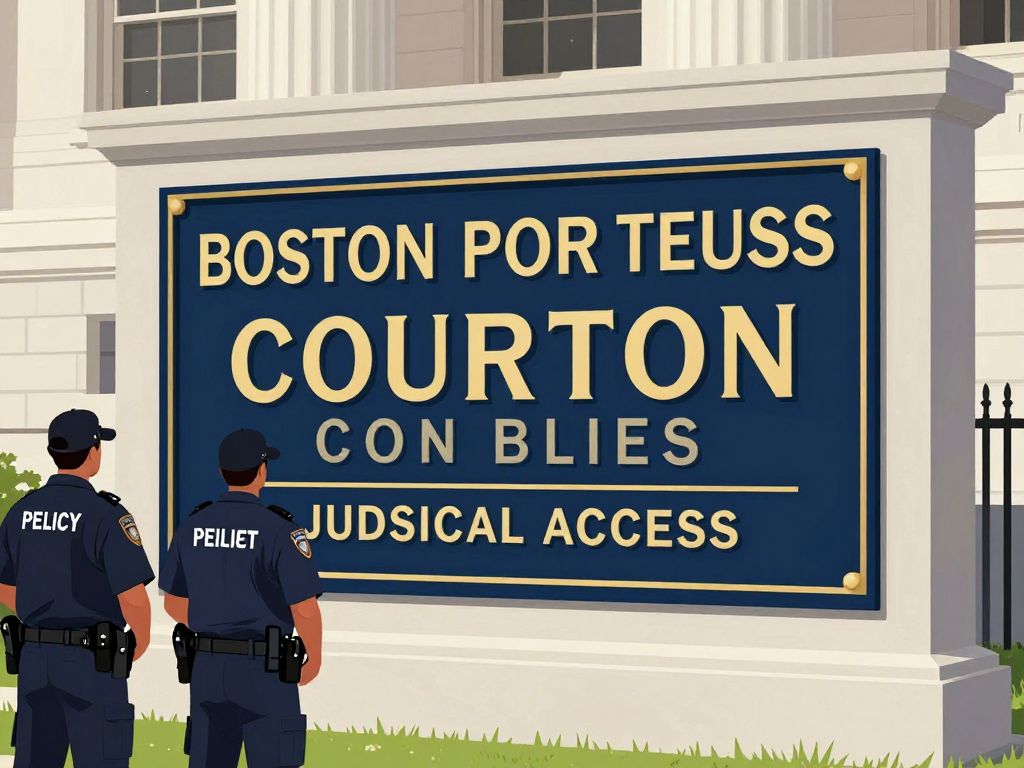
Recent data has confirmed the presence of Immigration and Customs Enforcement (ICE) agents in six out of eight Boston district courthouses, raising significant concerns regarding judicial accessibility and transparency. Issues particularly noted include interactions in the East Boston courthouse and the implications of such enforcement on individuals seeking legal recourse. Legal professionals are actively addressing these matters to ensure that the judicial system remains an open sanctuary for all, amidst increasing tensions between federal immigration enforcement and local judicial processes.
Boston
Recent data reveals a persistent presence of federal immigration agents within Boston’s district courts, underscoring a consistent pattern of enforcement within judicial spaces. At least six of the eight district courthouses operating under the trial court system in Boston have experienced the presence of Immigration and Customs Enforcement (ICE) agents. This ongoing activity prompts reflection on the delicate balance between federal enforcement mandates and the imperative of ensuring open and accessible judicial proceedings for all individuals.
Emerging Concerns and Local Impact
The presence of ICE agents has led to specific concerns, particularly within the East Boston courthouse, where issues related to the recording of interactions and the role of court officers have emerged. Such circumstances raise questions about transparency and the precise boundaries of authority when federal agents operate within local judicial environments. Across Massachusetts, legal professionals, including criminal defense attorneys, have engaged in outreach regarding ICE enforcement at courthouses, highlighting the widespread nature of this phenomenon. The Chelsea District Court, for instance, has been specifically noted in discussions pertaining to ICE presence. The very act of agents “staking out local courthouses” suggests a strategic approach to enforcement, aiming to apprehend individuals as they engage with the local justice system. This methodical approach often occurs under the watchful eyes of communities, for whom the sight of federal agents at a courthouse can signify a barrier rather than an assurance.
Broader Context and Human Dimensions
The intersection of federal immigration enforcement and local judicial processes has been a subject of ongoing dialogue and, at times, considerable tension. These encounters at courthouses are not isolated events but rather elements within a larger framework of immigration policy and its implementation, reflecting a national debate about jurisdiction and the locus of enforcement. For instance, in July 2025, a Salvadoran national was convicted of unlawful reentry in the District Court for Massachusetts, a case that underscored the agency’s role in addressing immigration violations, particularly concerning individuals who have previously displayed a blatant disregard for U.S. immigration laws. Such instances illustrate the stated objectives behind ICE’s courthouse presence, where federal agents seek to uphold national immigration statutes.
However, the methods employed by federal agents within or near courthouses have drawn scrutiny from various quarters, inviting courts and legal bodies to articulate appropriate protocols. In April 2025, a judge in the Western Slope region issued a warning to ICE, urging a cessation of civil immigration actions within the county courthouse. This judicial admonition reflects a broader concern that aggressive enforcement inside or immediately outside courthouses could deter individuals, regardless of their immigration status, from seeking legal recourse. The potential chilling effect could impact victims reporting crimes, witnesses providing testimony, or even defendants appearing for non-immigration related charges, thereby undermining the fundamental principle of access to justice. The courts, after all, are intended as forums where rights are protected and disputes are resolved, a purpose that can be imperiled if fear of apprehension supplants the expectation of due process. The presence of agents at these judicial gateways, therefore, invites a quiet apprehension, a subtle hesitation among those who might otherwise seek the court’s protective embrace.
Massachusetts itself has a history of engaging with these complex issues, demonstrating a thoughtful approach to balancing federal enforcement with state judicial integrity. As early as January 2019, significant changes were completed in the District Court system concerning “MassCourts” and the established process for requesting the presence of an ICE detainee for court matters. Furthermore, a new writ of habeas corpus specifically for detainees in ICE custody within Massachusetts required the court to designate a county sheriff to transport the detainee to and from court proceedings, indicating proactive efforts to formalize and regulate the interaction between federal custody and state judicial proceedings. These measures speak to an enduring effort within the Commonwealth to reconcile federal prerogatives with state-level concerns for legal order, public safety, and individual rights, ensuring that the judicial process maintains its essential function.
The presence of federal agents in these settings, while rooted in statutory authority, carries a profound human dimension. For many, the courthouse is a place of last resort, a critical arena for resolving disputes, seeking protection, or fulfilling civic obligations. When this space is perceived as a potential site of federal apprehension, it introduces a layer of anxiety that can quietly erode trust in institutions vital to the functioning of a civil society. For those seeking justice, whether as victims, witnesses, or defendants, the courthouse should ideally serve as a sanctuary of law, not a place shadowed by apprehension. The quiet observation of these events, through aggregated data and individual reports, reveals not just statistics, but the lived experiences of individuals navigating a complex legal landscape. It is a reminder that laws, in their application, touch the very fabric of human life and, thus, require a thoughtful discernment that extends beyond mere administrative efficiency to encompass the full measure of human dignity and the common good. This ongoing situation in Boston, viewed within the wider national context, serves as a poignant reminder of the enduring tension between the rigorous enforcement of federal law and the foundational commitment to an accessible and impartial system of justice for all.
Frequently Asked Questions
- What is the current situation regarding ICE presence in Boston district courts?
- At least six of the eight district courthouses operating under the trial court system in Boston have experienced the presence of Immigration and Customs Enforcement (ICE) agents.
- What specific issues have arisen due to ICE presence in Boston courthouses?
- Specific concerns have arisen, particularly within the East Boston courthouse, related to the recording of interactions and the role of court officers.
- What is the broader context of ICE enforcement at local courthouses?
- ICE agents are staking out local courthouses generally, suggesting a strategic approach to enforcement, aiming to apprehend individuals as they engage with the local justice system.
- Has Massachusetts taken any specific steps regarding ICE detainees in courts?
- As early as January 2019, significant changes were completed in the District Court system concerning “MassCourts” and the established process for requesting the presence of an ICE detainee for court matters. Furthermore, a new writ of habeas corpus specifically for detainees in ICE custody within Massachusetts required the court to designate a county sheriff to transport the detainee to and from court proceedings.
- What concerns have been raised by judges about ICE actions in courthouses?
- In April 2025, a judge in the Western Slope region issued a warning to ICE, urging a cessation of civil immigration actions within the county courthouse. This reflects a broader concern that aggressive enforcement could deter individuals from seeking legal recourse, undermining access to justice.
Key Features of ICE Presence in Boston District Courts
| Key Aspect | Details |
|---|---|
| Current Status | At least six of eight Boston district courthouses have experienced ICE presence. |
| Specific Locations Mentioned | East Boston Courthouse (issues with recording, court officers); Chelsea District Court (Northeastern U. School of Law outreach). |
| Massachusetts Judicial Measures | MassCourts changes for ICE detainee requests (2019); New writ of habeas corpus requiring sheriff transport for ICE detainees (2019). |
| Broader Concerns | Potential chilling effect on access to justice, undermining trust in judicial institutions. |
| Relevant Case Example | Salvadoran national convicted of unlawful reentry in District Court for Massachusetts (July 2025). |
| Judicial Warning (Regional) | Western Slope judge warned ICE to cease civil immigration actions in county courthouse (April 2025). |
Deeper Dive: News & Info About This Topic
HERE Resources
Massachusetts High School Football Stars Earn All-State Honors
Lynn Tech’s Batista Shines in Commonwealth Athletic Conference Victory
Residents Rally for Local Engagement in Chestnut Hill
Boston University Women’s Basketball Set for Rematch Against Lehigh
Dorchester Man Arrested on Gun Charges After Armed Robbery
Boston’s Campus Landscape Evolves: Dugout Café Closure
Addressing the Crisis of Black Teachers in Education
Boston Prepares for Winter’s Return: Snow Chances Ahead
Boston College Women’s Basketball Suffers Defeat Against Virginia Tech
Councilor Miniard Culpepper Begins New Term in Boston

Author: STAFF HERE BOSTON WRITER
The BOSTON STAFF WRITER represents the experienced team at HEREBoston.com, your go-to source for actionable local news and information in Boston, Suffolk County, and beyond. Specializing in "news you can use," we cover essential topics like product reviews for personal and business needs, local business directories, politics, real estate trends, neighborhood insights, and state news affecting the area—with deep expertise drawn from years of dedicated reporting and strong community input, including local press releases and business updates. We deliver top reporting on high-value events such as Boston Marathon, Head of the Charles Regatta, and Boston Harborfest. Our coverage extends to key organizations like the Greater Boston Chamber of Commerce and Associated Industries of Massachusetts, plus leading businesses in finance, biotech, and insurance that power the local economy such as Fidelity Investments, Biogen, and Liberty Mutual Insurance. As part of the broader HERE network, we provide comprehensive, credible insights into Massachusetts's dynamic landscape.