
News Summary
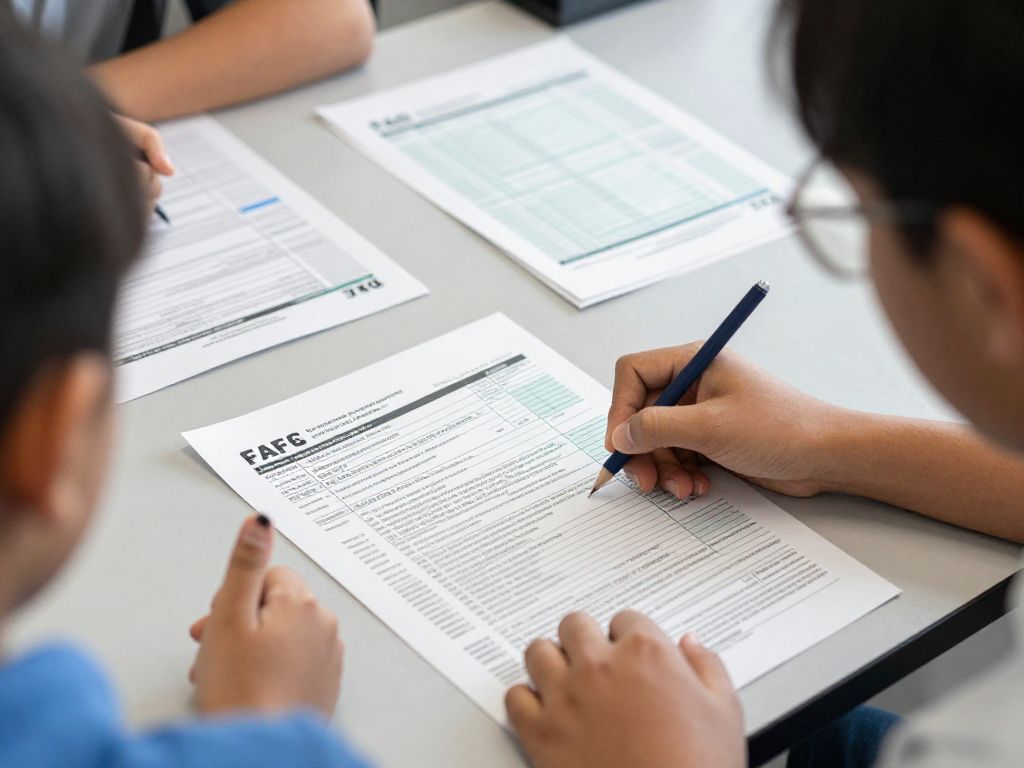
A new proposal in Massachusetts aims to require high school students to complete the Free Application for Federal Student Aid (FAFSA) before graduating. This initiative, focused on removing financial barriers, is intended to empower students with vital information regarding their educational opportunities. Bill S.2533 specifies that each student must submit a FAFSA or state equivalent application prior to graduation, aligning with a national trend of improving access to financial aid. By implementing this requirement, Massachusetts seeks to enhance student awareness and preparedness for post-secondary education and training.
Boston
FAFSA: A New Path for Massachusetts Graduates?
Boston’s educational landscape is constantly evolving, with new ideas emerging to empower students and families. A recent discussion gaining traction across the Commonwealth centers on a proposal to make the completion of the Free Application for Federal Student Aid (FAFSA) a requirement for high school graduation in Massachusetts. This initiative aims not to mandate college attendance, but rather to equip students with crucial information and opportunities as they embark on their post-secondary journeys. It reflects a commitment to ensuring that every student has the tools to explore their options, fostering personal achievement and informed decision-making.
The spirit behind such a proposal aligns with the community’s desire to reduce unnecessary hurdles and make pathways to success more transparent. By streamlining access to financial aid information, Massachusetts schools could further champion individual potential, allowing students and their families to proactively understand the resources available for vocational training, two-year degrees, or four-year universities. This proactive approach underscores the value of personal responsibility and informed choices in shaping one’s future, a testament to effective educational innovation.
Unlocking Opportunity: The FAFSA Proposal
There is a proposal in Massachusetts to require high school students to submit a Free Application for Federal Student Aid (FAFSA) or a state-authorized FAFSA equivalent application before graduating. This initiative, as articulated in discussions, is primarily about removing financial barriers and expanding access to educational opportunities for students, rather than mandating college attendance itself. The intent is to ensure that students are aware of and have applied for potential financial assistance that could support their further education or training.
The legislative effort, exemplified by Bill S.2533 in Massachusetts, specifies that each student shall submit a FAFSA or state equivalent application before graduating from high school. This focus on practical steps to empower students aligns with efforts to give families more control over their children’s educational and career paths. It is a testament to the belief that providing information early can significantly impact a student’s ability to pursue their chosen post-high school direction.
A Nationwide Trend Toward Financial Empowerment
The concept of requiring FAFSA completion for high school graduation is not unique to Massachusetts. Nationwide, states like Indiana and Texas have implemented similar policies. Indiana, for instance, became the eighth state with a universal FAFSA graduation requirement in May 2023. Texas began its requirement with the 2022-2023 school year for 2021-2022 high school graduates, mandating that districts and charter schools ensure submission. These examples illustrate a broader movement across the country to improve access to financial aid options for all high school graduates.
This trend suggests a recognition that providing students with comprehensive financial literacy tools and actionable steps, such as completing the FAFSA, can be a crucial component of modern education. It encourages students to take ownership of their future financial planning and explore all available resources, supporting individual achievement through greater self-reliance and informed decision-making.
Beyond FAFSA: The Broader Context of Financial Literacy
The push for FAFSA completion often coincides with a growing emphasis on broader financial literacy education. As of August 2025, a legislative review of K-12 financial education requirements indicated that 29 states had implemented financial literacy high school graduation requirements. While distinct from FAFSA completion, these initiatives share the common goal of preparing students for the financial realities of adulthood. The Massachusetts Department of Elementary and Secondary Education has also explored the idea that high school graduates should be required to complete coursework in Personal Finance.
These initiatives collectively contribute to a more robust educational framework, where students are not only academically prepared but also equipped with practical life skills. Empowering students with financial knowledge allows them to navigate complex decisions, manage resources, and plan for long-term stability, promoting responsible citizenship and self-sufficiency.
Massachusetts Programs Supporting Higher Education
Beyond the proposed FAFSA requirement, Massachusetts already has programs in place that underscore the importance of applying for financial aid. State-level, the Massachusetts High Demand Scholarship Program, for example, requires applicants to have applied for financial aid using the standard FAFSA or a FAFSA equivalent application authorized by the state. Additionally, for students who are not eligible to complete the FAFSA but are approved “High School Completers” under the Massachusetts tuition equity law, alternative state applications may be available, such as for the Free College program at Middlesex Community College.
These programs demonstrate a commitment to expanding educational access through various avenues, recognizing diverse student needs. By integrating a FAFSA completion requirement, the state can build upon existing frameworks, further ensuring that more students are aware of and can access these beneficial programs, fostering a more equitable and opportunity-rich educational environment for all Massachusetts classrooms.
Cultivating Informed Choices for Boston MA Schools
The potential implementation of a FAFSA completion requirement represents a forward-thinking step for Boston MA schools and for the Commonwealth as a whole. It’s an approach that prioritizes student access to information and resources, aligning with a vision of education that empowers individuals and strengthens communities. By reducing bureaucratic barriers to financial aid, Massachusetts can reinforce parental choice and allow students to pursue pathways that best suit their talents and aspirations. This focus on practical, actionable policies helps to cultivate a generation of graduates who are not only academically proficient but also fiscally aware and ready to make informed decisions about their futures.
We encourage parents, educators, and community members in Boston to engage with these important discussions. Supporting initiatives that provide clarity and opportunity for our students is vital to fostering academic growth and ensuring that every Massachusetts student has the chance to achieve their full potential. Stay engaged with local school news and policy discussions to champion educational innovation that benefits all.
Frequently Asked Questions
- What is the proposed change for high school graduation in Massachusetts?
- There is a proposal in Massachusetts to require high school students to submit a Free Application for Federal Student Aid (FAFSA) or a state-authorized FAFSA equivalent application before graduating.
- What is the primary goal of making FAFSA completion a graduation requirement in Massachusetts?
- The primary goal is to remove financial barriers and expand access to educational opportunities for students, rather than to mandate college attendance.
- Which other states have implemented a universal FAFSA graduation requirement?
- Nationwide, states like Indiana and Texas have implemented policies requiring FAFSA completion for high school graduation.
- What is Bill S.2533 in Massachusetts related to?
- Bill S.2533 in Massachusetts specifies that each student shall submit a FAFSA or state equivalent application before graduating from high school.
- What is the Massachusetts High Demand Scholarship Program’s requirement for financial aid application?
- State-level, the Massachusetts High Demand Scholarship Program requires applicants to have applied for financial aid using the standard FAFSA or a FAFSA equivalent application authorized by the state.
Key Features of FAFSA as a Graduation Requirement
| Feature | Description | Scope |
|---|---|---|
| Primary Goal | Removing financial barriers and expanding educational opportunities, not mandating college. | State-level |
| Legislative Proposal | Bill S.2533 proposes mandatory FAFSA or state equivalent submission before high school graduation. | State-level |
| Existing Requirement in Other States | States like Indiana and Texas have implemented universal FAFSA graduation requirements. | Nationwide |
| Relation to Financial Literacy | Distinct from but often associated with broader K-12 financial education requirements. | Nationwide (29 states have financial literacy requirements) |
| Support from State Programs | Massachusetts High Demand Scholarship Program requires FAFSA or equivalent application. | State-level |
Deeper Dive: News & Info About This Topic
HERE Resources
Massachusetts State of Education Address Highlights Key Initiatives
Undocumented Student Faces Tuition Inequities in Massachusetts

Author: STAFF HERE BOSTON WRITER
The BOSTON STAFF WRITER represents the experienced team at HEREBoston.com, your go-to source for actionable local news and information in Boston, Suffolk County, and beyond. Specializing in "news you can use," we cover essential topics like product reviews for personal and business needs, local business directories, politics, real estate trends, neighborhood insights, and state news affecting the area—with deep expertise drawn from years of dedicated reporting and strong community input, including local press releases and business updates. We deliver top reporting on high-value events such as Boston Marathon, Head of the Charles Regatta, and Boston Harborfest. Our coverage extends to key organizations like the Greater Boston Chamber of Commerce and Associated Industries of Massachusetts, plus leading businesses in finance, biotech, and insurance that power the local economy such as Fidelity Investments, Biogen, and Liberty Mutual Insurance. As part of the broader HERE network, we provide comprehensive, credible insights into Massachusetts's dynamic landscape.