

Franklin and Bellingham, Massachusetts, January 6, 2026
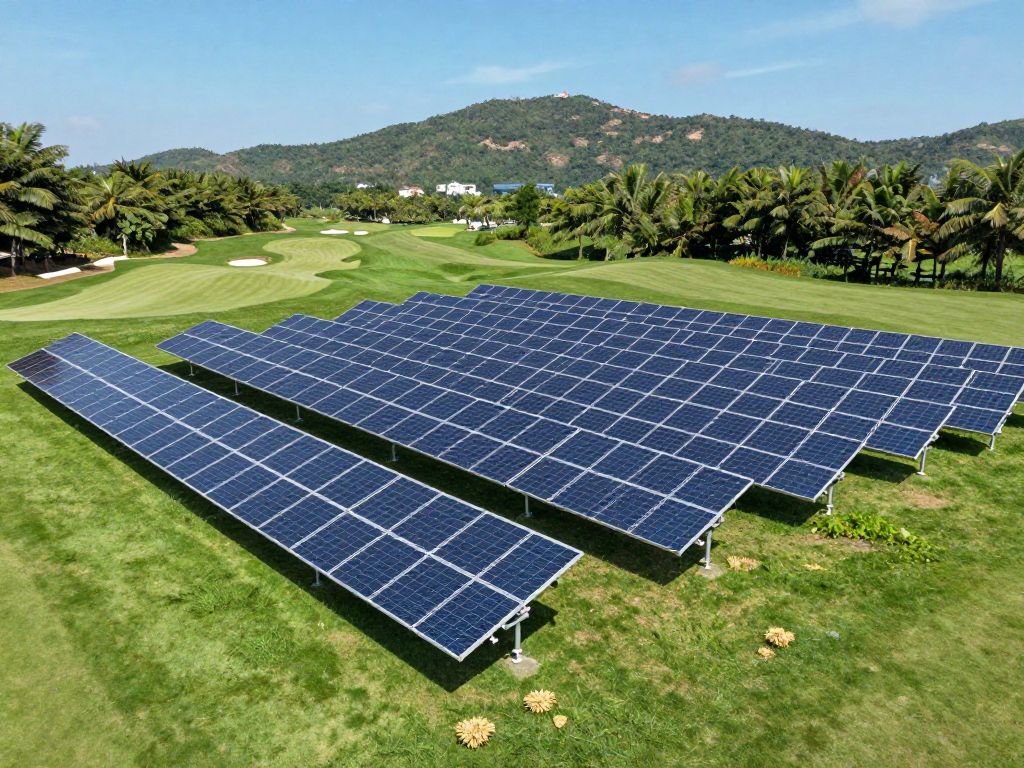
Maplegate Country Club in Massachusetts has been sold for nearly $25 million to a solar developer, marking a significant shift towards renewable energy. The acquisition will facilitate the establishment of a 30-megawatt solar project, demonstrating the role of private investment in evolving land use and clean energy initiatives in the region. This project is aligned with Massachusetts’ goal to produce 80% of its electricity from clean sources by 2050 and enhances local economic opportunities.
Mass. Golf Course Pivots to Solar: A New Energy Era
A significant development in Massachusetts’ evolving energy landscape has seen a prominent golf course transition into a site for a large-scale solar energy project. This move underscores a broader trend of private investment driving renewable energy initiatives and reshaping land use across the Commonwealth.
The sale of Maplegate Country Club in Bellingham and Franklin for nearly $25 million to a solar developer exemplifies how entrepreneurial innovation and strategic private capital are converging to meet growing energy demands. This substantial investment highlights a commitment to sustainable economic growth and the creative repurposing of existing land for future-focused endeavors, offering a fresh perspective on economic dynamism within the region.
Private Investment Fuels Renewable Energy Growth
The recent acquisition of Maplegate Country Club, a 140-acre property located in Franklin and on the Bellingham line, marks a pivotal moment for renewable energy development in Massachusetts. A solar energy developer purchased the property for $24,837,930.20, with plans to establish a 30-megawatt (MW) solar project on the site, consisting of two 15-MW solar photovoltaic systems. This private sector transaction demonstrates a significant commitment to expanding the state’s clean energy infrastructure. The project is expected to be among the largest solar installations in Massachusetts.
Such large-scale private investments are crucial catalysts for economic growth, fostering an environment where market forces drive innovation and sustainable development. The decision to convert a golf course into a solar farm reflects a practical adaptation of land use, prioritizing energy production while showcasing the responsiveness of Massachusettes entrepreneurs to emerging market needs. Private investment plays a critical role in financing the construction and operation of renewable energy projects and can accelerate the development of new and improved renewable energy technologies.
The Commonwealth’s Energy Evolution
Massachusetts has been steadily progressing in its adoption of renewable energy sources, with solar power playing an increasingly vital role. This latest project in Bellingham and Franklin aligns with a broader state-level push towards cleaner energy. The Commonwealth aims to produce 80% of its electricity from clean energy sources by 2050, with a target of net-zero emissions by the same year. Previous initiatives in Massachusetts include the development of a 2.5-megawatt solar array on a landfill in Westfield, which transformed an unused municipal property into an energy generator. Another example involves plans to convert the Cape Cod Country Club in Falmouth into a solar farm. These efforts collectively contribute to the Commonwealth’s energy independence and environmental goals.
The strategic deployment of solar projects, particularly those backed by substantial private funding, exemplifies an efficient approach to leveraging land resources. It represents a significant step forward in diversifying the energy portfolio, creating a more resilient energy infrastructure that benefits communities and businesses across the state, including the extended Boston MA business ecosystem. Solar energy in Massachusetts has contributed to a reduction in carbon emissions, job creation, and economic benefits.
Economic Ripple Effects and Local Opportunities
While the Maplegate project is located outside Boston’s immediate urban core, its economic implications extend regionally. The development of a 30-megawatt solar facility will likely generate economic activity through various stages, from construction and installation to ongoing maintenance and operation. This translates into potential opportunities for local contractors, skilled labor, and ancillary services, stimulating job creation and supporting the regional economy. The clean energy sector in Massachusetts employs over 109,000 workers.
Furthermore, such significant private capital inflows into renewable energy can attract further investment into related green technologies and services. This creates a fertile ground for Boston small business innovation, encouraging entrepreneurs to develop new solutions and services that support the burgeoning renewable energy sector. The conversion of the Maplegate Country Club property from recreational to industrial use will also increase property tax revenue for the town of Franklin by approximately $280,000 annually. The expansion of clean energy infrastructure contributes to a diversified and robust economic base, lessening reliance on traditional energy sources. New solar programs in Massachusetts are expected to provide $300 million a year in savings and benefits.
Navigating Land Use and Community Engagement
The transition of a long-standing recreational facility like a golf course to an industrial energy site naturally raises questions about land use. It underscores the ongoing balance between preserving green spaces and meeting the demands of energy production and economic development. Thoughtful planning and transparent engagement with local communities are essential when considering such transformations. The property was previously taxed at a lower rate under Chapter 61B, a Massachusetts law providing tax incentives for recreational land; its conversion to a solar project will now result in taxation at an industrial rate.
The ability to adapt and repurpose land efficiently, especially when driven by private investment, can be a hallmark of a dynamic economy. While the immediate focus is on energy generation, these projects also highlight the need for regulatory frameworks that are clear and predictable, allowing for innovative development while ensuring community interests are considered and addressed effectively. Streamlining solar project siting and permitting timelines is a key aspect of recent reforms in Massachusetts.
The Horizon of Massachusetts’ Energy Future
The Maplegate Country Club sale serves as a prominent example of how Massachusetts continues to adapt and innovate in its energy strategy. It signals a trend where private entities are taking a leading role in investing in and developing renewable energy solutions, contributing significantly to the state’s economic vitality and environmental sustainability. This proactive approach to energy development creates a more secure and independent energy future for the Commonwealth. Massachusetts homeowners can significantly reduce electricity costs by investing in solar panel installation, and solar energy can boost property values.
Looking ahead, similar conversions of underutilized or strategically located land could become more common, reflecting a statewide commitment to fostering both economic growth and environmental stewardship. The success of such ventures will continue to rely on the spirit of Massachusettes entrepreneurs, strategic private investment, and a supportive environment for innovation. Continuing to add new solar and storage capacity as planned through 2030 could lead to more than $313 million in consumer savings annually by 2030 and significant improvements to winter grid reliability.
Frequently Asked Questions
- What was the Maplegate Country Club sold for?
- The Maplegate Country Club was sold for $24,837,930.20 to a solar energy developer.
- Where is the Maplegate Country Club located?
- The Maplegate Country Club is located in Franklin and on the Bellingham line, Massachusetts.
- What kind of project is planned for the former golf course?
- A 30-megawatt solar project, consisting of two 15-megawatt solar photovoltaic systems, is planned for the former golf course site.
- What is an example of another solar project in Massachusetts?
- A 2.5-megawatt solar array on a landfill in Westfield, Massachusetts, transformed an unused municipal property into an energy generator.
- What are some economic benefits for the town of Franklin from this project?
- The conversion of the property to a solar energy facility will bring approximately $280,000 annually in additional property tax revenue for the town of Franklin.
Key Features of the Maplegate Solar Project
| Feature | Detail |
|---|---|
| Location | Franklin and on the Bellingham line, Massachusetts |
| Previous Use | Maplegate Country Club (golf course) |
| Purchaser | Solar energy developer |
| Sale Price | $24,837,930.20 |
| Planned Project Type | Solar energy project (two 15-megawatt solar photovoltaic systems) |
| Project Capacity | 30 megawatts |
| Annual Additional Tax Revenue for Franklin | Approximately $280,000 |
Deeper Dive: News & Info About This Topic
HERE Resources
Proposed Gas Rate Hike Sparks Discussion for Massachusetts Consumers and Businesses
Carl Rodrigues Appointed Vice Chancellor at Vanderbilt
Cummings Properties Recognized as 2025 Mass Save Climate Leader
TPC Network Achieves Sustainability Certification in Golf
Massachusetts Faces Economic Challenges Amid Rising Costs
Farewell to Bill DiCroce: A Trailblazer in Decarbonization
India’s Growing E-Waste Challenge
Vietnam Raises GDP Growth Target to 8% by 2025
Billions in Clean Energy Projects Canceled Amid Uncertainty

Author: STAFF HERE BOSTON WRITER
The BOSTON STAFF WRITER represents the experienced team at HEREBoston.com, your go-to source for actionable local news and information in Boston, Suffolk County, and beyond. Specializing in "news you can use," we cover essential topics like product reviews for personal and business needs, local business directories, politics, real estate trends, neighborhood insights, and state news affecting the area—with deep expertise drawn from years of dedicated reporting and strong community input, including local press releases and business updates. We deliver top reporting on high-value events such as Boston Marathon, Head of the Charles Regatta, and Boston Harborfest. Our coverage extends to key organizations like the Greater Boston Chamber of Commerce and Associated Industries of Massachusetts, plus leading businesses in finance, biotech, and insurance that power the local economy such as Fidelity Investments, Biogen, and Liberty Mutual Insurance. As part of the broader HERE network, we provide comprehensive, credible insights into Massachusetts's dynamic landscape.