
Massachusetts, January 29, 2026
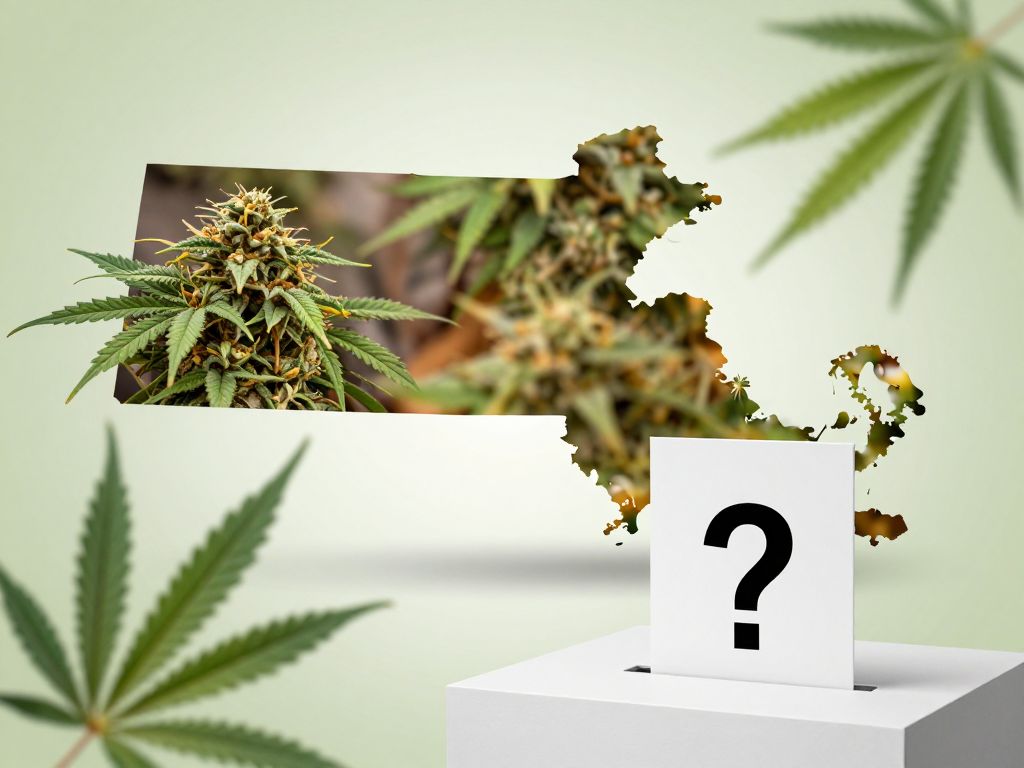
The Massachusetts State Ballot Law Commission has allowed a ballot question to proceed that would give voters the opportunity to repeal recreational marijuana legalization. The commission dismissed objections regarding the validity of signature collection for the initiative, paving the way for potential inclusion on the November ballot. This decision marks a significant moment in the state’s cannabis policy discussions, reflecting evolving public sentiment and the role of transparency in democratic processes.
Boston
The Massachusetts State Ballot Law Commission has cleared the path for a significant ballot question, one that would offer voters the profound opportunity to consider the repeal of recreational marijuana legalization within the Commonwealth. The commission, acting last Thursday, January 22, 2026, formally dismissed an objection challenging the validity of the initiative petition, allowing the measure to proceed toward potential inclusion on the November 2026 ballot. This decision marks a pivotal moment in the state’s ongoing dialogue about cannabis policy, moving a deeply rooted societal question closer to a direct public referendum.
The objection, lodged by attorney Thomas Kiley on January 2, centered on concerns regarding the integrity of the signature collection process that brought the repeal measure forward. Allegations were made that petitioners, operating on behalf of the initiative, employed misleading tactics to secure voter support, potentially obscuring the true intent of the ballot question from those signing. These claims suggested that individuals were led to believe they were endorsing proposals related to matters such as affordable housing or public parks, rather than a direct repeal of recreational marijuana sales. A subsequent poll indicated that a notable portion of those who signed the petition later felt misled about its core objective.
However, the State Ballot Law Commission, following a review, concluded that these allegations, though raised, were not supported by admissible evidence. In its ten-page ruling, the commission stated that the objector’s claims “ring hollow” given the absence of concrete proof substantiating the asserted misconduct. This determination underscored the rigorous evidential standards required in such challenges, prioritizing factual presentation over mere assertion in the delicate machinery of democratic process.
The Path to the Ballot
With the objection dismissed, the initiative petition, titled “An Act to Restore A Sensible Marijuana Policy,” continues its journey through the state’s legislative and electoral framework. The Secretary of State William Galvin’s office had previously certified 78,301 signatures for the petition in December, a number sufficient to place the measure before the state Legislature. The legislative body now has the opportunity to consider and potentially enact the proposed law. Should the Legislature decline to adopt the initiative, its proponents, led by the Coalition for a Healthy Massachusetts, would then be required to gather an additional 12,429 signatures by July 8, 2026, to secure its definitive placement on the November 2026 ballot. This multi-stage process reflects the considered approach states often employ to ensure widespread and deliberate public engagement with significant policy changes.
Proposed Policy Changes and Broader Context
The ballot initiative seeks to fundamentally alter Massachusetts’s cannabis landscape, which was shaped by a 2016 voter-approved measure, Question 4, that legalized recreational marijuana use. Specifically, the current proposal aims to repeal all standing laws governing the regulation and sale of recreational marijuana, including provisions for personal cultivation of cannabis in homes. It would, however, preserve the existing medical marijuana program.
Under the proposed changes, civil penalties would be expanded for possession of over one ounce of marijuana. Furthermore, the initiative would eliminate the 10.75% excise tax currently levied on recreational marijuana sales, which generated approximately $15 million in state revenue during the fiscal year 2025. The Cannabis Control Commission, presently tasked with overseeing both recreational and medical marijuana regulation, would see its scope narrowed to focus primarily on the medical sector and the licensing of independent testing laboratories for medical use.
The financial impetus behind the repeal effort is notable. Reports indicate that SAM Action Inc., a national organization known for its opposition to legal drug use, has been the sole donor behind the Massachusetts initiative, contributing all $1.55 million raised in support of the measure thus far. This underscores the role of national interests in state-level ballot initiatives, a dynamic that often elicits scrutiny regarding transparency and local autonomy.
Massachusetts finds itself at a unique juncture, as no state has yet reversed its decision on recreational cannabis legalization after voters initially approved it. The progression of this ballot question invites a deeper reflection on the evolving relationship between policy, public will, and the practical consequences for communities. The forthcoming vote will not only determine the future of recreational marijuana in the Commonwealth but may also offer a compelling case study for other states grappling with similar questions, illuminating the enduring tension between initial public enthusiasm and subsequent reconsiderations of broad social policies.
Frequently Asked Questions
- What was the recent decision by the Massachusetts State Ballot Law Commission?
- The Massachusetts State Ballot Law Commission dismissed an objection to a ballot question that would give voters the opportunity to repeal recreational marijuana legalization in the Commonwealth.
- When did this decision occur?
- The decision occurred on Thursday, January 22, 2026.
- What was the objection about?
- The objection, filed by attorney Thomas Kiley, raised concerns about how signatures in support of the ballot initiative were collected, alleging misleading tactics.
- What was the Commission’s reasoning for dismissing the objection?
- The Commission found that the allegations of misconduct were not supported by admissible evidence, stating that the objector’s claims “ring hollow” without concrete proof.
- What is the next step for the ballot question?
- The initiative will now go before the Massachusetts Legislature. If the Legislature declines to enact it, proponents will need to gather an additional 12,429 signatures by July 8, 2026, to secure a spot on the November 2026 ballot.
- What changes would the ballot initiative make if passed?
- The initiative would repeal laws permitting the sale of recreational marijuana and personal cultivation in homes, preserve the medical marijuana program, expand civil penalties for possession over one ounce, and eliminate the 10.75% excise tax on recreational sales.
- When was recreational marijuana initially legalized in Massachusetts?
- Recreational marijuana was legalized in Massachusetts in 2016 through a voter-approved measure known as Question 4.
- Has any state reversed recreational cannabis legalization before?
- No state has ever reversed its decision on recreational cannabis legalization after voters initially approved it.
Key Features of the Massachusetts Recreational Marijuana Repeal Initiative
| Feature | Details | Scope |
|---|---|---|
| Primary Goal | Repeal recreational marijuana legalization (adult-use). | State-level |
| Sales & Cultivation | Repeal laws permitting recreational sales and personal home cultivation. | State-level |
| Medical Marijuana | Preserve the existing medical marijuana program. | State-level |
| Possession Penalties | Expand civil penalties for possession of over one ounce of marijuana. | State-level |
| Excise Tax | Eliminate the 10.75% excise tax on recreational sales (generated ~$15M in FY25). | State-level |
| Cannabis Control Commission | Scope would narrow to oversee medical marijuana and testing labs only. | State-level |
| Origin of Legalization | Recreational marijuana legalized by Question 4 (voter-approved) in 2016. | State-level |
| Financial Support | Funded by SAM Action Inc., a national anti-legalization group ($1.55M). | Nationwide (source), State-level (impact) |
| Historical Precedent | No state has ever reversed recreational cannabis legalization after voter approval. | Nationwide |
Deeper Dive: News & Info About This Topic
HERE Resources
Massachusetts Cannabis Cultivators Face Potential Grow Limit Reductions
Newton’s Cannabis Industry Faces Potential 2026 Ballot Question
Massachusetts Sees Decline in Medical Cannabis Sales
Massachusetts Initiative Aims to Repeal Cannabis Legalization

Author: STAFF HERE BOSTON WRITER
The BOSTON STAFF WRITER represents the experienced team at HEREBoston.com, your go-to source for actionable local news and information in Boston, Suffolk County, and beyond. Specializing in "news you can use," we cover essential topics like product reviews for personal and business needs, local business directories, politics, real estate trends, neighborhood insights, and state news affecting the area—with deep expertise drawn from years of dedicated reporting and strong community input, including local press releases and business updates. We deliver top reporting on high-value events such as Boston Marathon, Head of the Charles Regatta, and Boston Harborfest. Our coverage extends to key organizations like the Greater Boston Chamber of Commerce and Associated Industries of Massachusetts, plus leading businesses in finance, biotech, and insurance that power the local economy such as Fidelity Investments, Biogen, and Liberty Mutual Insurance. As part of the broader HERE network, we provide comprehensive, credible insights into Massachusetts's dynamic landscape.