

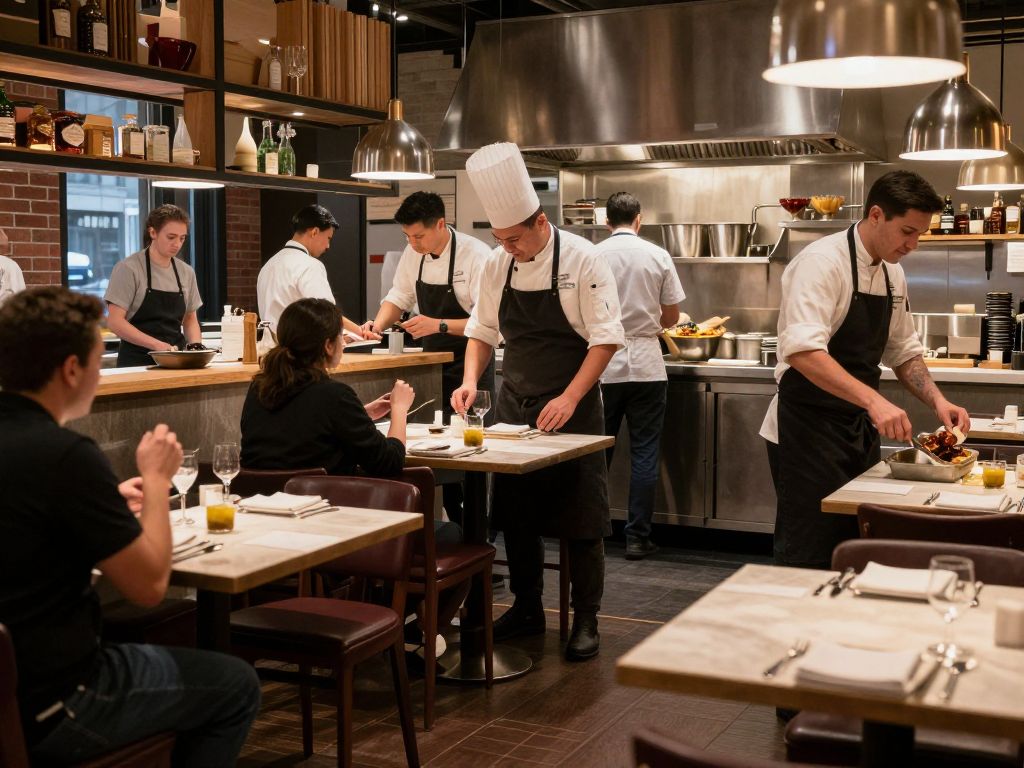
Boston, MA, January 8, 2026
As the Michelin Guide broadens its horizons, Boston’s culinary scene faces new opportunities and challenges. Local entrepreneurs aim to maintain prestigious stars amidst increased competition. The evolution of the guide emphasizes the importance of innovation and quality for Boston’s restaurants, while showcasing the resilience and dedication of its small businesses.
Boston, MA
Michelin’s Expanding Reach: A Test for Culinary Excellence
As the renowned Michelin Guide broadens its horizons, Boston’s vibrant dining scene, fueled by innovative entrepreneurs, faces new opportunities and challenges in maintaining the prestige of its coveted stars.
In Boston, a city celebrated for its rich history and forward-thinking spirit, the culinary landscape is a testament to the enduring drive of local entrepreneurs and small business owners. Their dedication to crafting unique dining experiences not only enriches the community but also contributes significantly to the local economy. Against this backdrop of innovation and growth, a significant shift in the global fine-dining industry is unfolding: the expansion of the Michelin Guide. This evolution presents both intriguing possibilities and a testing of established norms for restaurants striving for, and maintaining, the prestigious Michelin stars, impacting cities like Boston across the nation.
The Michelin Guide’s journey from a humble travel companion to a global arbiter of culinary excellence highlights a fascinating intersection of commerce and culture. While some may view the expansion of such guides as a natural progression in a globalized market, it underscores the dynamic nature of entrepreneurial ventures in the restaurant sector, where recognition can translate directly into economic vitality. Understanding the implications of this expansion is crucial for Boston’s restaurateurs, who continuously innovate and adapt in a competitive environment, showcasing the resilience inherent in the Boston small business community.
The Genesis and Growth of Michelin’s Influence
The Michelin Guide began its storied tradition of awarding restaurants with stars in 1926. Initially, it bestowed a single star, eventually expanding its recognition system to multiple stars. The original concept behind the guide was to encourage people to drive to distant cities, thereby boosting tire sales for the Michelin company. This innovative marketing strategy inadvertently created one of the most respected benchmarks in the culinary world. The guide’s consistent reviews, with each restaurant typically reviewed annually to assess its standing, cemented its authority over decades.
Nationwide Expansion and Its Ramifications
In recent years, the Michelin Guide has undertaken a significant expansion, broadening its regions and increasing the overall number of rated establishments nationwide. This growth is currently testing trust in its stars across the restaurant industry. While greater coverage can be seen as an opportunity for more restaurants to gain recognition, it also introduces complexities for the integrity and perception of the star system. For Massachusetts entrepreneurs in the culinary field, this expansion means both a wider stage for their talents and potentially a more crowded field for accolades.
Navigating the Changing Landscape of Star Recognition
The expansion has led to a noticeable trend: losing stars is not uncommon, especially as the Michelin guide has expanded its regions and increased the overall number of rated restaurants. This dynamic underscores the intense competition and the continuous need for culinary innovation. For a city like Boston, where the culinary scene is driven by passionate chefs and restaurateurs, adapting to these evolving standards and the increased number of rated establishments becomes a key factor in maintaining prominence. It emphasizes the importance of consistent quality and the distinctive identity that many Boston MA business ventures in the food sector strive to cultivate.
Fostering Innovation in Boston’s Culinary Scene
Boston’s restaurateurs, known for their innovative spirit and commitment to quality, are well-positioned to navigate these changes. The pursuit of a Michelin star often drives chefs to push creative boundaries, refine their techniques, and source exceptional ingredients, leading to an elevated dining experience for patrons. This pursuit of excellence, often fueled by personal achievement and entrepreneurial drive, benefits the entire local economy. Furthermore, the guide’s presence can draw increased tourism and private investment, providing crucial support for local businesses and job creation.
The Path Forward for Boston Small Businesses
For Boston’s small businesses in the restaurant sector, the expanding Michelin Guide presents a dual challenge and opportunity. While the increased number of rated restaurants nationwide and the potential for greater scrutiny may seem daunting, it also shines a spotlight on the dedication and hard work of local chefs and restaurateurs. It reinforces the idea that unwavering commitment to quality and a unique vision are paramount. The sustained growth of Boston’s dining industry relies on the resilience of these businesses and their ability to adapt and thrive, perhaps even benefiting from a regulatory environment that champions growth and minimizes unnecessary barriers.
The evolution of the Michelin Guide serves as a compelling case study in the dynamics of market expansion and its impact on established systems of recognition. For Boston, a city that consistently champions its local talent and economic growth, this moment offers a chance to reaffirm its standing as a culinary destination. By supporting our local restaurants and celebrating the entrepreneurial spirit of their owners, we ensure that Boston’s vibrant dining scene continues to thrive and achieve widespread acclaim. We encourage you to explore and support the diverse culinary offerings across our city, investing in the future of Boston small business and the Massachusetts entrepreneurs who make it special.
Frequently Asked Questions
- What is the primary function of the Michelin Guide?
- The Michelin Guide’s original function was to encourage people to drive to distant cities, thereby boosting tire sales. Over time, it evolved to rate hotels and restaurants, becoming a widely recognized arbiter of culinary excellence.
- When did the Michelin Guide start awarding stars?
- The Michelin Guide began awarding restaurants with stars in 1926, initially with a single star.
- How often are restaurants in the Michelin Guide reviewed?
- Each restaurant included in the Michelin Guide is reviewed each year to assess its standing.
- Is it common for restaurants to lose Michelin stars?
- Yes, losing stars is not uncommon, especially these days as the Michelin Guide has expanded its regions and increased the overall number of rated restaurants nationwide.
- What is the current impact of Michelin’s expansion on the trust in its stars?
- Michelin’s expansion of its restaurant guides is currently testing trust in its stars across the industry nationwide.
Key Features of Michelin Guide’s Expansion
| Feature | Description | Scope |
|---|---|---|
| Initial Awarding of Stars | Began in 1926, initially with a single star, later expanding. | Nationwide |
| Review Frequency | Each restaurant in the guide is reviewed each year. | Nationwide |
| Recent Expansion | The guide has expanded its regions and increased the overall number of rated establishments. | Nationwide |
| Star Loss Trend | Losing stars is not uncommon, especially with the guide’s expansion. | Nationwide |
| Impact on Trust | The expansion is currently testing trust in its stars. | Nationwide |
Deeper Dive: News & Info About This Topic
HERE Resources
Boston’s Culinary Scene Shines with First Michelin Star
Boston’s Culinary Scene Shines with First Michelin Star
Boston Prepares for General Municipal Election
Michelin Guide Launches New Hotel Ranking System
Massachusetts Faces Decline in International Tourism
Chinatown Restaurants in Boston Push to End Contracts Amid Trash Strike
Dine Out Boston Returns This Summer
Outdoor Movie Screenings and Cultural Events in Boston
Affordable Art Fair Debuts in Boston
Boston’s Dining Scene Welcomes New Culinary Ventures

Author: STAFF HERE BOSTON WRITER
The BOSTON STAFF WRITER represents the experienced team at HEREBoston.com, your go-to source for actionable local news and information in Boston, Suffolk County, and beyond. Specializing in "news you can use," we cover essential topics like product reviews for personal and business needs, local business directories, politics, real estate trends, neighborhood insights, and state news affecting the area—with deep expertise drawn from years of dedicated reporting and strong community input, including local press releases and business updates. We deliver top reporting on high-value events such as Boston Marathon, Head of the Charles Regatta, and Boston Harborfest. Our coverage extends to key organizations like the Greater Boston Chamber of Commerce and Associated Industries of Massachusetts, plus leading businesses in finance, biotech, and insurance that power the local economy such as Fidelity Investments, Biogen, and Liberty Mutual Insurance. As part of the broader HERE network, we provide comprehensive, credible insights into Massachusetts's dynamic landscape.