
Everett, Massachusetts, December 31, 2025
The Kraft Group’s landmark agreements with Boston and Everett aim to construct a 25,000-seat stadium for New England Revolution, injecting substantial private investment into the local economy. This project promises job creation, public infrastructure upgrades, and various community enhancements, transforming a long-neglected site into a vibrant asset. Through a comprehensive community benefits agreement, both cities are set to gain significant value, with Boston receiving nearly $48 million and Everett projected to benefit by approximately $91.7 million over the next 20 years. This initiative reflects the power of private investment in fostering economic growth and community revitalization.
Boston
Revs Stadium Deal: A New Era for Everett & Boston Economic Growth
The recent landmark agreements between the Kraft Group and the cities of Boston and Everett mark a pivotal moment for regional economic development and community revitalization. This achievement underscores the power of persistent entrepreneurial vision and collaborative spirit in transforming long-neglected urban landscapes into vibrant centers of commerce and community engagement. For years, the pursuit of a dedicated home for the New England Revolution has been a testament to private sector determination, navigating complex regulatory frameworks and community needs to lay the groundwork for a truly transformative project.
This initiative promises to inject significant private investment into the local economy, showcasing how major private ventures can catalyze widespread benefits, from job creation to crucial infrastructure upgrades. The unfolding of this project exemplifies how focused private enterprise, working in concert with local governments, can overcome challenges to foster sustained economic growth and enhance the quality of life for residents across multiple communities.
The Vision Unfolds: A 25,000-Seat Catalyst
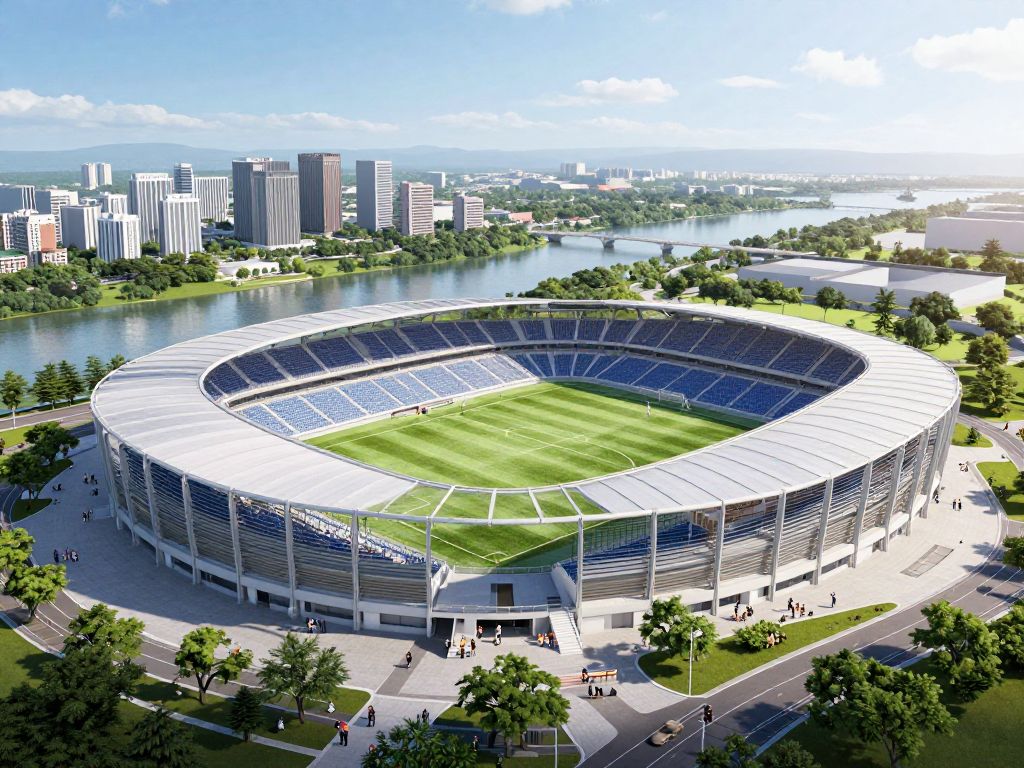
The proposed New England Revolution soccer stadium is slated to be a 25,000-seat facility, designed to become the new home for the Major League Soccer team, which currently plays in Foxborough. This significant undertaking is planned for a 43-acre industrial site along the Mystic River in Everett, Massachusetts. The chosen location, the former Mystic Generating Station, is a brownfield site that has stood underutilized for years. The Kraft Group, as owners of the New England Revolution, is leading this transformative project. The vision extends beyond a sports venue, aiming to create a publicly accessible waterfront destination that will serve as a hub for professional sports, concerts, public markets, and various community-driven programs.
Private Capital Fuels Public Good
A notable aspect of this ambitious project is its financial structure: the construction of the stadium and an adjacent waterfront park will be 100% privately funded. This commitment means that local taxpayers will not be directly responsible for the costs of building the core facilities, highlighting a model of economic development driven by private investment. Furthermore, the Kraft Group has committed an estimated $100 million specifically for environmental cleanup and mitigation at the contaminated former power plant site. This substantial investment in remediating a long-blighted industrial property underscores the potential for private developers to address environmental challenges while simultaneously fostering economic growth. State-level legislation ensures that public funds are prohibited for site remediation or construction, with exceptions only for related infrastructure improvements that require matching private funds. This approach ensures a balanced partnership where private capital takes the lead in both development and environmental stewardship.
Boston’s Strategic Partnership
The city of Boston has secured a comprehensive community benefits agreement with the Kraft Group, valued at nearly $48 million over 15 years. This agreement is primarily structured to address potential impacts on the Charlestown neighborhood, which is situated across the Mystic River from the proposed stadium site. Key provisions include an initial payment of $3 million over six years directed to the Charlestown Community Impact Fund, a fund established in 2016 to support various local organizations. Beyond this initial contribution, at least half of the anticipated $2 million per year in future annual ticket revenues will be allocated to Charlestown-specific municipal projects, expected to total $34 million in the first 15 years.
The agreement also mandates substantial infrastructure improvements in Charlestown, particularly in the busy Sullivan Square area, before the stadium’s opening. These improvements include at least $5 million in safety and access upgrades to roadways, sidewalks, bike paths, intersections, and transit facilities. Additionally, a $5 million Transportation Fund will be established, with the Kraft Group contributing $333,000 annually for 15 years for ongoing transportation infrastructure improvements in Charlestown. The agreement emphasizes local economic participation through goals to target 25% of construction and ongoing operational contracts for local MWBE/Veteran-owned businesses, and 25% of permanent stadium jobs for Boston residents via preferential hiring. Furthermore, the city of Boston will have the opportunity to use the stadium for community events four times per year, and the Revolution will host at least six free youth soccer clinics annually in Boston. These provisions reflect a strategic effort to ensure tangible benefits for Boston residents and businesses.
Everett’s Economic Transformation
For the city of Everett, the agreement with the Kraft Group is projected to deliver an estimated $91.7 million in total community value over 20 years, encompassing direct payments, infrastructure investments, and various community benefits. A central component of this commitment is the creation of a new four-acre Mystic River waterfront public park, with $20 million dedicated to its development and ongoing annual maintenance funding. This park is designed to reconnect residents with the waterfront, which has been largely inaccessible due to the industrial nature of the site.
Transportation enhancements are also a significant part of Everett’s benefits, including $17.5 million for the construction of a headhouse at Assembly Row, aiming to provide expanded public transportation access to the Orange Line for Everett residents and visitors. The agreement also includes funding for a pedestrian bridge connection. Financially, Everett will benefit directly from stadium operations, receiving $2.25 for every ticket sold, projected to generate revenue for the city’s general fund based on an estimated 418,000 soccer tickets and an additional 520,000 event tickets annually. Beyond these direct financial and infrastructure benefits, the project is expected to expand local employment opportunities and support Everett Public Schools, with the stadium and waterfront park available for community and school events. This multifaceted agreement is anticipated to be a catalyst for sustained economic revival and community pride in Everett.
Navigating the Regulatory Landscape
The path to these agreements involved navigating significant regulatory complexities. The proposed stadium site, a 43-acre parcel along the Mystic River, was previously classified as a Designated Port Area (DPA), a state zoning designation that historically limited development to marine industrial uses. Overcoming this hurdle required legislative action, with the Massachusetts Legislature needing to change the language of a bill to remove the power plant land from its DPA designation. This legislative amendment, part of a broader economic development bill, was crucial in enabling the transformation of this industrial parcel. The “Mass Leads Act” further stipulated that community impact agreements between the site owner and the cities of Everett and Boston were necessary for the parcel to be removed from the DPA, adding a layer of crucial negotiation to the process. The finalization of these agreements on December 31, 2025, met a state-imposed deadline, which, if missed, would have sent negotiations into binding arbitration. This demonstrates how dedicated private sector engagement, coupled with appropriate legislative adjustments, can unlock development potential for economic growth.
Beyond the Field: A Community Asset
The vision for the New England Revolution stadium extends beyond professional soccer matches. The plans incorporate making the stadium and its adjacent four-acre waterfront public park available for a variety of public and community-driven events, including concerts, farmers markets, and youth soccer clinics. This multi-use approach aims to create a true neighborhood asset, enhancing public access to the waterfront, strengthening pedestrian and bicycle connectivity, and improving access to public transit. The commitment to prioritizing local hiring, youth soccer clinics, and community programming for both Everett and Boston residents further solidifies the project’s role as a significant community partner. These initiatives reflect a holistic approach to development, where private investment not only creates economic opportunities but also enriches the social and recreational fabric of the surrounding communities, serving as a model for Boston MA business and economic growth.
Future Steps for a Growing Region
The recent agreements are a significant milestone, opening the door for the formal project proposal. However, further approvals are required from both Everett and the State, including local Site Plan Review, the Massachusetts Environmental Policy Act (MEPA) review process, and Chapter 91 license review through MassDEP. Public input will continue to be a vital part of these subsequent stages. This project embodies the spirit of entrepreneurial innovation and the resilience of Boston small business in shaping the region’s future. It demonstrates how substantial private investment can lead to economic growth and community revitalization, turning a long-dormant site into a dynamic asset. As Massachusetts entrepreneurs continue to drive forward such ambitious projects, it is imperative for local communities to remain engaged and supportive of developments that promise long-term benefits.
Frequently Asked Questions (FAQ)
- What is the proposed New England Revolution stadium project?
- The proposed project is a 25,000-seat soccer stadium for the New England Revolution.
- Where will the new stadium be located?
- The stadium will be located on the former Mystic Generating Station industrial site, a 43-acre brownfield site along the Mystic River in Everett, Massachusetts.
- Who is funding the construction of the stadium?
- The construction of the stadium and an adjacent waterfront park will be 100% privately funded by the Kraft Group.
- What environmental commitments has the Kraft Group made?
- The Kraft Group has committed an estimated $100 million for environmental cleanup and mitigation at the former power plant site.
- What benefits will Boston receive from this agreement?
- Boston will receive nearly $48 million in community benefits over 15 years, including $3 million over six years to the Charlestown Community Impact Fund, at least half of future annual ticket revenues (anticipated $2 million/year) for Charlestown-specific municipal projects, and at least $5 million in infrastructure improvements in Sullivan Square.
- What benefits will Everett receive from this agreement?
- Everett will receive an estimated $91.7 million in total community value over 20 years, including $20 million for a new four-acre Mystic River waterfront public park, $17.5 million for an Orange Line Assembly Station headhouse, and $2.25 for every ticket sold for the city’s general fund.
- What are the next steps for the project?
- The agreements open the door for a formal project proposal, which requires further approvals from Everett and the state, including local Site Plan Review, Massachusetts Environmental Policy Act (MEPA) review, and Chapter 91 license review through MassDEP.
Key Features of the New England Revolution Stadium Project
| Feature | Detail | Scope |
|---|---|---|
| Stadium Capacity | 25,000 seats | Local |
| Location | Former Mystic Generating Station industrial site, Everett, MA (43-acre brownfield site) | Local |
| Funding | 100% privately funded for stadium and park construction | Local |
| Environmental Remediation | Estimated $100 million committed for cleanup by Kraft Group | Local |
| Boston Community Benefits | Nearly $48 million over 15 years (including infrastructure, community fund, ticket revenue share, local hiring goals) | Local |
| Everett Community Benefits | Estimated $91.7 million in total community value over 20 years (including waterfront park, transit improvements, ticket revenue share, local employment opportunities) | Local |
| Public Access | New four-acre Mystic River waterfront public park, stadium available for community events | Local |
| Regulatory Change | Removal of “Designated Port Area (DPA)” classification by Massachusetts Legislature | State-level |
| Current Team Home | Gillette Stadium, Foxborough | Local |
Deeper Dive: News & Info About This Topic
HERE Resources
Boston’s Stadium Crossroads: Kraft Group Faces Deadline
Chelsea High School’s Football Victory and Local Sports Developments
Exploring Boston: A Parent’s One-on-One Travel Experience
College Students Return to Boston Amid Federal Concerns
Morgan Wallen’s Concert Weekend at Gillette Stadium
Affordable Golf Access on the Rise with New Programs
Boston Mayoral Election: Wu vs. Kraft
Everett Proposes Redevelopment of Historic Sewage Pumphouse

Author: STAFF HERE BOSTON WRITER
The BOSTON STAFF WRITER represents the experienced team at HEREBoston.com, your go-to source for actionable local news and information in Boston, Suffolk County, and beyond. Specializing in "news you can use," we cover essential topics like product reviews for personal and business needs, local business directories, politics, real estate trends, neighborhood insights, and state news affecting the area—with deep expertise drawn from years of dedicated reporting and strong community input, including local press releases and business updates. We deliver top reporting on high-value events such as Boston Marathon, Head of the Charles Regatta, and Boston Harborfest. Our coverage extends to key organizations like the Greater Boston Chamber of Commerce and Associated Industries of Massachusetts, plus leading businesses in finance, biotech, and insurance that power the local economy such as Fidelity Investments, Biogen, and Liberty Mutual Insurance. As part of the broader HERE network, we provide comprehensive, credible insights into Massachusetts's dynamic landscape.